

DeSantis signs bill regulating costs, water use tied to large-scale data centers in Florida
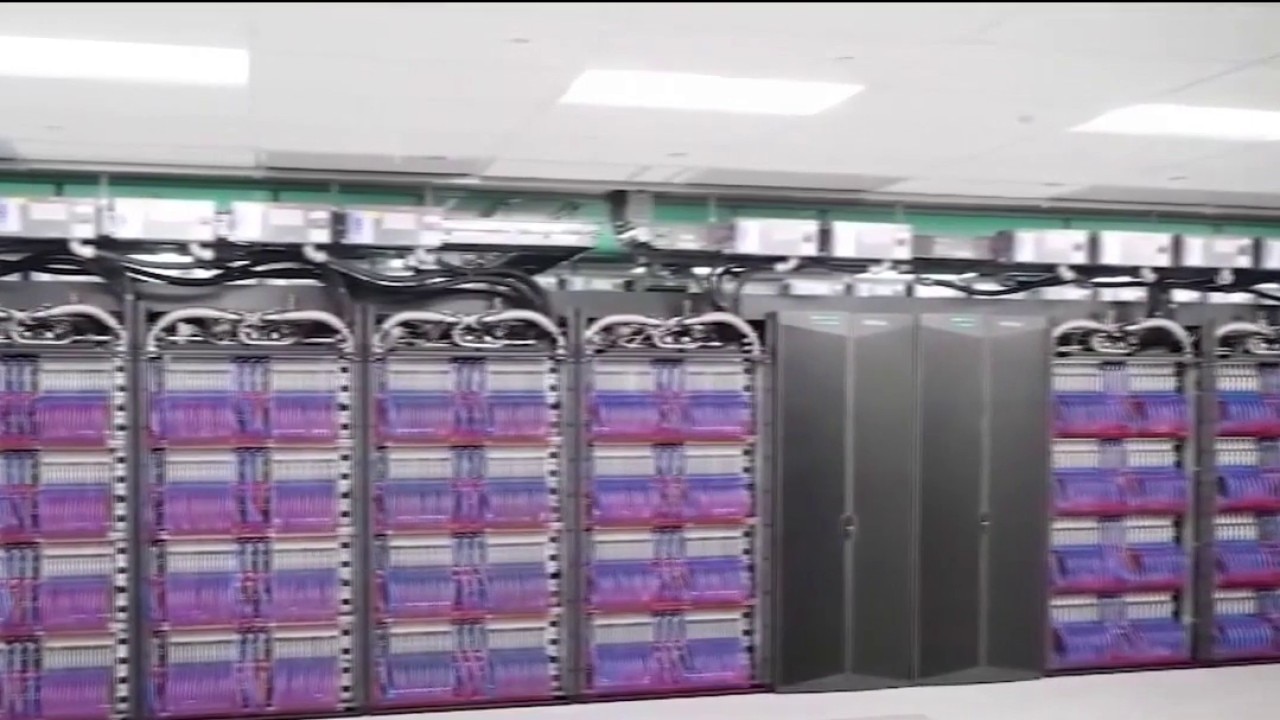
Pinellas County data center regulation
Some Pinellas County commissioners are pushing to block or limit data center development locally, citing water usage and limited long-term economic benefits. FOX 13's Genevieve Curtis reports.
LAKELAND, Fla. - Florida Gov. Ron DeSantis signed a new bill Thursday aimed at controlling large-scale data centers and preventing consumers from footing the bill for the massive facilities’ utility demands.
The backstory:
The governor signed Senate Bill 484 during an event at Florida Polytechnic University in Lakeland, calling the legislation the first of its kind in the nation.
"It protects consumers from footing the bill for any hyperscale data center in the state of Florida," DeSantis said. "The bill also revises Florida law regarding the regulation of large-scale data centers."
According to DeSantis, the measure is designed to ensure that the costs associated with hyperscale data centers are not passed on to everyday Floridians through utility bills. It also requires public utilities to provide certain minimum tariffs and service requirements for these data center customers.
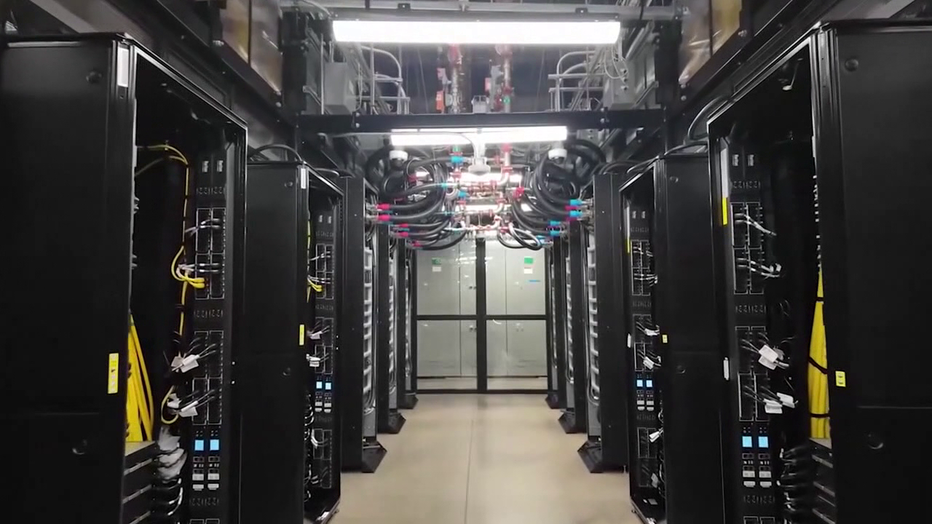
The legislation also preserves local governments’ authority over approving and regulating large-scale developments, including data centers – an issue that became a concern after Senate Bill 180 unintentionally limited local authority over some developments.
State officials said the bill requires discussions involving water use and utility impacts from data centers to happen during public meetings, adding more transparency for communities.
The centers will have to apply to be considered for a consumptive use permit in order to tap into the state's water resources.
DeSantis has been outspoken about implementing laws around data centers, originally pushing for stronger legislation.
"This bill I think is the first in the country that ensures that the rhetoric we hear is actually reality on the ground," DeSantis said.
The legislation also requires the Office of Program Policy Analysis and Government Accountability to do a study on the construction and operation of large-scale data centers.
Water and utility impact concerns
State leaders voiced concerns about the amount of water and electricity needed to operate massive data centers, particularly as artificial intelligence infrastructure continues to expand nationwide.
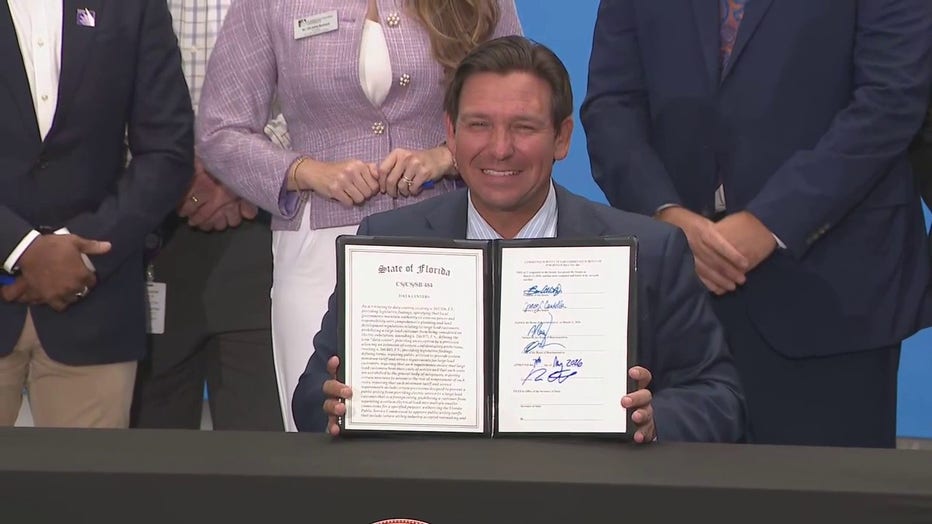
Florida Secretary of Commerce Alex Kelly said the bill strikes a balance between economic growth and public accountability.
Kelly added that the legislation ensures utility costs tied to the facilities remain the responsibility of the data centers themselves rather than taxpayers or utility customers.
"We know it’s taken water, we know it has taken electricity, what is it producing in terms of jobs and economic development?" DeSantis said during remarks on the bill signing. "It really is kind of the one-shot build."
The governor also argued residents should not subsidize large technology companies through rising utility costs.
"You should not pay one more red cent for electricity because of a hyperscale data center as an individual," DeSantis said. "That’s just not right for the most wealthy companies in the history of the world to come in and have individual Floridians or Americans subsidize these hyperscale data centers."
Local perspective:
Recently, Fort Meade decided to move forward with plans for Florida's first hyperscale data center. The $2.6 billion project has drawn criticism from residents and lawmakers.
"We know that data centers draw an exponential need for energy," Lt. Gov. Jay Collins said.
Collins campaigned for Governor in Lakeland on Thursday, pushing a plan for more regulations on large-scale data centers.
"We, as a state, will make sure that those costs never get passed on to you from a data center," Collins said.
Preventing utility costs from being passed down to taxpayers is one of five points that Collins outlined in his plan.
He also pushed for measures to protect the environment and the region's land.
"We have to have rigorous, site-specific reviews with strict water caps, noise limits, habitat protections and preference for inland and brownfield," Collins said.
Collins is also pushing for data verification audits on these centers, human oversight and safety filters. He wants any threatening or dangerous usage of AI to be flagged.
"Refuse, redirect or flag [AI] content promoting suicide, self-harm or homicide, with real-time human escalation to LEO, health authorities, behavioral health," Collins said.
Collins says he supports the legislation that the governor signed on Thursday, adding that he wants to see additional laws put in place.
Collins also wants to see more public discussions surrounding the Fort Meade data center.
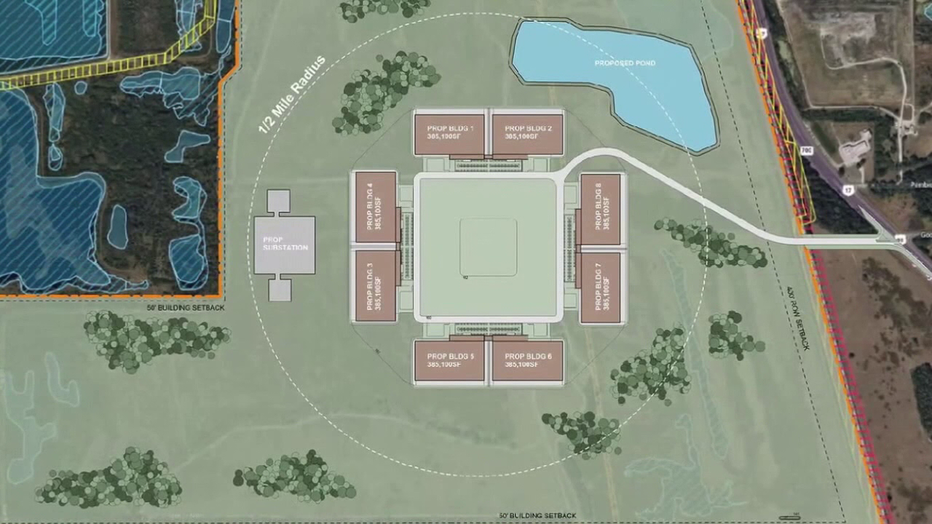
DeSantis did not say whether large-scale data centers should be implemented locally, but suggested local governments should consider charging the large companies higher rates for infrastructure usage when building the data centers.
"You should be charging them a lot more," DeSantis said.
As Florida sees growing interest in large-scale data center development, some local leaders in Pinellas County are making it clear they do not want those projects moving in.
"Maybe we could ban them," Pinellas County Commissioner Kathleen Peters said during a recent commission meeting.
Peters said concerns over water consumption are driving much of the opposition.
"We are in such a drought that we can’t afford to be using water for cooling these data centers," Peters said.
County leaders say they are aware of a company interested in building a data center along Gandy Boulevard. Commissioners argue the facilities consume massive amounts of water and electricity while providing relatively few permanent jobs once construction is complete.
Dig deeper:
In Pinellas County, commissioners are now considering additional measures, including preventing data centers from receiving tax incentives or abatements.
"I don’t think they should have tax benefits or abatements since they aren’t real job producers," Peters said. "That’s what Brevard County is doing. They are banning the ability for data centers to get tax exemptions or abatements, and I’d like to take the same action here and protect our constituents."
Pinellas County leaders say they are now waiting on legal opinions to determine whether the newly signed legislation overrides portions of SB 180 and fully restores local control over future data center projects.
AI growth and Florida infrastructure
The event comes as states across the country compete to attract artificial intelligence and large-scale data centers, which often require massive amounts of power and water to cool servers.
Florida officials say the new law is intended to provide safeguards before more hyperscale facilities are developed across the state.
DeSantis also discusses immigration operations
During the press conference, DeSantis also addressed Florida’s partnership with the U.S. Department of Homeland Security on immigration enforcement efforts.
The governor said Florida currently leads the nation in agreements with DHS.
DeSantis also discussed the state-run immigration detention facility nicknamed "Alligator Alcatraz," saying the operation has helped house thousands of migrants temporarily while federal officials process deportations.
"The facility keeps Florida safer," DeSantis said.
What's next:
DeSantis added that DHS has not indicated plans to shut down the facility and is continuing to evaluate its operational footprint. He said the state will continue to partner and support them.
Now that DeSantis signed SB 484, the bill becomes a law and will likely take effect on July 1.
The Source: Information for this story was gathered from a campaign press conference with Lt. Gov. Jay Collins, SB 484 and a bill signing with Gov. Ron DeSantis.