

Florida couple says scammers used AI-generated picture of missing puppy while trying to steal $2K

Family scammed after dog went missing
When their dog went missing, a Pinellas family did what anybody would --- they turned to social media, pleading for help. FOX 13's Kailey Tracy reports.
ST. PETERSBURG, Fla. - A couple in St. Petersburg says a scammer preyed on them and their love for animals.
Dennis Morida says he nearly lost $1,900 last Tuesday to the scammer because of an AI-generated picture.
What we know:
He runs a non-profit training dogs for veterans and others in the community called "Always a Warrior K9." He’d been training Hazel, a German Shepard puppy, for only a few hours when he says she managed to slip through a tiny hole in the fence.
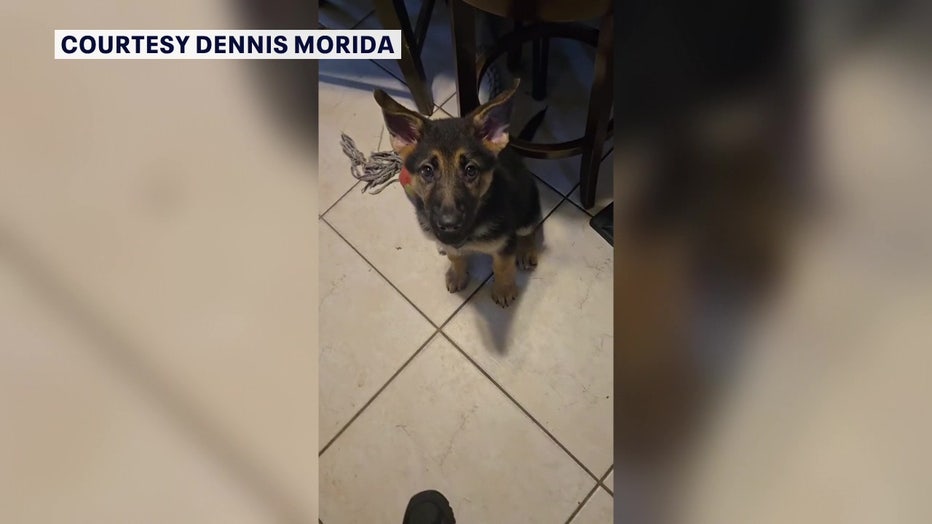
Courtesy: Dennis Morida
His doorbell camera picked up the moment she ran across the street. It then showed Morida searching for her seconds later. They searched all night for her and posted Hazel’s picture and their contact information on social media.
"She ended up across the street and must have hunkered down, because we had the whole posse out looking for her, a couple dozen people, Facebook, a bunch of other organizations, a lot of people volunteering up and down the streets and by that time, we're thinking the worst, like, ‘ok, well, something might've happened,’" he said. "Then, all of a sudden, I get a phone call around 11 o’clock at night."
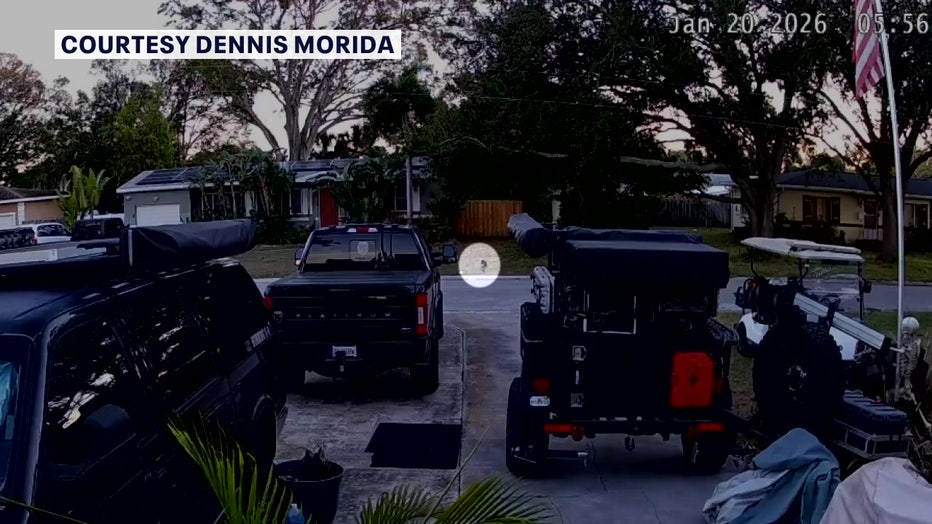
Courtesy: Dennis Morida
Dig deeper:
The person on the other end of the blocked number claimed to be a sergeant with the St. Petersburg Police Department. She said Hazel was hit by a car and brought to an emergency vet. The person claimed she was then connecting the call to the vet.
They even sent a picture of Hazel on an operating table and said she needed surgery.
Morida believes they used artificial intelligence to make the picture, altering photos he and his wife Michelle posted to social media.
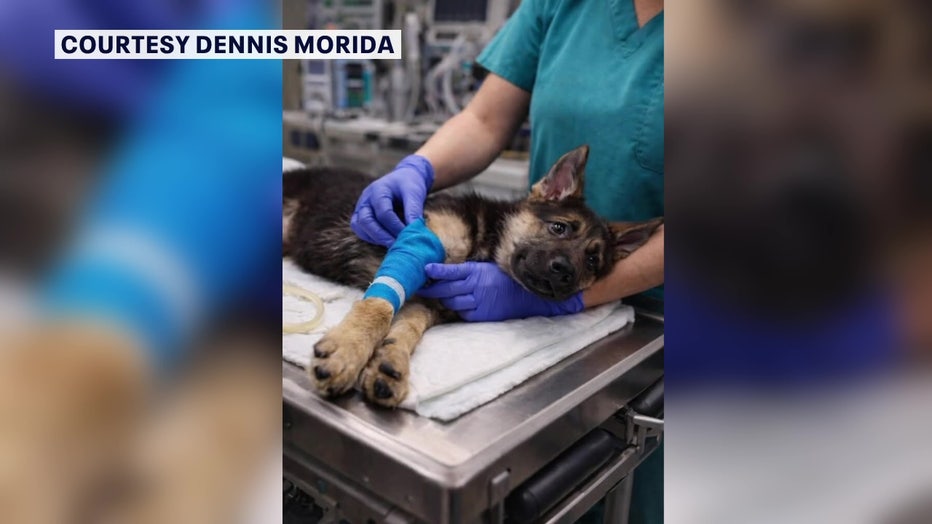
Picture given to us by Dennis Morida shows a dog on an operating table at a vet, but he believes this is a photo created by AI.
"They said, ‘okay, well, if you give us authorization, we need payment of $1,900,’ and so, I was like, ‘okay, I got a credit card,’ and they said, ‘we're non-profit, we can't take credit cards,’ and I didn't think, you know, it didn't click to me that just doesn't sound right," Morida said. "They ended up saying that, ‘well, unless you got Zelle or Venmo. I was like, ‘yeah, I have Zelle.’"
Morida sent the money that initially got flagged on Zelle.
READ: USF Students to crack code on cyber criminals through new criminology and AI degree
He tried again and it said it was pending.
The person on the phone told Morida to pick Hazel up at Pinellas County Animal Services the next morning. The next morning, though, Hazel showed up in their front yard unharmed.
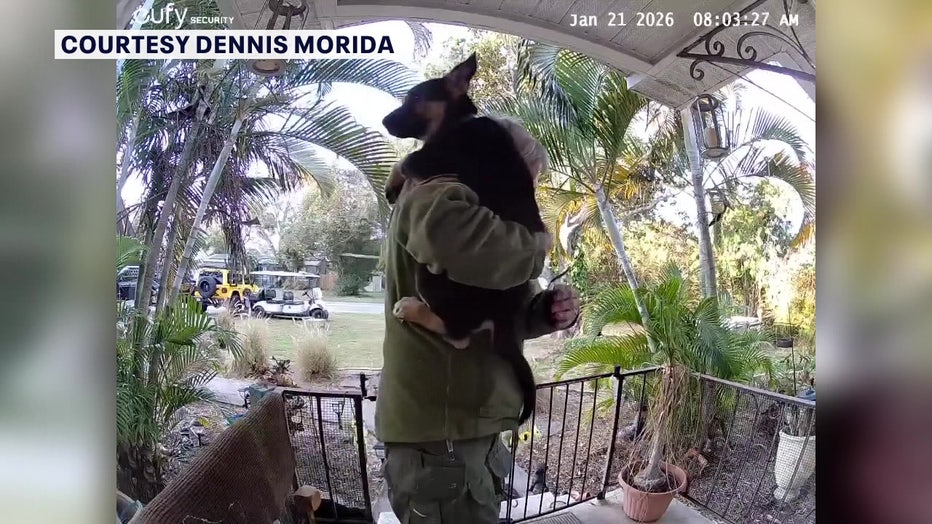
Courtesy: Dennis Morida
"There's Hazel wagging her tail, sitting on the golf cart waiting for one of us to come get her," Morida said. "We tried to look as much as we could, but she definitely didn't go far … with so many people looking around and everything, maybe she was just scared to come out," he said.
Why you should care:
Morida’s wife’s parents in Georgia also got a similar call around 3 a.m. asking about the missing dog and asking for money. After Hazel showed back up, Morida then called the local vet the caller claimed to be from.
"Now I'm thinking, ‘all right, well, whose dog got hit by a car then?’ It looked just like Hazel. What are the chances? And so, I called the hospital with the veterinarian and I asked them, ‘Hey, I've already paid $1,900 for the surgery. What do we do now because this is somebody else's dog,’" he said.
"They said, ‘Well, we have no idea. Let us double-check,’ and they were like, ‘yea, we don't know what you're talking about.’ And right there, I knew, ‘oh, I got scammed,’" Morida said.
What they're saying:
Morida worked in law enforcement and in the military and says he wants to tell his story to help others.
"I should have known, but you know, when you're in that heat of the moment, it's really hard to concentrate," he said. "To get scammed like that, it’s just terrible. So, we don’t want that to happen to anybody else again."
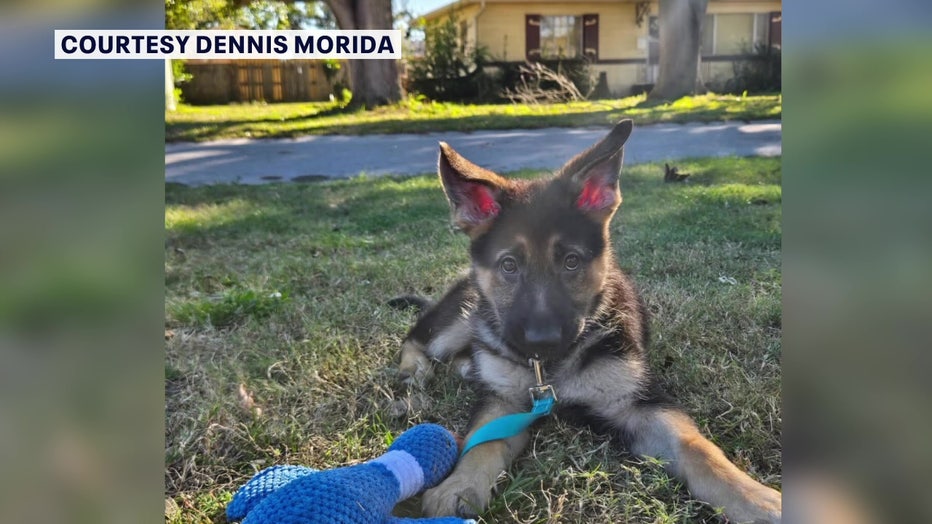
Courtesy: Dennis Morida
"It was so gut-wrenching. I kept asking myself, ‘what did I do to deserve this?’ We try to help dog owners and dogs, and I believe everything happens for a reason. I just couldn't figure this one out, and then I finally figured out why. It's so we can put the word out to help other individuals, other people, veterans, non-veterans, anybody," he said. "These scammers are out there. They're going to do whatever they can to play on your emotions. And so, take a deep breath. Think about it and verify with every information you can."
What you can do:
AI strategist Dr. Jill Schiefelbein agrees with this advice.
"Much like we used to when we had to be wary of phone calls and emails, now we have to take it to the next level in terms of our diligence when it comes to generative images and videos," she said. "So, here are some things that you can do to generally keep yourself in check and make sure you're asking the right questions if you feel something might be off. First, if something seems a little too urgent, it probably is. These scammers like to prey on people who are in emotionally vulnerable situations, and so much like this story where someone was looking for a missing animal, that's a prime target."

"So, you want to make sure if you're in those emotionally-laden situations, that you first think, ‘how does this seem urgent? Are they asking me for personal information? Are they asking me to verify my identity? And if I push back at all, what is the reception? If something is genuine, and you push back with some questions, they're going to have no issue answering?’ So, take that extra step to protect yourselves," she said.
READ: St. Pete police say woman faked crime using AI-generated image
Schiefelbein said the good news is, according to the World Economic Forum, fraud overall is down year over year slightly. On the flip side, those frauds are becoming more and more sophisticated.
"When it comes to fraudulent activity and scams involving AI, it's estimated that anywhere between 40 and 50 percent of all the scams that are out there now do involve AI and specifically generative AI or a deep fake in some way, shape, or form," she said.
"The behaviors we're seeing right now aren't new behaviors. The methods and the technologies that are being used to execute these behaviors, though, are. So, you have to be extra diligent, fact check everything. And that's just good life practice in general, but make sure you're corroborating your sources and asking the questions if you have any confusion or doubt," Schiefelbein said.
What's next:
As for Morida, he says he’s in the process of filing a police report. Luckily, his bank flagged the fee and marked it as fraud, so he didn’t end up losing any money.
He said he hadn’t been able to give Hazel an Air Tag yet to track her before the incident. She’s been reunited with her owner, who helped search for her too.
The Source: This article was written with information provided by Dennis Morida and Dr. Jill Schiefelbein.