

Exclusive: Ellen Gilland, woman who shot, killed terminally ill husband: 'I'm accepting the consequences'

Woman who killed terminally ill husband speaks out three years later
Ellen Gilland, the woman who killed her terminally ill husband in his hospital room, speaks with FOX 35 three years after the incident.
Three years ago, a single gunshot shattered the quiet of Advent Health Daytona Beach hospital, leaving one man dead and triggering a tense, hours-long standoff with police and sending the facility into lockdown.
The fatal shooting was the result of a failed murder-suicide plot Ellen Gilland, now 79, and her terminally ill husband Jerry came up with.
Gilland has since been released from custody after serving most of her one-year prison sentence.
Gilland sat down exclusively with FOX 35 News to shed some light on the relationship with her husband, the details of their plan, and the impact of her time spent behind bars.
CLICK TO DOWNLOAD THE FOX LOCAL APP
Failed 2023 murder-suicide plot
In January 2023, Ellen Gilland was wheeled out of the hospital in handcuffs.
According to investigators and Gilland’s own account, the couple discussed a plan in which Jerry asked her to go home and retrieve his pistol. She took it to a gun shop, where employees told her it needed cleaning but was still usable. Gilland then returned to the hospital. She said she and Jerry sat together in his room and talked before she fired a single shot into his head, killing him instantly.
Gilland said she planned to take her own life afterward but became hysterical and could not go through with it. When hospital staff came to investigate the noise, Gilland pointed the gun at them — forcing nurses and employees to flee. A lockdown and standoff ensued on the 11th floor.
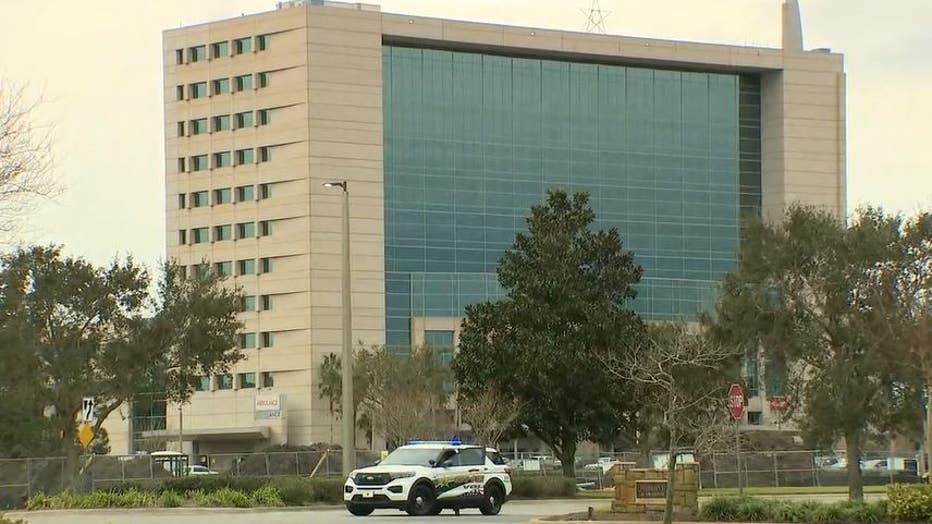
Dozens of patients and staff sheltered in place, some hiding in rooms and crying as police worked to contain the situation. The standoff lasted for hours.
It finally ended when officers deployed a flashbang into the hospital room and rushed inside. During the struggle, Gilland fired a second shot — this time into the ceiling. No one else was injured.
Gilland was taken to jail and later entered a no contest plea to manslaughter, aggravated assault with a firearm, and aggravated assault on law enforcement.
SIGN-UP FOR FOX 35'S BREAKING NEWS, DAILY NEWS NEWSLETTERS
"I'm accepting the consequences"
Gilland tells FOX 35 News she was worried she would be unable to take care of her husband as his condition continued to worsen. She said he was depressed, while also dealing with vision issues, and a form of dementia.
She feared going on without him in her life after 53 years of marriage.
"We'd known each other since middle school," she said. "I knew how difficult it would be to be without him."
"There wasn't anything else to do," Gilland said when asked if she would change anything about that day, though this is a mindset experts warn against.
Licensed clinical social worker Robin Schultz, with The National Partnership for Healthcare and Hospice Innovation said feelings of desperation are common when a loved one faces a terminal diagnosis, but support exists.
"It’s very normal to feel overwhelmed and unsure where to turn," Schultz said.
She said families should start by asking for a hospice referral. A process which can provide not only medical care but emotional support for both patients and loved ones.
"Getting connected with the right resources in your community makes all the difference," Schultz said.
Gilland said she avoids reliving the day whenever possible. She said it makes her feel sad and hopeless. She said she wants people to know that, despite her conviction, she doesn’t consider herself a violent person.
"In the 76 years before this event happened, I had never been in trouble before in my life, and never planned to hurt anyone ever," she said.
As she serves the remainder of her sentence under supervision, Gilland said she is trying to learn how to move forward, while reflecting on the life she shared with Jerry.
"He was very supportive, very quiet, very generous," she said. "He was a lovely person."
Gilland was released in November and is currently serving 12 years of probation. Per the judge’s orders, she is required to perform monthly community service for as long as she is physically able. She recently picked up a role volunteering for a local animal shelter.
"I’m accepting the consequences," she said. "I have to figure out how to survive after this."
What others have to say
"At first I thought somebody fell, because it was a huge bang," Hector Aponte, a nurse said. Aponte was the first person to enter the room to investigate the sound.
Gilland pointed the gun at him and another staff member, threatening to shoot them if they didn't leave.
Daytona Beach Police Chief Jakari Young commended his staff for diffusing the situation safely, while not being able to fully evacuate the floor.
"That 11th floor is made up of terminally ill patients," Young explained. "Pretty much all of the patients on that floor were on ventilators."
At sentencing, Judge Kathryn Weston acknowledged letters from family and loved ones describing Gilland as kind and thoughtful — but said what happened told a different story.
"Your actions on that day were none of those things," Weston said.
End of life debate
Gilland's case continues to fuel debate over end-of-life choices.
Florida law does not allow medically assisted dying, meaning actions taken out of compassion can still result in criminal charges.
Gilland said she will continue to push for that to change.
Advocates for what some call "Death with dignity" hope the case will prompt renewed discussion among lawmakers, while others warn of the ethical and legal risks of changing assisted-dying laws.
The Source: This story was written with information gathered by FOX 35 reporter Chris Lindsay.