

SNAP: See the overpayment and underpayment rates for benefits in every state
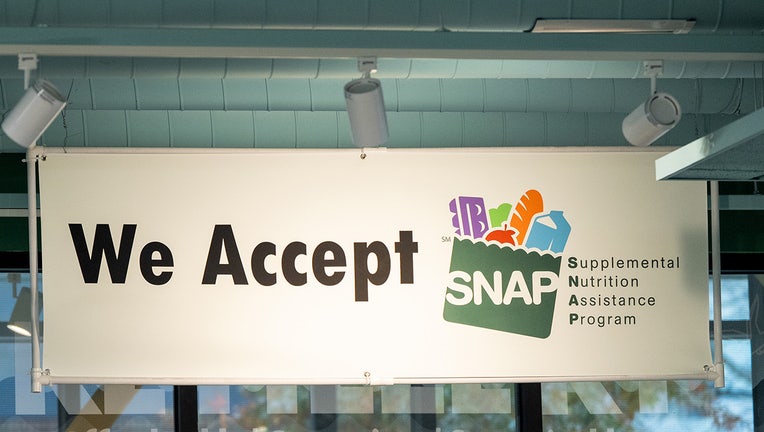
Supplemental Nutritional Assistance Program (SNAP) signage at a grocery store in Dorchester, Massachusetts, on Monday, Nov. 3, 2025. (Mel Musto/Bloomberg via Getty Images)
There are around 42 million low-income Americans who receive benefits from the Supplemental Nutritional Assistance Program (SNAP). The SNAP Quality Control system ensures recipients receive the right benefits and identifies both underpayments and overpayments.
The backstory:
The U.S. Department of Agriculture (USDA) Food and Nutrition Service (FNS) oversees the SNAP program, which in fiscal year 2024 cost just over $100 billion, providing an average of $190.59 a month per person to over 42 million people.
The federal government sends SNAP funds to states which administer applications and determine eligibility based on federal guidelines. Benefits are loaded on prepaid cards through the Electronic Benefit Transfer (EBT) system and beneficiaries use the cards at stores to pay for their groceries.
RELATED: New SNAP requirements now in effect, USDA planning major overhaul of program
Dig deeper:
SNAP Quality Control
According to the USDA, federal law assigns state agencies the responsibility for monitoring and improving SNAP administration. While the federal government provides overall oversight, states handle the detailed work of ensuring eligible households receive accurate benefits, giving them autonomy to identify and correct errors.
The SNAP Quality Control system measures how accurately states determine a household’s eligibility and benefits. As part of the quality control system, both the FNS and states identify underpayment and overpayment errors.
Underpayments are when a household receives fewer benefits than they are entitled to receive, while overpayments are when a household receives more benefits than they are entitled to.
To identify underpayment and overpayment errors, the USDA says each month, states review a select number of household case files, totaling 50,000 per year from all states combined. The USDA then conducts a second review of approximately half of the state cases to determine any benefit errors.
The USDA process requires that when state agencies identify a benefit error, they must make a correction by either reimbursing underpayments or recouping overpayments so that each household gets exactly what they are eligible to receive.
Every year in June, the USDA analyzes the final data collected from the states and uses that to determine national and state payment error rates.
The report for Fiscal Year 2024 shows Alaska, the District of Columbia, Georgia, Florida, and New Mexico had the highest payment error rates. South Dakota, Idaho, Wisconsin, Wyoming, and Vermont had the lowest payment error rates.
As a whole, the U.S. average payment error rate is 10.93% with an average overpayment rate of 9.26% and an underpayment rate of 1.67%.
When a state’s error rate exceeds the national payment error rate, USDA is required to determine a state’s financial responsibility. The USDA says states can either immediately pay the determined amount to USDA or settle by investing 50% of the amount in ways to address the root cause of the errors and improve the state’s administration of SNAP with the remaining 50% held as "at-risk" for future payment.
If a state is determined to be financially responsible for poor performance in three consecutive years, the USDA says it will collect the previously held amount.
How SNAP payment errors are addressed
As part of the SNAP Quality Control, the USDA assists state agencies in determining the causes of their payment errors and works with them to develop a corrective action plan. In addition, USDA provides continuous monitoring, training, and technical assistance to the states to improve their quality control system, develop new policies, and improve tools designed to prevent payment errors.
The Source: Information in this article was taken from the U.S. Department of Agriculture (USDA) and previous FOX Television Stations reporting. This story was reported from Orlando.