

Cyclosporiasis cases in Florida: County-by-county reports
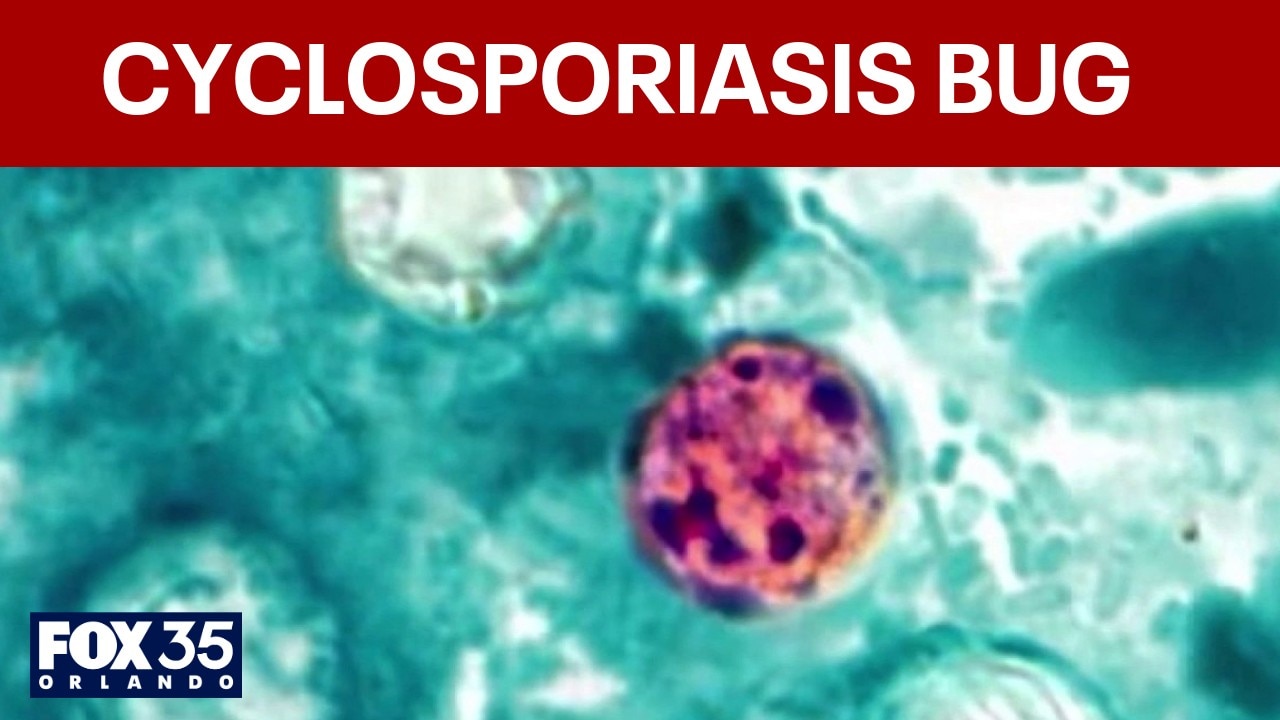
Doctor explains how to protect from Cyclosporiasis outbreak
It's not your average bug. FOX 35's Hannah Mackenzie spoke with a doctor to learn about how to ward off Cyclosporaiasis. Not-so-friendly symptoms could be avoided, but washing your produce might just not be enough. Michael Sparks, M.D., reported the parasite can be treated with a common antibiotic, Bactrim.
ORLANDO, Fla. - The U.S. Centers for Disease Control and Prevention (CDC) is investigating several clusters of Cyclosporiasis outbreaks in at least 17 states, including Florida.
Cyclosporiasis is an intestinal infection caused by a parasite that can lead to watery, sometimes "explosive" diarrhea, cramping, bloating, and nausea.
Cyclosporiasis cases in Florida
By the numbers:
There have been a total of 50 cases of Cyclosporiasis reported in Florida between May 1 - July 4, 2026, according to the Florida Department of Health's Bureau of Epidemiology. Last week's data reported 36 cases.
- Total cases: 50
- 49 confirmed cases, 1 suspected
- Acquired in Florida: 31
- Acquired outside the USA: 10
- Unknown: 9
"Cyclosporiasis is a seasonal disease that affects Floridians every year," the Florida Department of Health told FOX 35 in a statement.
The CDC adds that cases tend to rise during the spring and summer months, specifically between May 1 - August 31. This year's season began May 1, the CDC said.
Cyclosporiasis cases: county by county
- Alachua: 1
- Brevard: 1
- Broward: 5
- Collier: 2
- Columbia: 1
- Duval: 1
- Escambia: 1
- Flagler: 1
- Gadsden: 1
- Highlands: 1
- Hillsborough: 2
- Lake: 1
- Lee: 9
- Miami-Dade: 6
- Orange: 3
- Osceola: 2
- Palm Beach: 1
- Pasco: 1
- Pinellas: 1
- Polk: 2
- Seminolee: 2
- St. Johns: 2
- Sumter: 1
- Volusia: 2
Age group
- 15-19: 2
- 20-24: 2
- 25-29: 6
- 30-34: 3
- 35-39: 3
- 40-44: 5
- 45-49: 3
- 50-54: 7
- 55-59: 6
- 60-64: 3
- 65-69: 4
- 70-74: 4
- 75-79: 2
When is the data reported?
The Florida Department of Health's Reportable Disease Frequency Report is updated every Thursday and includes data from the previous week, Sunday - Saturday. There is a four-day gap to allow for data quality reporting. Then numbers can fluctuate from what's initially posted "as case reports undergo further investigation and validation."
What is cyclosporiasis?
Cyclosporiasis is a diarrheal illness caused by infection with the parasite Cyclospora cayetanensis, which experts say is found in developing countries and is spread by food or water contaminated with feces.
Outbreaks have occurred in the US as a result of eating contaminated fresh produce in hot weather.
It is not known to spread from person-to-person.
Cyclosporiasis symptoms
Symptoms occur two to 14 days after exposure and may include:
- Frequent watery diarrhea
- Loss of appetite and weight
- Abdominal cramps and bloating
- Nausea (vomiting is less common)
- Low-grade fever
List of fruits, vegetables
To date, health officials have not linked the most recent outbreak to a specific grower or supplies, or a specific type of produce as a potential source of the outbreak.
Last week, the Michigan Department of Health and Human Services released a list of fruits and produce connected to previous outbreaks of Cyclosporiasis.
- Bagged salad mixes and kits (pre-cut lettuce blends with romaine, iceberg, red cabbage, carrots)
- Fresh cilantro (coriander leaves)
- Fresh basil
- Raspberries
- Snow peas
- Green onions (scallions)
What you can do:
If you are preparing or eating any of the following raw foods, take the following steps to reduce the risk of exposure:
- Lettuce/leafy greens: Buy whole heads of lettuce (rather than prewashed, bagged lettuce or salad mixes), throw away the outer 2–3 layers of leaves and wash the inner leaves under running water. For leafy greens that can be cooked, cooking is the safest option.
- Cilantro, basil: Wash thoroughly under running water, separating the leaves. Safest when cooked.
- Raspberries: Their bumpy surface makes them especially hard to clean; the parasite can hide in the tiny crevices. Safest when cooked (pies, jams etc.). Consider frozen raspberries as an alternative (freezing may reduce but does not guarantee elimination of the parasite).
- Snow peas: Wash under running water and rub the surface. Safest when cooked.
- Green onions: Trim the root end and remove the outer layer, wash thoroughly under running water. Safest when cooked.
Cyclosporiasis treatment
If you experience sudden, ongoing diarrhea, reach out to your health care provider and your local health department.
Symptoms can be improved with an antibiotic.
The Source: The information used in this article is from the U.S. Centers for Disease and Control (CDC), Florida Department of Health, and Florida's Reportable Disease Frequency Report, Michigan Department of Health, and previous reporting for FOX Local and FOX Television Station reporters.