

What is sea pork? Strange blob washes ashore on Florida's Space Coast
Strange 'sea pork' blob washes ashore on Florida's Space Coast
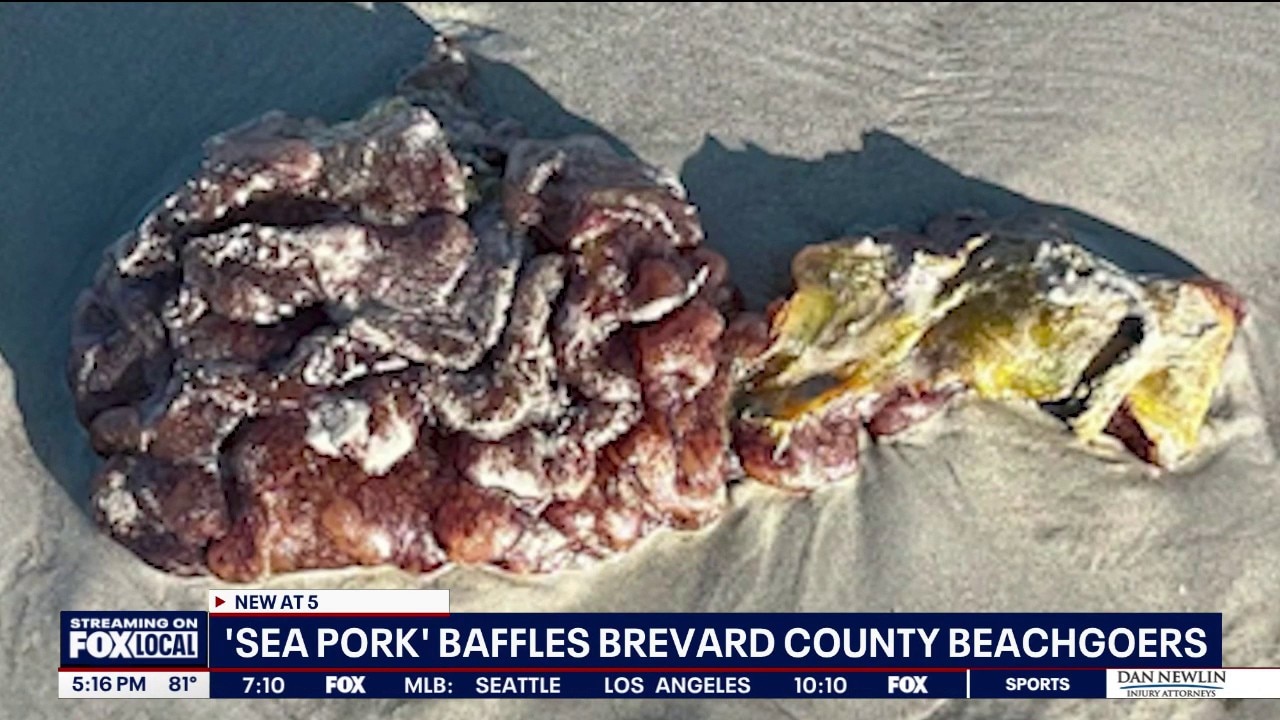
A strange blob that washed ashore at Cherie Down Park on Florida's Space Coast left beachgoers guessing before marine experts identified it as a colony of marine organisms known as "sea pork."
BREVARD COUNTY, Fla. - A strange, blob-like organism that recently washed ashore on Florida's Space Coast has drawn attention from beachgoers.
Marine experts identified it as a colony of marine organisms known as "sea pork," which they said plays an important role in the ocean ecosystem.
What is sea pork?
Local perspective:
The organism, commonly known as "sea pork", was spotted at Cherie Down Park by a beachgoer who initially described it as a "gross blob" about the size of two footballs. Photos shared online prompted speculation that it resembled everything from an apple fritter to a whale's brain.
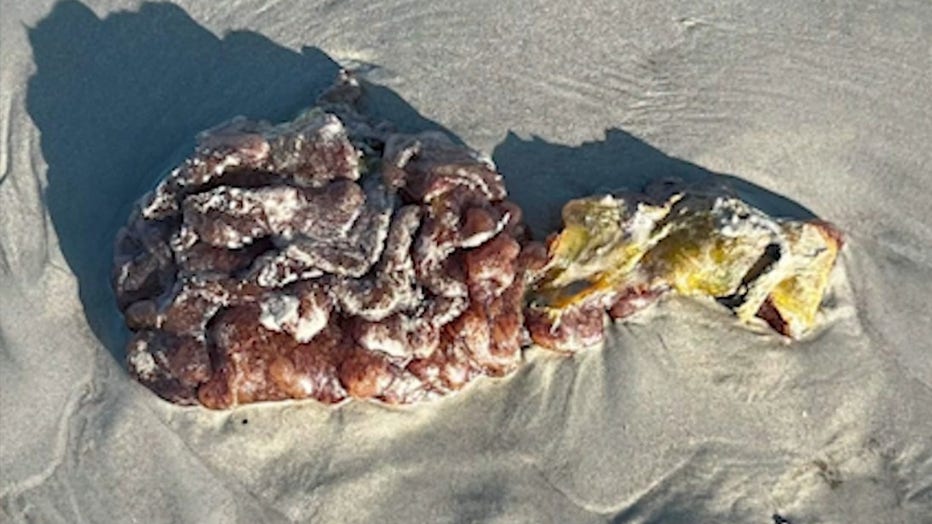
Marine experts identified the organism as a colony of tunicates, tiny filter-feeding animals that help clean seawater. A single mass can contain millions of individual organisms working together as one colony.
Experts said sea pork colonies attach to floating objects, grow as they reproduce and can reach large sizes before washing ashore. If stranded on the beach for more than a few minutes, the colony is unlikely to survive.
Although its appearance may be unusual, scientists say sea pork serves an important ecological role by filtering water and supporting healthy marine environments.
What they're saying:
Dave Clark, who walks the beach daily, discovered the unusual mass while filming a sunrise and shared photos on Facebook, where commenters speculated about its identity.
"Apple fritter, you know, a brain of a whale," Clark said.
Despite its appearance, the blob is not an animal organ but a large colony of tunicates, tiny filter-feeding marine animals that help clean seawater.
"It's just a very large colony of tunicates," said Dr. Todd Osborne, an associate professor of coastal biogeochemistry at the University of Florida.
Osborne said tunicates function much like oysters or clams, filtering water as they feed. A single colony can contain millions of organisms working together.
Clark estimated the sea pork was about the size of two footballs.
"It is crazy the stuff you see," Clark said. "It looked like a brain. It just had things moving in and out of it."
Osborne said the colony likely died if it remained stranded on the beach for more than a few minutes. He said sea pork colonies attach to floating objects, reproduce and can grow to impressive sizes.
"They come in every shape and size," Osborne said.
Clark said beachgoers should keep an eye out while walking the shoreline because unusual marine life can wash ashore at any time.
The Source: This story was written based on information shared by beachgoer Dave Clark and Dr. Todd Osborne, an associate professor of coastal biogeochemistry at the University of Florida.