

UPS plane crash update: Part that broke failed 4 times on other aircraft years ago

UPS plane crash: Pylon fractured on takeoff
We are now seeing a preliminary report after the UPS plane crash in Louisville, Kentucky from earlier this month. The initial investigation has found a detached engine led to the fire that ultimately caused the crash which claimed 14 lives. LiveNOW’s Mike Pache is speaking with experienced pilot, Captain Ross "Rusty" Aimer, the CEO of Aero Consulting Experts.
A part that failed at least four other times in the past is what investigators believe contributed to the deadly UPS plane crash in Kentucky last year.
The National Transportation Safety Board said on Wednesday that Boeing had warned plane owners in 2011 about the defective part.
Dig deeper:
Boeing had documented there were four previous failures of a part that helps secure the MD-11’s engines to the wings on three different planes, but at that point the plane manufacturer "determined it would not result in a safety of flight condition."
These planes were built by McDonnell Douglas which were later bought by Boeing.
UPS plane crash
The NTSB previously said investigators found cracks in some of the parts that held the engine to the wing.
Those cracks hadn’t been caught in regular maintenance done on the plane, which raised questions about the adequacy of the maintenance schedule.
The last time those engine mount parts were examined closely was in October 2021, and the plane wasn’t due for another detailed inspection for roughly 7,000 more takeoffs and landings.
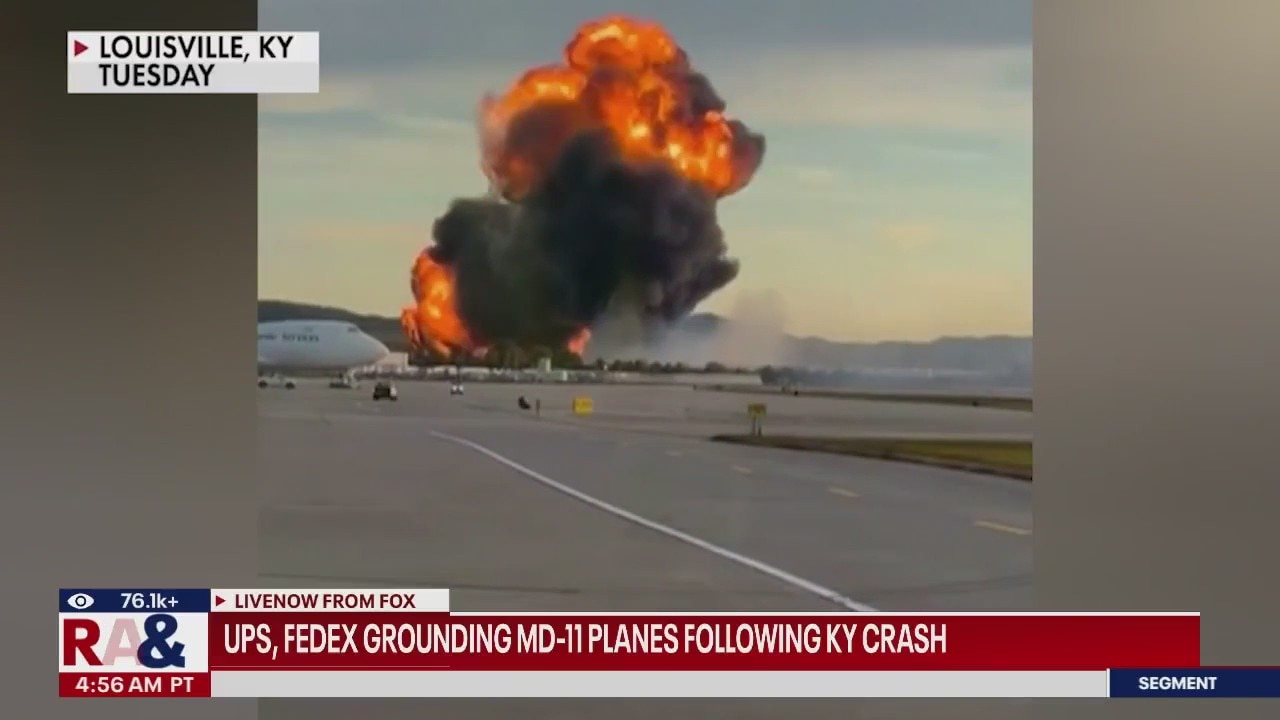
UPS, FedEx grounding MD-11 planes after KY crash
UPS and FedEx said they are grounding their fleets of McDonnell Douglas MD-11 planes "out of an abundance of caution" following a deadly crash at the UPS global aviation hub in Kentucky.
Previous crashes
The backstory:
The UPS plane crash is reminiscent of a 1979 incident in Chicago when the left engine flew off an American Airlines DC-10 during takeoff, killing 273 people. The DC-10 was the predecessor of the MD-11.
That previous crash led to the worldwide grounding of 274 DC-10s.
The aircraft was allowed to return to the skies because the NTSB determined that maintenance workers damaged the plane that crashed while improperly using a forklift to reattach the engine.
That meant the crash wasn’t caused by a fatal design flaw even though there had already been a number of accidents involving DC-10s.
But former FAA and NTSB crash investigator Jeff Guzzetti said that a service bulletin McDonnell Douglas issued in 1980 did identify failures of the spherical bearing race as a "safety of flight condition" so it's surprising that Boeing didn't call it that in 2011. He said that American had removed the engine of that plane so it could inspect that bearing.
What they're saying:
"I just think it raises questions regarding the adequacy of the severity of the 2011 service letter, and it also raises questions about how UPS incorporated that information and acted upon it," Guzzetti said.
Boeing’s past repairs may have fallen short
Big picture view:
The service bulletin that Boeing issued didn't require plane owners to make repairs like an FAA airworthiness directive would, and the agency didn't issue such a directive.
Former federal crash investigator Alan Diehl said the notice from Boeing recommended replacing the bearings with a redesigned part that was less likely to fail, but it still allowed operators to replace defective bearings with another older bearing that had demonstrated it was prone to failing.
"As the investigation continues, the NTSB will have to address whether this service bulletin was an adequate solution to a known problem which could have had catastrophic results," Diehl said. "The UPS crash highlights the need for increased maintenance measures on older airframes."
NTSB didn't say whether there had been additional documented failures of the spherical bearing race since 2011. Investigators found that part broken into two pieces after the UPS crash, and the lugs that held that part were cracked.
Investigation still ongoing
Though it seems investigators are focusing on this one part as contributing to the fatal UPS plane crash, it did not state in its report on Wednesday what caused the aircraft’s engine to fly off.
Officials said they were limited on what they could say since the investigation is ongoing.
The Source: Information for this article was taken from The Associated Press and previous reporting by FOX Local.