

Pot makes older people smarter but impairs younger users, scientists say
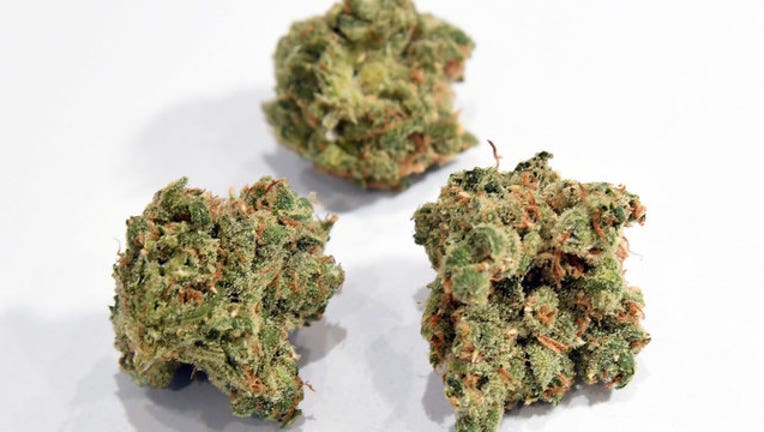
Cannabis is displayed at Essence Vegas Cannabis Dispensary before the midnight start of recreational marijuana sales on June 30, 2017 in Las Vegas, Nevada. (Photo by Ethan Miller/Getty Images)
(FOX 35 ORLANDO) - When you think of the stereotypical pot smoker, most people envision someone young, slow and confused. So it may surprise you to find out that scientists say that marijuana actually has the opposite effect on older users.
According to new research published in Nature Medicine, instead of impairing memory and learning abilities, pot appeared to improve the cognitive performance of older mice. On the flip side, pot appeared to decrease the performance of younger mice.
Researchers reportedly gave low does of THC, the active ingredient in marijuana, to young, mature, and aged mice.
The research showed that the younger mice performed worse when it came to memory and learning.
"For example, after receiving THC, young mice took longer to learn where a safe platform was hidden in a water maze, and they had a harder time recognizing another mouse to which they had previously been exposed," ScientificAmerican.com reported.
The mature and aged mice were tested first without the drug and performed worse than the younger mice. However, when given the dose of THC, the performances of the older mice improved to the level of younger mice before they were given the drug.
"The effects were very robust, very profound," said lead researchers Andreas Zimmer of the University of Bonn in Germany.
While many experts praised the findings, they cautioned against concluding that the same results can be said for humans.
"This well-designed set of experiments shows that chronic THC pretreatment appears to restore a significant level of diminished cognitive performance in older mice, while corroborating the opposite effect among young mice," wrote Susan Weiss, director of the Division of Extramural Research at the National Institute on Drug Abuse wrote in an email to ScientificAmerican.com. "While it would be tempting to presume the relevance of these findings [extends] to aging humans ... further research will be critically needed."
You can read more about the study HERE.