

Lake Eola swans: 19 have died over span of weeks; all tested positive for Avian flu: City

Dead Lake Eola swans tested positive for bird flu
Over the span of nearly three weeks, 19 swans and 2 wild birds have been found dead at Lake Eola Park in downtown Orlando. The birds have tested positive for Avian influenza, the City of Orlando said in a news release on Monday afternoon.
ORANGE COUNTY, Fla. - Over the span of nearly three weeks, 19 swans and 2 wild birds have been found dead at Lake Eola Park in downtown Orlando. The birds have tested positive for Avian influenza, the City of Orlando said in a news release on Monday afternoon.
That is a significant jump in reported swan deaths since last week. Shortly after the Christmas holiday, city officials confirmed that a dozen swans had died. That number was then reduced to 9 after two of the deaths were attributed to wildlife, not swans. Now the death toll has risen to 21.
What they're saying:
"The city is taking all necessary precautions as recommended by Florida Fish and Wildlife Conservation Commission (FWC), as well as local veterinarians, to keep our community safe and limit the spread of Avian Influenza," the City of Orlando said in a statement.
What is the city doing?
In a statement, the City of Orlando said it had:
- Proactively disinfected multiple surfaces throughout the park and would continue to do so.
- Placed signage throughout the park about avian flu.
- Removed bird food from various feeder stands
- Reaching out directly to neighborhoods and businesses near Lake Eola
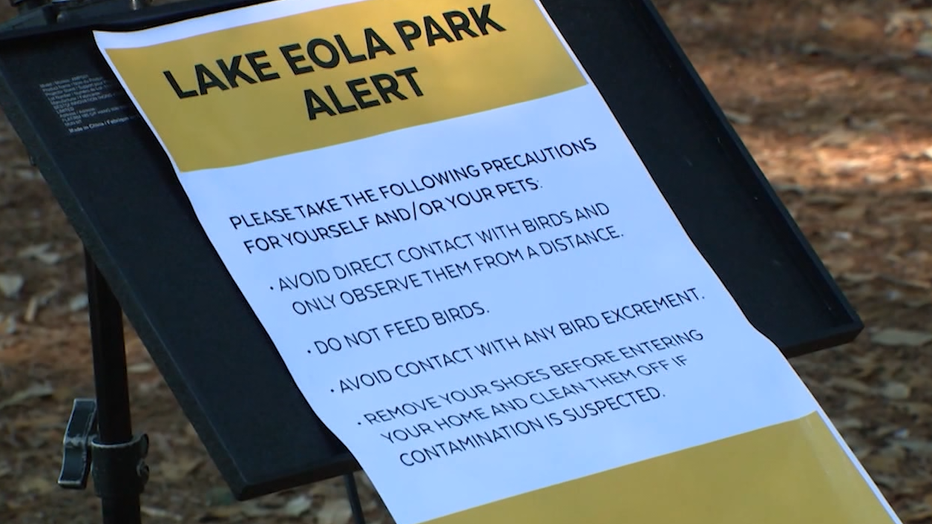
"The city will continue to follow the recommendations of FWC. Based on the size of the park and the bird population, they recommend allowing the Avian Influenza to run its course as some birds may build immunity and estimate a month of dissipation of infections. The city will continue to actively track, monitor and report any new infections to FWC and remain vigilant in our efforts related to disinfecting the park," the city said.
What is Avian influenza?
According to the CDC, Avian flu is a disease caused by avian influenza A viruses. It usually spreads between birds and is rarely transmitted to people or people to people.
There are various subtypes of avian flu, such as H5, H6, H7, H9, and H10. The CDC said the H5 variant is spreading worldwide amongst birds and has caused sporadic outbreaks in U.S. poultry and dairy cows.
How does it spread?
It is often spread between birds and other animals via mucous, saliva, or poop, the CDC said.
Can it spread to humans?
Yes, but it is considered to be rare.
"People rarely get bird flu, but when they do, it's most often through direct unprotected contact (not wearing recommended personal protective equipment, PPE) with infected birds or other infected animals," the CDC said.
The CDC said the overall risk for humans is low, though some people have tested positive for the H5 variant.
"Human illness from bird flu has ranged from mild symptoms to severe illness, resulting in death. However, most human cases of H5 bird flu in the United States have been mild, to date. No person-to-person spread has been identified in the United States, but limited person-to-person spread has been reported in the past in other countries," reads the CDC's website.
Signs and symptoms of Avian influenza?
Mild symptoms: eye redness and irritation, mild fever, cough, sore throat, runny or stuffy nose, muscle or body aches, headaches, fatigue
Moderate or severe symptoms: high fever, shortness of breath, altered consciousness, seizures
Ways to avoid bird flu exposure
According to the CDC
- Avoid sources of exposure, such as direct contact with sick or dead birds, poultry, or other animals. If you need to interact, wear PPE.
- Avoid touching animal litter or bedding of animals suspected of bird flu or animals that have tested positive for bird flu.
The Source: The information is from the City of Orlando and the U.S. Centers for Disease Control and Prevention