

Latest shark bite comes as Florida’s Volusia County leads state in unprovoked attacks, data shows
VOLUSIA COUNTY, Fla. - A recent victim of an unprovoked shark attack in Central Florida is recovering from his injuries after being bitten on his foot in waist-deep water.
Jacorey High was swimming with his fiancée in Daytona Beach Shores at the Dunlawton Beach Approach on July 25, when he felt something sharp on his leg, he told FOX 5 Atlanta. But his main focus was getting his wife-to-be to safety. The shark was described as being approximately 4 feet long, Volusia County Beach Safety reported. High said he pushed the shark further in the water.
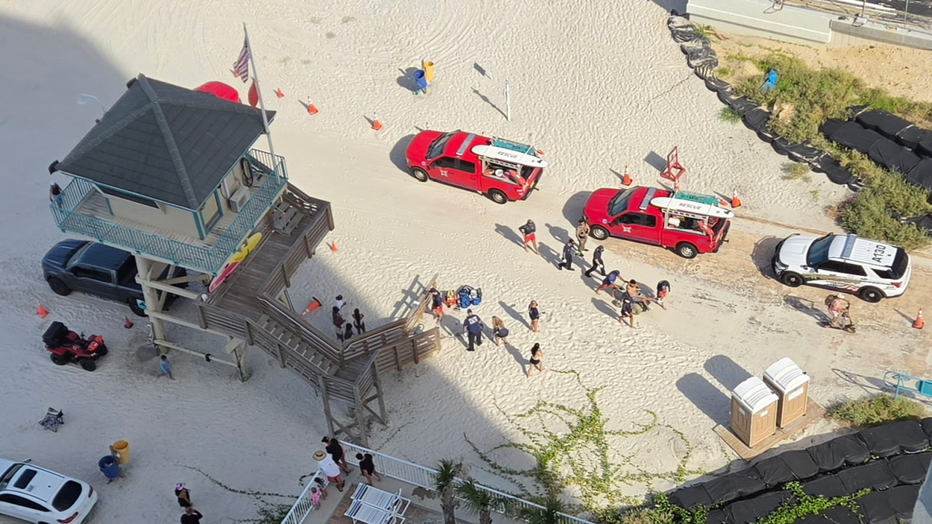
High called the situation shocking and scary.
"When the waves came, that's when it got to waist-deep," High told FOX 5. "That's when it bit my leg and I had to push my pregnant fiancée toward the shore to get her out of the way."
How prevalent are shark attacks in Florida?
The Florida Museum of Natural History reported that the total number of unprovoked shark bites worldwide remains extremely low, according to 2025 data. One reason is there are fewer sharks than there used to be, the museum reported in February 2026.
The 65 unprovoked shark bites worldwide in 2025 are less than the most recent 10-year average of 72, the Florida Museum said. FOX 35 has reached out to receive Florida data for the past 10 years from the International Shark Attack File database.
However, the U.S. has the highest recorded number of unprovoked shark bites worldwide, with Florida having more than any state in 2025 – 11 shark bites last year, the Florida Museum said. Second is California, followed by Hawaii, museum data shows.
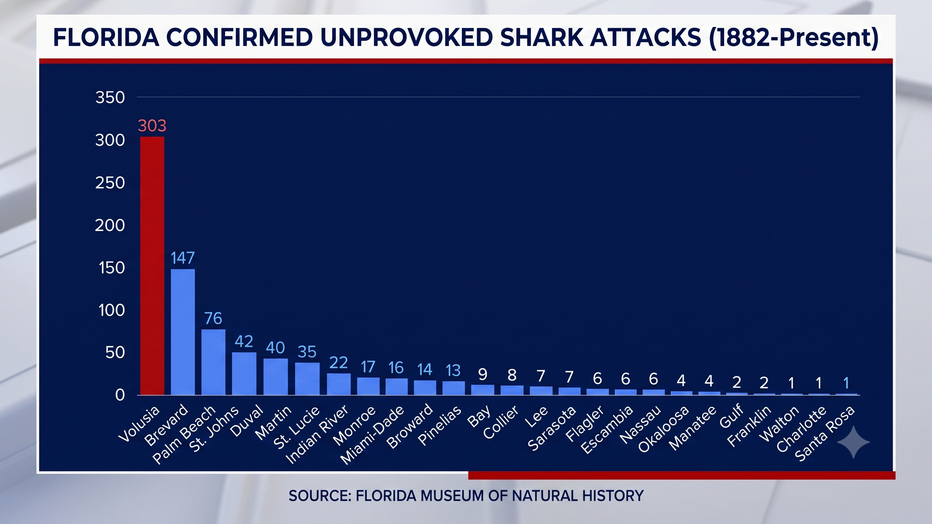
County-by-county data shows Volusia County has the highest number of unprovoked shark attacks in Florida. (Source: Florida Museum of Natural History.) This graphic was created using AI from museum data.
Highest number of unprovoked shark bites in Florida
Historical data dating back to 1882 indicates that Volusia County has recorded the highest number of unprovoked shark bites in Florida.
Unprovoked shark bites are defined as incidents in which a bite on a live human occurs in the shark’s natural habitat with no human provocation of the shark, the museum said on its website.
In 2021, Volusia County reported 17 non-fatal bites – the highest annual total between 2012 and 2021. FOX 35 has reached out to the Florida Museum for more recent Volusia County annual data.
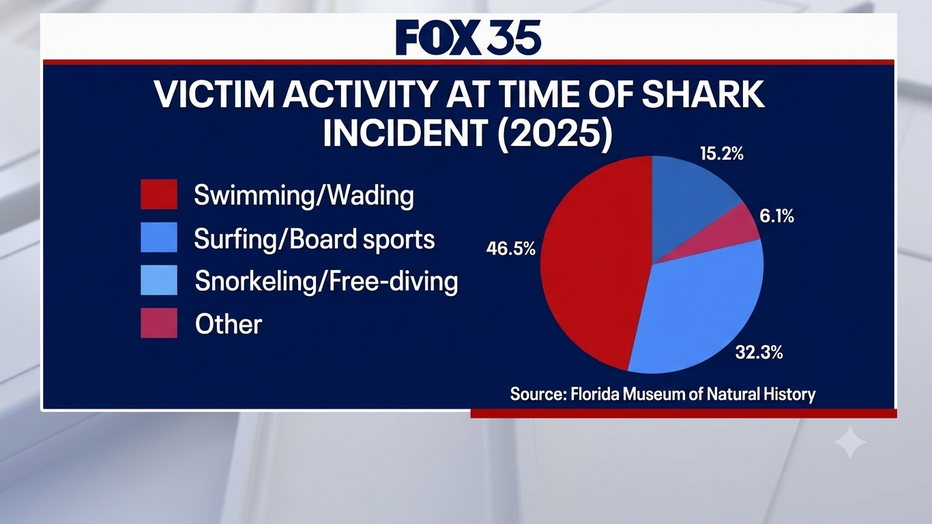
The Florida Museum 2025 data shows a higher percentage of people swimming or wading were most associated the shark bite incidents. (Source: Florida Museum of Natural History). This image was partly created with the use of AI.
What were people doing during the majority of shark bite incidents?
2025 data from the Florida Museum shows that people swimming or wading were most associated with shark bite incidents. Surfers and those participating in sports while bitten by a shark account for 32% of incidents.
What attracts sharks to the shoreline?
Humans are not a shark’s "normal prey," but by splashing, wearing shiny jewelry or contrasting colored swimsuits, they could be mistaken as such, the Florida Museum of Natural History reported.
"We suspect that, upon biting, the shark quickly realizes that the human is a foreign object, or that it is too large, and immediately releases the victim and does not return," the Florida Museum reported. This is what researchers refer to as a "hit-and-run," which is the most common type of unprovoked shark attack that happens when the animal quickly bites a human and immediately swims away.
Worldwide, the museum said, about 70 to 100 shark attacks annually result in about five deaths.
Reduce the risk of unprovoked shark bites
Though the Florida Museum of Natural History reported the relative risk of a shark bite is very small, the museum provided a list of tips to stay safe in the water.
- Swim with a buddy
- Stay close to shore
- Don't swim at dawn or dusk
- Don't swim around schools of fish or where people are fishing
- Avoid wearing jewelry
- Avoid excessive splashing
Visit the Florida Museum of Natural History's website for more information.
How to report shark attacks
What you can do:
The Florida Museum asks anyone who witnesses a shark attack to fill out a questionnaire independently. To help researchers gather as much information as possible, witnesses are also encouraged to provide:
- Supporting documentation: photographs, police reports, or medical and autopsy records.
- Location and weather details: Environmental data such as water temperature, tide, or weather conditions.
According to the museum, these details are considered confidential, and will be used to support ongoing medical studies.
The Source: Information in this story was gathered from Volusia County Beach Safety, FOX 5 Atlanta and data from the Florida Museum of Natural History's International Shark Attack File.