

Florida heat wave: Heat stroke, heat exhaustion signs, symptoms
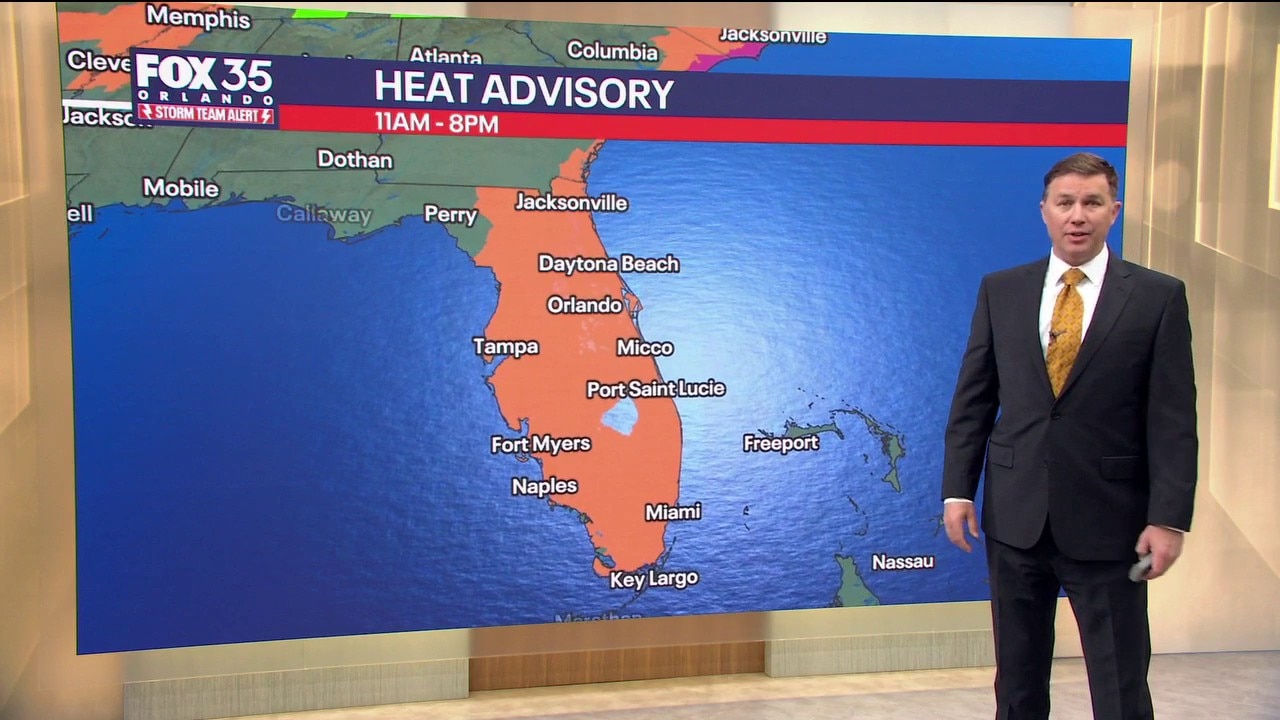
Orlando AM Weather Forecast: Excessive heat continues Friday
The unusually hot weather continues across Central Florida with heat advisories issued for the area. FOX 35 Storm Team meteorologist Brooks Garner takes a look at the forecast.
ORLANDO, Fla. - Heat alerts and advisories have been issued for nearly all of Florida as extremely hot and humid weather sticks around for the next several days.
Heat forecast: Daily high temperature, heat index
Daily highs are expected to be in the 90s and 100s, while the heat index – the feels like temperatures – is expected to be near 110 degrees.
Heat stroke
Heat stroke is a serious and potentially deadly heat-related emergency. It happens when the body overheats and is no longer able to cool itself down. If left untreated, it can damage viral organs, like the brain, heart, kidneys, leading to permanent disability or death, according to the U.S. Centers for Disease Control and Prevention (CDC) and Mayo Clinic.
Heatstroke most commonly happens during the summer months, as people are exposed to a hot environment, such as being in a hot, humid environment for a long time, or when performing intense physical activity during hot weather, such as working outside or exercising.
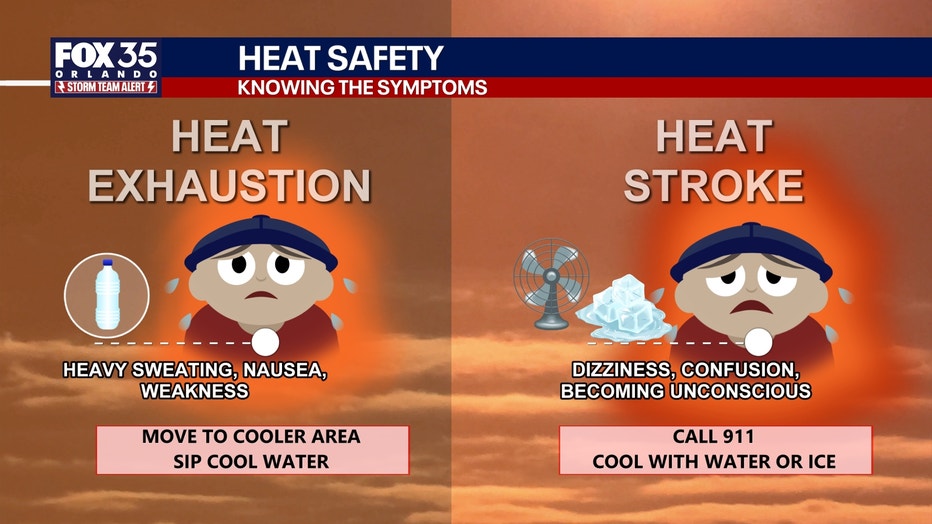
Signs and symptoms
- Core body temperature of 104 degrees or higher
- Quick change in mental state or behavior, like confusion, agitation, slurred speech, delirium, or seizures
- Nausea and vomiting
- Flushed or red skin
- Rapid breathing and rapid heart rate
- Headache
What to do
- This is a medical emergency. Call 911.
- Find shade or go indoors right away
- Cool the person down any way you can: cool tub of water, cool shower, garden hose, misting fan with cold water
- Place ice packs or cold towels on the person's head, neck, armpits, and groin
Heat exhaustion
Heat exhaustion is when the body loses a lot of water and salt, primarily through excessive sweating.
Signs and symptoms
- Skin is cool, moist with goose bumps in the heat
- Heavy sweating
- Feeling faint or dizzied or exhausted
- Weak, rapid pulse; low blood pressure when standing
- Nausea and/or headache
What to do
- Stop and rest
- Go indoors and cool down
- Drink cold water and sports drinks (electrolytes)
- If symptoms do not improve or get worse, call 911 and seek medical attention
How to avoid heat stroke, heat exhaustion
- Wear light and light-colored clothing; avoid heavy clothing
- Drink plenty of water; avoid becoming dehydrated and avoid alcohol
- Wear sunscreen
- Go inside during the hottest parts of the day
- Never leave anyone – kids, adults, elderly – or pets inside a parked car
The Source: The information used is from the U.S. Centers for Disease Control and Prevention (CDC) and Mayo Clinic websites on heat-related illnesses, including heat cramps, heat exhaustion, and heat stroke.