

Here's why your cup of coffee may get expensive soon

Scientists say coffee might be good for your bones
A recent study shows there may be a positive link between coffee consumption and bone health.
President Donald Trump’s threat to boost import taxes on Brazilian goods could drive up the cost of breakfast items in the United States.
This decision would further impact consumers who have already been hit by rising costs fueled by ongoing inflation and a drought in Brazil.
Tariffs against Brazil could impact coffee costs
On July 9, Trump threatened a 50% tariff against Brazil, one of the U.S.’s largest suppliers of coffee beans, starting on Aug.1.
What they're saying:
If implemented, David Ortega, a food economist and professor at Michigan State University, said the tariffs will lead to higher coffee prices for U.S. consumers.
"Brazil is the world’s largest producer of coffee and the leading exporter of coffee to the U.S. A tariff of this magnitude would effectively function as a tax on a key input in the supply chain, raising costs for importers, roasters, and ultimately consumers," Ortega said.
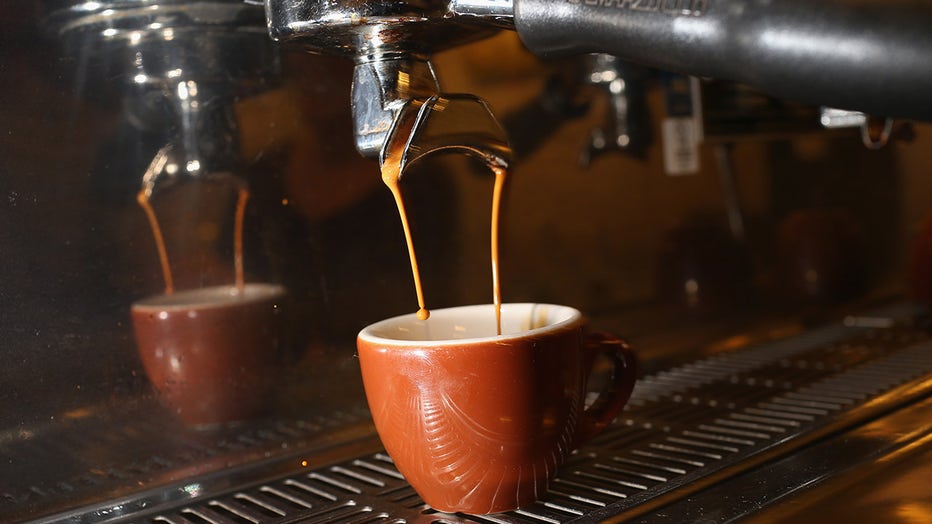
An espresso coffee is seen at Eternity Coffee Roasters during National Coffee Day. (Credit: Joe Raedle/Getty Images)
If the tariff takes effect, Ortega said Americans could see noticeable price increases on store shelves within a few weeks to months.
Coffee prices continue to rise
The backstory:
Coffee prices have been rising in recent months, primarily due to drought and adverse weather conditions affecting production in key coffee-growing regions, including Brazil and Vietnam.
"If the 50% tariff is enacted, consumers should brace for additional price hikes," Ortega continued. "The impact will be most apparent at the grocery store, where prices are more directly tied to the cost of coffee beans. While large coffee chains may be somewhat insulated due to long-term contracts and diversified sourcing, smaller roasters and retailers could feel the effects more acutely. With prices already elevated, the tariff would only add to the pressure."
RELATED:
According to the Bureau of Labor Statistics, the average price of a pound of ground roast coffee cost $8.13 in June, up from $7.01 in January and $6.25 a year prior.
In 2023, about 80% of U.S. unroasted coffee imports came from Latin America, principally from Brazil (35%) and Colombia (27%), the U.S. Department of Agriculture said.
Other breakfast staples could be affected
Dig deeper:
Trump’s move this time is overtly political, targeting the Brazilian Supreme Court trial of former president Jair Bolsonaro, an ally of his who was charged for his alleged role in trying to overturn his 2022 election loss. The court’s prosecution of U.S.-based social media companies failing to comply with local laws was also mentioned by Trump in a public letter as a reason to hike Brazil’s trade tariffs.
Earlier this month, Trump also said he would place a 25% tax on goods imported from South Korea and Japan. Those tariffs would also begin on Aug. 1.
RELATED: Trump announces 25% tariffs on Japan and South Korea
And, the 50% tariff on Brazil would not only affect coffee. Other breakfast staples, including orange juice, could also be susceptible to price increases.
"It’s unclear how this will ultimately play out, but the potential for volatility is very real," Ortega said, adding, ""For something as embedded in our daily routines as coffee, even modest price increases are noticeable. And there’s really no good substitute; coffee remains the primary source of caffeine for most Americans."
According to the National Coffee Association, an estimated two-thirds of American adults drink coffee each day, and more than 70% of American adults drink coffee each week.
The Source: The information for this story was provided by the Associated Press, USA Today, the National Coffee Association, the U.S. Bureau of Labor Statistics, the U.S. Department of Agriculture and food economist David Ortega.