

‘Strawberry Moon’: Here’s when to look up to see June’s full moon

Micromoon vs. Supermoon: Stunning video compares the two
Filmed from the mountains of Colorado, a videographer shows the difference between micromoon and supermoon events.
The Strawberry Moon, named for the traditional strawberry harvests in parts of North America in June, will turn full soon.
According to meteorologists, June's full moon will be the first of astronomical summer.
When to see the strawberry full moon
Big picture view:
June’s full moon will rise above the horizon on Monday, June 29, beginning around sunset at 7:56 p.m. ET.
As with every full moon, the most beautiful views come at moonrise, when the moon appears low on the southeastern horizon during dusk.
RELATED: June skywatching guide: From planet conjunctions to new moons, here is what to look up for
To see the full moon at its best, find an elevated location, an open field or a coastline with a clear view of the southeastern horizon.
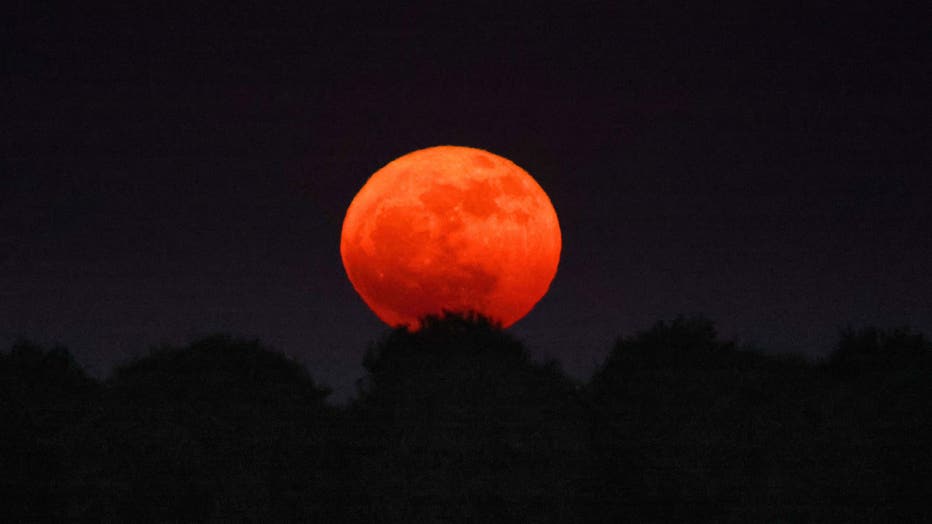
This picture taken from the southern Kibbutz of Afar Aza shows the full moon, known as the 'Strawberry Moon' rising on June 11, 2025. (Photo by JACK GUEZ/AFP via Getty Images)
Will ‘Strawberry Moon’ be pink?
Dig deeper:
While strawberries certainly are a reddish-pink color and are roundish, the origin of the name "Strawberry Moon" has nothing to do with the moon’s hue or appearance, despite its name, according to the Old Farmer’s Almanac.
READ MORE: NASA finds ‘puffiest’ planets so far: ‘Comparable to cotton candy’
But a moon usually does appear reddish when it’s close to the horizon because the light rays must pass through the densest layers of the atmosphere.
"When it spends more of that time in that lower portion of the sky, you're looking through more of Earth's atmosphere, which makes these moons generally look redder and more golden. And also, they appear bigger," Dr. Tyler Richey-Yowell, a postdoctoral fellow at Lowell Observatory in Arizona told FOX Weather. "The atmosphere actually bends some of the light. And so while there's not really any astronomical significance to moons in the summer, we do actually get cooler, bigger, prettier moons in the summer."
When is the next full moon?
What's next:
According to the the Old Farmer’s Almanac, the "Buck Moon" will appear in the sky on July 29.
It’s named the "Buck Moon," because the antlers of male deer (bucks) are in full-growth mode at this time. Bucks shed and regrow their antlers each year, producing a larger and more impressive set as the years go by.
The Source: This story was reported from Los Angeles. The Old Farmer’s Almanac and FOX Weather contributed.