

Recalled ByHeart baby formula still on store shelves, officials find

FDA to increase testing on baby formula
The U.S. Food and Drug Administration will increase its testing on baby formulas for contaminates including heavy metals.
ByHeart infant formula, the brand recalled over potentially deadly cases of botulism in babies who drank it, is still being sold on some store shelves, state officials said.
What we know:
At least 31 babies in 15 states who drank ByHeart formula have been hospitalized and treated for infantile botulism since August, federal health officials said Wednesday. They range in age from about 2 weeks to about 6 months, with the most recent case reported on Nov. 13.
No deaths have been reported.
READ MORE: Baby formula recall linked to infant botulism outbreak is expanding: What to know
Tests by an independent food safety laboratory found Clostridium botulinum, a bacterium that produces toxins that can lead to potentially life threatening illness in babies younger than 1, the company said on its website.
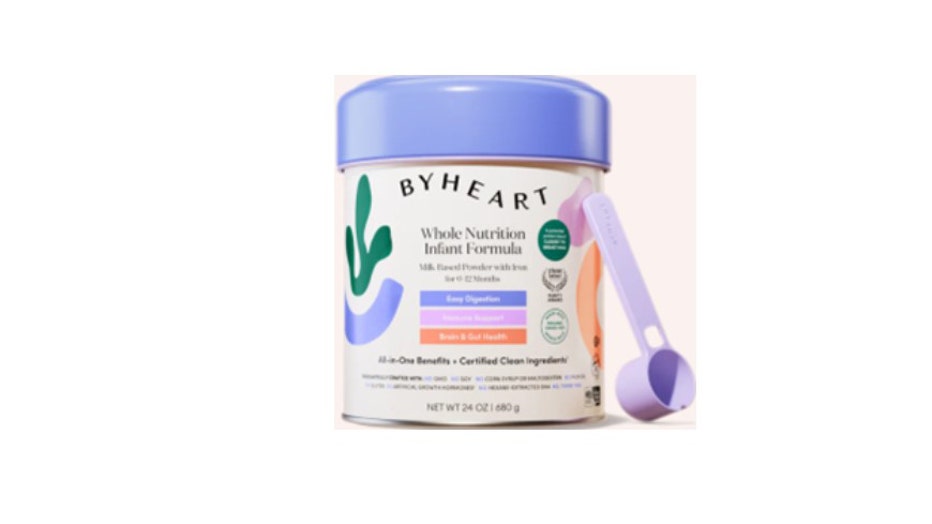
ByHeart has recalled some batches of its powdered infant formula related to an infant botulism outbreak. (Photo courtesy of the Food and Drug Administration)
ByHeart reported late Wednesday that laboratory tests confirmed some samples of formula were contaminated with the type of bacteria.
ByHeart officials said they notified the U.S. Food and Drug Administration of the findings but did not specify how many samples were tested or how many were positive.
What we don't know:
The FDA did not immediately respond to questions about the findings.
What they're saying:
"We are working to investigate the facts, conduct ongoing testing to identify the source, and ensure this does not happen to families again," ByHeart said on its website.
ByHeart still for sale
Dig deeper:
Investigators in at least three states found ByHeart formula still for sale even after the New York-based company recalled all products nationwide, officials told The Associated Press.
Local perspective:
In Oregon, nine of more than 150 stores checked still had the formula on shelves this week, a state agriculture official said. In Minnesota, investigators conducted 119 checks between Nov. 13 and Nov. 17 and removed recalled products from sale at four sites, an agriculture department official said. An Arizona health official also said they found the product available.
What you can do:
Businesses and consumers should remain alert, Minnesota officials said in a statement. "No affected product should be sold or consumed," they wrote.
ByHeart had been manufacturing about 200,000 cans of formula per month. It was sold online or at retail stores such as Target and Walmart. A Walmart spokesperson said the company swiftly issued a restriction that prevented sale of the formula, removed the product from stores and notified consumers who had bought it. Customers can visit any store for a refund of the formula, which sold for about $42 per can.
Federal and state health officials are advising consumers to stop using the product — including formula in cans and any single-serve sticks. They also suggest marking it "DO NOT USE" and keeping it for at least a month in case a baby develops symptoms. In that case, the formula would need to be tested.
The California health department operates the Infant Botulism Treatment and Prevention Program, which tracks cases and distributes treatment for the disease. Officials there have launched a public hotline at 833-398-2022, which is staffed with health officials from 7 a.m. to 11 p.m. Pacific Standard Time.
What is infant botulism?
The backstory:
Infant botulism, which can cause paralysis and death, is caused by a type of bacteria that forms spores that germinate in a baby's gut and produce a toxin.
Symptoms can take up to 30 days to develop and include constipation, poor feeding, a weak cry, drooping eyelids or a flat facial expression. Babies can develop weakness in their limbs and head and may feel "floppy." They can have trouble swallowing or breathing.
The Source: This report includes information from The Associated Press and previous FOX TV Station reporting.