

New Florida driver's license exam rules: English requirement now in effect
English-only driver's license tests
Florida driver's license tests are now only administered in English. FOX 13's Kellie Cowan breaks down the new rule and the reaction it is receiving.
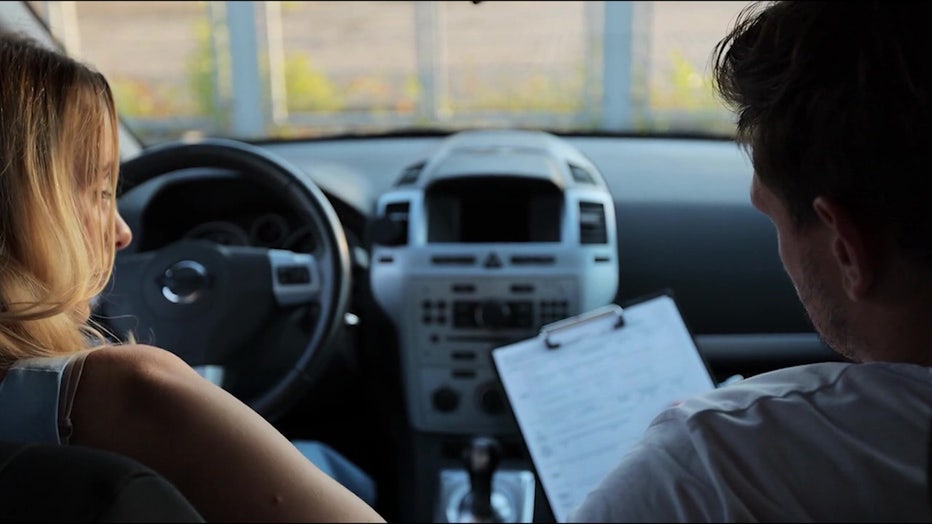
TAMPA - Beginning today, the FLHSMV has transitioned to an English-only testing standard for all driver license classifications. This includes the knowledge exam and practical driving test conducted with an instructor.
Previously, knowledge exams for non-commercial licenses were available in multiple languages, while commercial exams were offered in both English and Spanish. Under the updated policy, any printed exams in languages other than English have been removed from all service centers and third-party testing providers.
The backstory:
For nearly two decades, Florida provided driver's license testing in various languages to accommodate its diverse population. According to government census data from 2020 to 2024, nearly one-third of Florida's population spoke a language other than English at home. In Hillsborough County, approximately 13,517 skills tests—or about 37 percent—were administered in non-English languages in 2025.
The shift follows recent federal emphasis on English proficiency for commercial drivers and a state-level push for stricter licensing requirements following high-profile fatal traffic incidents.
PREVIOUS: Semi-truck driver arrested after illegal U-turn kills 3 people on Florida Turnpike: FLHSMV
The other side:
Advocates for the change, including Governor Ron DeSantis and state legislators, frame the policy as a necessary safety measure. They argue that because Florida’s road signs and emergency electronic alerts are primarily in English, proficiency in the language is essential for safe navigation. Critics push back on that logic, pointing out that U.S. road signs employ universally recognized symbols and colors—such as the red octagon for "Stop"—which are understood globally, regardless of the driver's native language.
They also point out the change doesn't stop non-english speakers, whether tourists, immigrants, or citizens, from driving on Florida roads.
What they're saying:
Congressman Randy Fine (R): "We’ve seen accidents where people couldn’t read the signs because they don’t speak English. Our road signs are in English. So, I think it’s essential to be able to know and understand English to be able to drive."
Alexis Brady (Florida Driver): "When I went to France [signs] were in a different language, but I could understand them. I think they just have to be able to do the same. I think people will start driving without a license because they still need to get to where they are going, but they are going to have to do it somehow and it’s going to turn out to be illegal."
Victoria (Jacksonville Driver): "Who doesn’t know what stop is? Who doesn’t know what red light, green light, yellow light is? It’s something that’s simple. You shouldn’t have to stop someone from taking a test in either language."
Insurance experts are raising alarms that these new barriers could worsen Florida’s already high uninsured motorist problem. Individuals unable to pass the English-only exam may choose to drive unlicensed and uninsured. Florida already faces some of the highest insurance premiums in the country, a trend largely driven by the high volume of uninsured drivers on the road. More than one in five drivers in Florida are uninsured, according to the Insurance Information Institute.
The Source: Information in this article was sourced from official press releases by the Florida Department of Highway Safety and Motor Vehicles (FLHSMV), policy notifications from the Hillsborough County Tax Collector’s Office, and statistical data provided by the Insurance Information Institute. Supplemental reporting on community feedback and legislative comments was gathered from local Fox affiliates in Miami, Jacksonville, and Orlando.