

More Americans now use marijuana daily than tobacco, survey shows
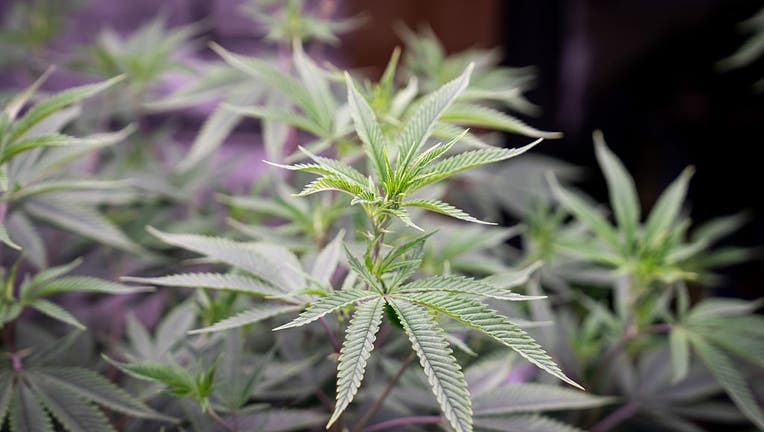
Cannabis plants in a grow room at a medical marijuana dispensary in Bangkok, Thailand, on June 26, 2026. (Photo by Matt Hunt/NurPhoto via Getty Images)
For the first time, more Americans are using marijuana on a daily or near-daily basis than alcohol or tobacco, according to newly released federal survey data.
By the numbers:
Smart Approaches to Marijuana (SAM), a nonprofit advocacy organization that opposes marijuana legalization, says newly released federal data show that, for the first time, more Americans use marijuana every day than smoke cigarettes daily.
Citing the 2025 National Survey on Drug Use and Health, the group said an estimated 21.4 million people reported daily or near-daily marijuana use, compared with 19.9 million daily cigarette smokers.
RELATED: One cannabis mistake at airport could bring 10 years in prison and $15,000 fine
SAM also pointed to the survey's findings on substance use disorders, saying nearly 19.3 million Americans met the clinical criteria for marijuana use disorder in 2025, making it the second most common substance use disorder behind alcohol, which affected 25.7 million people.
According to the organization, marijuana use disorder has increased by about 2.6 million people since 2021, while the number of people with alcohol use disorder has declined by roughly 4 million over the same period.
What they're saying:
"Marijuana is on track to become America’s number one addiction, and Washington is looking the other way," said Dr. Kevin Sabet, President and CEO of Smart Approaches to Marijuana (SAM) said in a news release. "The addiction industry has engineered a product that out-addicts the cigarette – the deadliest consumer product in American history. More people now use marijuana every single day than smoke cigarettes every day, one in three users is hooked, and a generation of young people is being enrolled in a daily habit before their brains are finished developing. This is not the harmless plant the industry sold us. It is Big Tobacco 2.0, and the trend line points in one direction."
RELATED: TSA updates medical marijuana travel guidance for air passengers
Dig deeper:
Other highlights from the survey include:
- More than half of Americans age 12 and older (56.0%, or 162.8 million people) used tobacco, nicotine vapes, alcohol or an illicit drug in the past month in 2025. Alcohol was the most commonly used substance (129.1 million), followed by illicit drugs (47.5 million), tobacco products (46.9 million) and nicotine vaping (29.3 million).
- Marijuana remained the most commonly used illicit drug in 2025, with 61.6 million people age 12 and older (21.2%) reporting use in the past year.
- Past-year marijuana use increased from 19.0% (53.2 million people) in 2021 to 21.2% (61.6 million) in 2025, with increases also seen among adults age 26 and older.
- Hallucinogen use rose to 3.1% (9.1 million people) in 2025, up from 2.7% (7.6 million) in 2021. Use also increased among adults age 26 and older.
- Prescription opioid misuse declined from 3.0% (8.5 million people) in 2021 to 2.4% (6.9 million) in 2025.
- About 768,000 people age 12 and older (0.3%) reported using illicitly made fentanyl in the past year, with no significant change from 2021 to 2025.
- An estimated 44.6 million Americans age 12 and older (15.3%) had a substance use disorder in 2025, including 25.7 million with alcohol use disorder, 26.0 million with drug use disorder and 7.1 million with both.
- The overall rate of substance use disorders fell from 16.7% (46.8 million people) in 2021 to 15.3% (44.6 million) in 2025.
- Alcohol use disorder declined from 10.6% (29.7 million people) in 2021 to 8.9% (25.7 million) in 2025.
- The rate of drug use disorder remained largely unchanged between 2021 and 2025.
The Source: The information in this story comes primarily from the 2025 National Survey on Drug Use and Health (NSDUH), released by the Substance Abuse and Mental Health Services Administration (SAMHSA), a federal agency within the U.S. Department of Health and Human Services. The story also cites a news release and analysis from Smart Approaches to Marijuana (SAM), a nonprofit organization that opposes marijuana legalization, including comments from its president and CEO, Dr. Kevin Sabet, interpreting the survey's findings. This story was reported from Los Angeles.