

Lake County Schools adds bus cameras to find stop-arm violators: How it works, potential fines
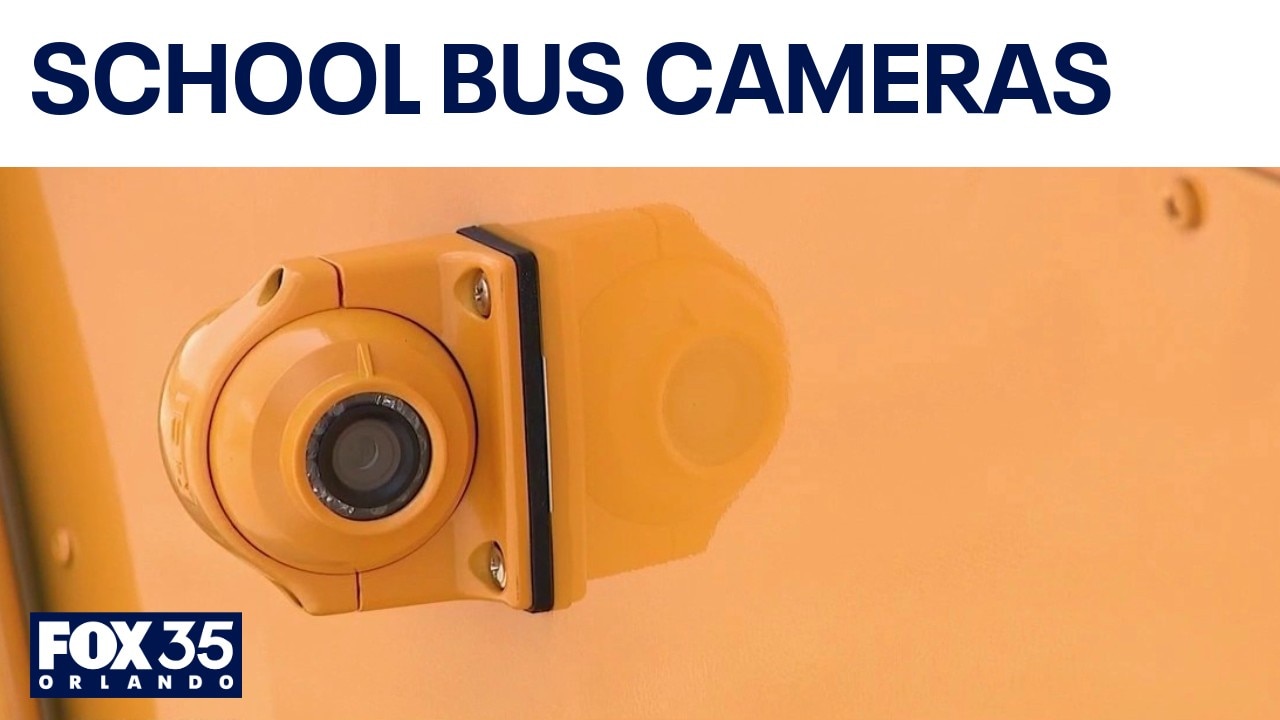
Lake County adding safety cameras to school buses
Lake County Schools is installing stop-arm enforcement cameras on its school buses ahead of the new school year in an effort to crack down on drivers who illegally pass stopped buses.
LAKE COUNTY, Fla. - Lake County Public Schools is adding several cameras to the outside of its school buses in an effort to catch drivers who ignore those red stop sign warnings, which could lead to hefty fines
It's part of the School Bus Stop Arm Safety Program, which was launched three years ago. .
School Bus Stop Arm Safety Program
By the numbers:
Participation in the program has rapidly expanded across the state:
Year 1 (2023-2024) 3 school districts participated: Hillsborough County Public Schools, Santa Rosa County District Schools, and Polk County Public Schools.
Year 2 (2024–2025): 5 districts participated: Hillsborough County Public Schools, Santa Rosa County District Schools, Polk County Public Schools, Miami-Dade Schools and Brevard Public Schools.
Year 3 (2025-2026): This year, Lake County Public Schools joins the five other districts.
According to the Florida Highway Safety and Motor Vehicles, more than 304,000 violators were caught – a 69% increase from the inaugural year.
How does the program work?
Drivers in Lake County will notice bumper stickers affixed to the back of every school bus, beginning on the first day of school.
The warning is clear: "CAMERA ENFORCED."
If you illegally pass a bus while the stop arm and lights are deployed, you will be caught on camera.
Here is how it works:
As the bus comes to a stop, the driver initiates the brakes and amber warning lights. As the stop arm and stop signs deploy, the amber warning lights turn red signaling to other vehicles, they must stop, said Scott Pfender, director of transportation for Lake County Schools.
If a driver passes a school bus while the stop arm and signs are deployed, cameras around the bus will automatically begin recording. The photos and videos, which would include the offender's license plate, are be reviewed by employees of Verra Mobility, the company behind the cameras, and local law enforcement, to determine if a citation will be issued.
Those citations would be issued to the registered owner of the vehicle.
When does it start?
The cameras will be live for the start of the school year. To give drivers time to adjust, enforcement will begin with a short leniency window:
- 30-Day Grace Period: Any driver caught by the stop-arm cameras during the first 30 days of the program will receive a written warning in the mail.
Here are the fines:
- Passing on outside: $200 fine.
- Passing on the inside (closest to the main door where students enter/exit): $400 fine.
Zero cost to district or taxpayers, official says
Despite the high-tech setup, Pfender said the automated camera program comes at no price tag for the school district or local taxpayers.
"We don't have the staff to sit and run a whole program, so our must-haves, even when we laid out our request for proposal, was hands-off, hands-free," Pfender said. "The vendor handles everything. There's no cost to the district. All the equipment is put on by the vendor at no charge... It's just another tool in our toolbox, and it doesn't cost us a nickel, so we're happy about that."
Hundreds of violations found every day: ‘It happens all the time’
For transportation officials, the urgency behind the technology stems from daily near-misses.
"I can show you video after video of students crossing in front of a bus and somebody running and hitting or almost hitting. It happens all the time," said Pfender.
Pfender noted school districts across Florida are required annually to submit a single-day audit to the state, counting every driver who illegally passes a stopped school bus.
Over Pfender's 14-year tenure with the district, Lake County has averaged between 200 and 300 violations during that single audit day. However, last school year, that number spiked to 375 violations in a single day, placing Lake County among the highest in the state for bus-passing infractions.
The Source: FOX 35's Hannah Mackenzie talked with Scott Pfender, director of transportation for Lake County Schools, about the new program, the cameras, the grace period, and the potential fines.