

How much media parents and kids actually consume at the dinner table
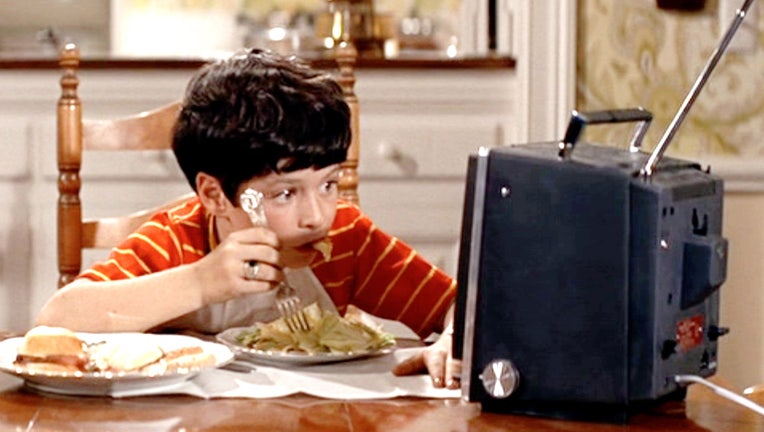
The April Fools, theatrical movie originally released May 28, 1969. Film directed by Stuart Rosenberg. Pictured, Gary Dubin (as Stanley Brubaker). Frame grab. (Photo by CBS via Getty Images)
New research claims to show that smartphones, television, video games, and other types of devices may be taking over dinnertime, and it is not leaving enough time for families to talk to each other.
A University of Arizona study, published by JAMA Pediatrics, looked into how often parents and children are distracted by media at the dinner table, and the most common group may not be the first one that comes to mind.
Why you should care:
The study’s authors cited previous research that showed consistent family meals can be key to children growing up eating better and improving their well-being. As such, they were concerned that, as devices got smaller and smaller, they were taking more and more attention during mealtime.
What they're saying:
They wrote in their conclusion that they hoped their research would "highlight the potential prevalence of communication interruptions caused by electronic devices that result in children receiving less attention and less parental guidance that is critical to their development."
By the numbers:
Researchers included 357 parents and 357 children in their study. For those who did read, play a game, listen to something, or watch videos, there were further subdivisions for the types of devices they used.
When all was said and done, more parents actually reported doing one of those things during dinner, as 77.6% of parents reported doing so themselves and 68.7% of children did so, as reported by the parents.
The older generation was particularly apt to grab their smartphones. That was followed by watching something on a large screen and watching on a small screen, respectively. Those two were also the top two ways their children consume media while consuming their meal.
The average age of the children in the study, however, was 6.6 years old, which may have accounted for why smartphone usage took the bottom two slots for their group.
What's next:
In addition to highlighting how much people are distracted at the table, the researchers felt the study could help going forward in the development of pediatric recommendations that surround the type of media families consume during mealtimes, especially if it is individualized usage or something they are engaged with together.
The Source: Information for this article was taken from JAMA Pediatrics. This story was reported from Orlando.