

How did the Edmund Fitzgerald sink? It's complicated.
Edmund Fitzgerald Cause
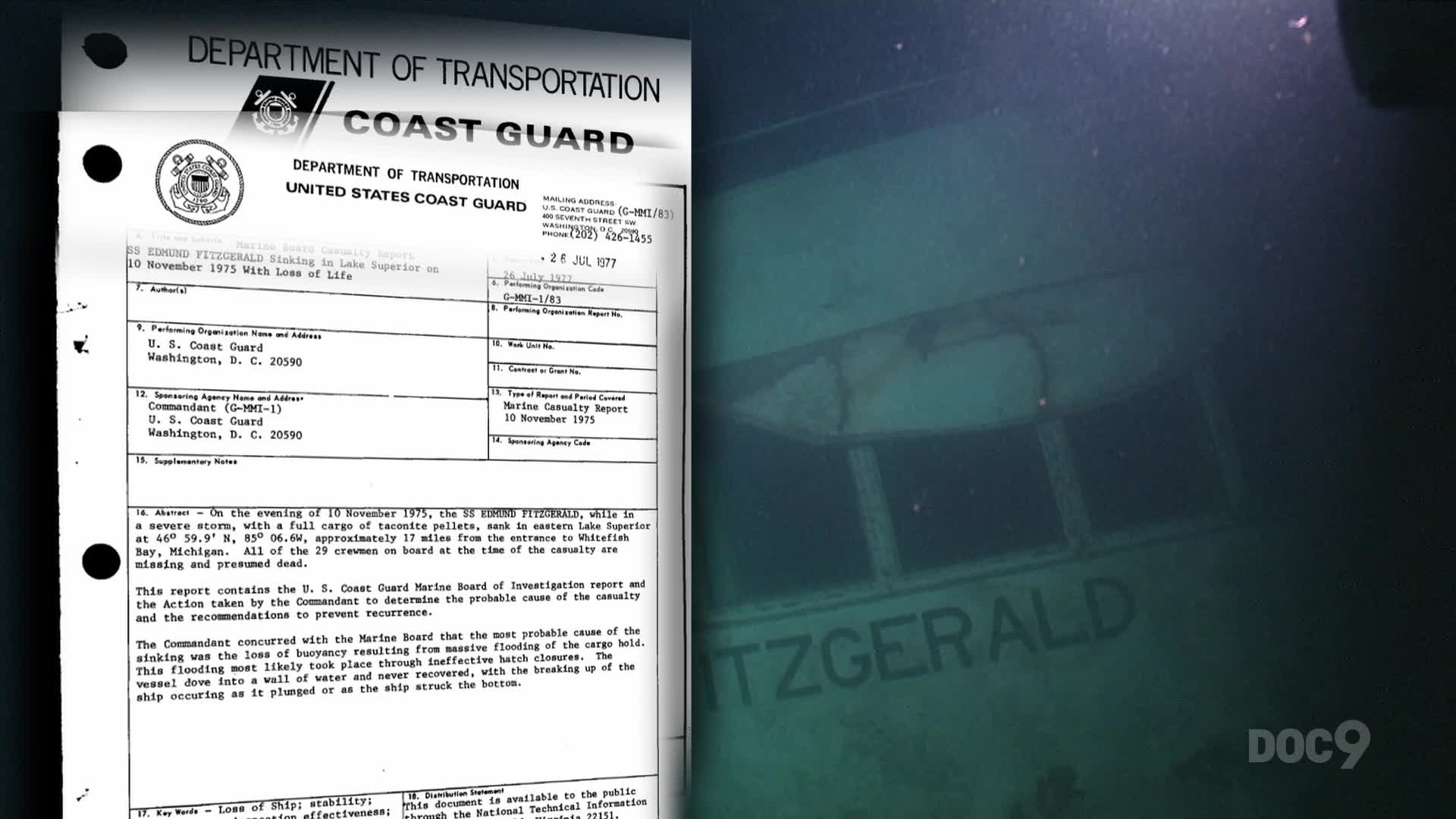
This clip from the FOX 9 Documentary "Gales of November: Diving the Edmund Fitzgerald" examines the competing theories on what caused the ship to sink in November 1975.
MINNEAPOLIS (FOX 9) - Fifty years after the Edmund Fitzgerald sank in Lake Superior, experts and historians are still debating what caused the ship to sink and break apart.
What we know:
The Edmund Fitzgerald sank in Canadian waters during a storm on Nov 10, 1975.
The ship sank, and the 29 crew were lost without issuing a distress signal, which some historians believe indicates the ship went down quickly after being overtaken by a giant wave.
"And they think it's gonna be like every other time they've been pushed in the water when the waves come over the deck, but this time, they didn't come back up," said Larry Elliott.
What they're saying:
Elliott participated in two diving expeditions to study the ship’s wreckage at the bottom of Lake Superior.
In 1994, he saw the door to the pilot house was open, which Elliott says also suggests someone tried to get out as the ship quickly headed to the bottom of the lake.
"I think it's a big indicator of how quickly the ship went down," Elliott said.
FOX 9 interviewed Elliott as part of a documentary called "Gales of November: Diving the Edmund Fitzgerald."
Elliott and other historians believe the ship started taking on water after hitting bottom in shallow waters near Caribou Island.
"Our speculation is that it hit that shoal, that shallow area of Lake Superior just off Caribou Island. And that it started taking on water."
Those who believe the ship hit bottom point to radio traffic between Capt. Ernest McSorley and the captain of the Arthur M. Anderson, Bernie Cooper, who had been following the Fitzerald’s path.
"(Cooper) was the one who watched the Fitzgerald and her course off and on through the night leading up to the sinking" said author Thomas Nelson.
Elliott says Capt. Cooper is the only one who had any insight into how the Edmund Fitzgerald was handling the storm.
"(Cooper) was convinced that the ship ran aground and that it was taking on water and listing," Elliot said.
Ric Mixter, another shipwreck historian, doesn’t buy that theory.
"The only person who believes the ship bottomed out was Captain Cooper, who looked at a radar very quickly and said, ‘boy, she's in closer than I would want to be’ and then he promptly went and took a nap," Mixter said. "Even the Coast Guard didn't think that it ran aground.
What we don't know:
In 1977, the U.S. Coast Guard concluded "the most probable cause of the sinking was the loss of buoyancy resulting from massive flooding of the cargo hold" which was caused by "ineffective hatch closures."
However, the Coast Guard did not conclude how or when the ship broke apart.
"The vessel dove into a wall of water and never recovered, with the breaking up of the ship occurring as it plunged or as the ship struck the bottom," the report stated.
Over the next several decades, experts and historians offered competing theories.
There is not even consensus among the few who have gone to the bottom of Lake Superior to study the ship’s wreckage.
Elliott and Quirin are convinced the ship only broke apart after hitting the lake bottom.
"The Fitzgerald was basically sailing toward the bottom," said Jene Quirin, who also went on the expeditions in 1994 and 1995.
Mixter, who dove as part of a separate, independently financed expedition in 1994, believes the ship broke apart on the surface because of open hatches and vents.
"Did it go down nose dive as we've seen in so many paintings? Absolutely not," Mixter said. "And until we stop doing that I don't think that the true story of the Fitzgerald will be told."
Elliott believes the unsolved mystery and decades of debate have kept people interested in the Edmund Fitzgerald 50 years after it sank.
"I think that's a part of the fascination, the fact that we've never really had a clear answer on why the Fitzgerald went down," Elliott said.