

Dining out? Here's what's more expensive, based on October data

Which fast food spots have the best drive-thrus?
A new study reveals where you should go when you're hungry and on the go.
If you’re dining out, expect to pay a bit more, according to new data.
Food prices first surged when the COVID-19 pandemic disrupted supply chains, and they’ve continued to rise amid global pressures, including the war in Ukraine, new tariffs, and ongoing labor shortages.
Restaurant management software company Toast has released its latest October 2025 insights, analyzing menu item costs – from beer to burritos – using median pricing data and year-over-year trends from its network of 156,000 restaurant locations.
Here’s a look at what’s getting more expensive.
Beer prices increase
By the numbers:
The median monthly price of beer on restaurant menus climbed to $6.50 in October 2025 – up 2.5% compared to last year, according to the data.
While there are countless American beers served in restaurants in the U.S., there are also plenty of imported beers from around the world, which can face additional costs, from tariffs to shipping costs.
Burgerflation
By the numbers:
Meanwhile, the median monthly price of burgers on restaurant menus surged to $14.53 in October 2025 – up 3.2% compared to last year.
While the price of burgers on Toast restaurant menus has been increasing, it has not kept pace with the surge in beef prices in recent months. But the recent rise suggests that restaurants may be finally raising menu prices to offset some of the rising beef costs.
Beef prices have soared for various reasons, including a decreasing herd size with demand staying high, according to the Associated Press.
Supply chain issues from the COVID-19 pandemic, labor shortages, production costs at meatpacking plants, export demands, and droughts have also collectively pushed meat prices higher in recent years.
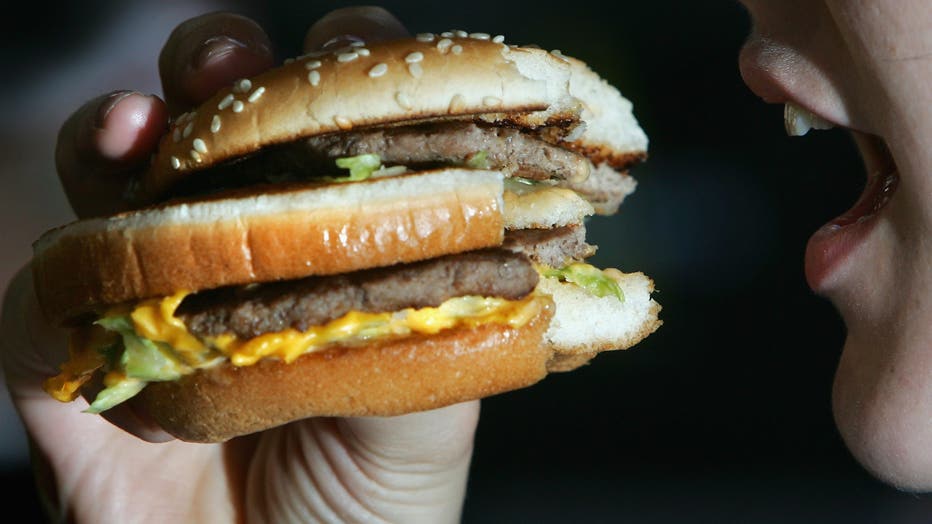
FILE: In this photo illustration a lady eats a burger. (Credit: Cate Gillon/Getty Images)
Burritos
By the numbers:
The data also revealed that the median monthly price of burritos on restaurant menus increased in October 2025 to $13.43 (up 3.3% from last year).
Sourcing and processing meat can also add significant costs for restaurants. While the majority of meat is raised in the U.S., those prices can vary widely based on how the animals were raised.
Cold brew coffee costs soar
By the numbers:
The data found that the median monthly price of cold brew coffee on restaurant menus increased in October 2025 to $5.53 – up 4.7% from last year.
In addition, the price of hot coffee rose to $3.57, up 3.2% from 2024.
Americans are paying more for their coffee as prices for the caffeinated commodity are near record levels due to global production headwinds and higher costs from imported coffee exposed to tariffs.
RELATED: Americans now paying even more for coffee as prices near record highs
Weather was among the most influential factors affecting coffee prices in recent years. Coffee requires very specific conditions to grow and is primarily sourced from an area known as the "bean belt," which lies between the Tropic of Cancer and the Tropic of Capricorn.
Extreme weather, including both droughts and flooding, has put a strain on coffee production over the past few years, but demand has continued to grow.
The most recent edition of the consumer price index (CPI) released by the Bureau of Labor Statistics showed that coffee prices were up 20.9% from a year ago in August and rose 3.6% on a monthly basis. That's the highest annual price gain reported in the data series since a 21.2% reading in July 2011, and topped the 20.3% reading in July 2022 amid the COVID inflation surge.
Grocery bills more expensive in these cities
Big picture view:
This analysis comes as grocery prices continue to be at the forefront of Americans’ minds amid fluctuating inflation and the impact of President Donald Trump’s tariffs.
In fact, a majority of Americans said in a recent poll that grocery costs were a "major" stressor.
RELATED: Grocery bills are most expensive in these major cities, analysis finds
A study by WalletHub found people in Detroit spend the most on groceries – not because of abnormally high grocery prices, but because the city has a low median annual household income. This was followed by Cleveland, Ohio and Birmingham, Alabama.
The Source: Data from the Menu Price Monitor is a combination of all restaurant types on the Toast platform, from small quick-service restaurants to large, full-service restaurants and everything in between. Restaurants are located in all 50 U.S. states and Washington, D.C. This story was reported from Los Angeles.