

Can Minnesota prosecute ICE agents? What the law says

ICE shooting: Side-by-side videos show fatal shooting of Renee Good
Videos show an ICE agent shooting Renee Good in Minneapolis on Jan. 7, 2026. Different angles help tell the story of what happened. The shooting is under investigation.
State and county officials vowed to investigate after an ICE officer shot and killed a woman in Minneapolis Wednesday, but the FBI says it is handling the investigation and won’t share evidence with Minnesota’s Bureau of Criminal Apprehension.
The death of 37-year-old Renee Nicole Good during an immigration enforcement operation has sparked widespread protests and calls for ICE to leave the city, while the Trump administration continues to defend the officer amid its "largest immigration enforcement operation ever" in Minneapolis.
Video of the fatal shooting has led to conflicting accounts of what happened, and questions over whether the officer can claim self-defense. Now, the FBI says it won’t allow Minnesota’s Bureau of Criminal Apprehension to join in the investigation – and it won’t share any evidence with the state.
LIVE UPDATES | Minneapolis ICE shooting: Protesters clash with feds at Whipple Building
What happened?
What we know:
The shooting happened around 9:30 a.m. in the area of East 34th Street and Portland Avenue.
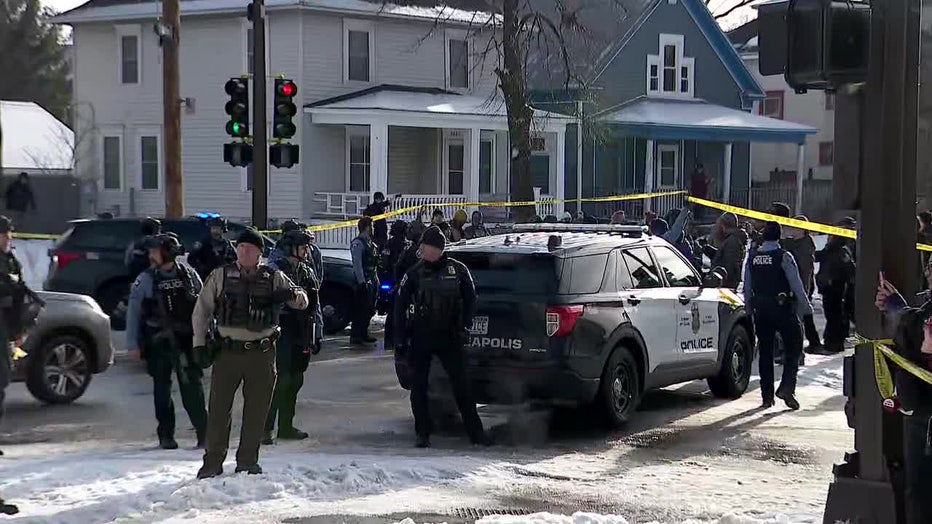
Minneapolis police at the scene of a shooting involving federal ICE agents in Minneapolis on Jan. 7, 2026. (FOX 9)
Video of the shooting shows a red Honda Pilot partially blocking the roadway as an ICE squad approached. When agents approached the Honda, Good tried to drive away, moving toward an agent. The agent stepped back and fired three shots at Good, who crashed her car into a parked vehicle after she was shot. She died at the hospital.
What they're saying:
Federal officials said Good was part of a mob of "rioters" who "weaponized her vehicle, attempting to run over law enforcement officers in an attempt to kill them."
"An officer of ours acted quickly and defensively, shot, to protect himself and the people around him," Homeland Security Secretary Kristi Noem said.
The other side:
Minneapolis Mayor Jacob Frey and Gov. Tim Walz say the video refutes those claims.
"It’s bullshit," Frey said Wednesday at a news conference.
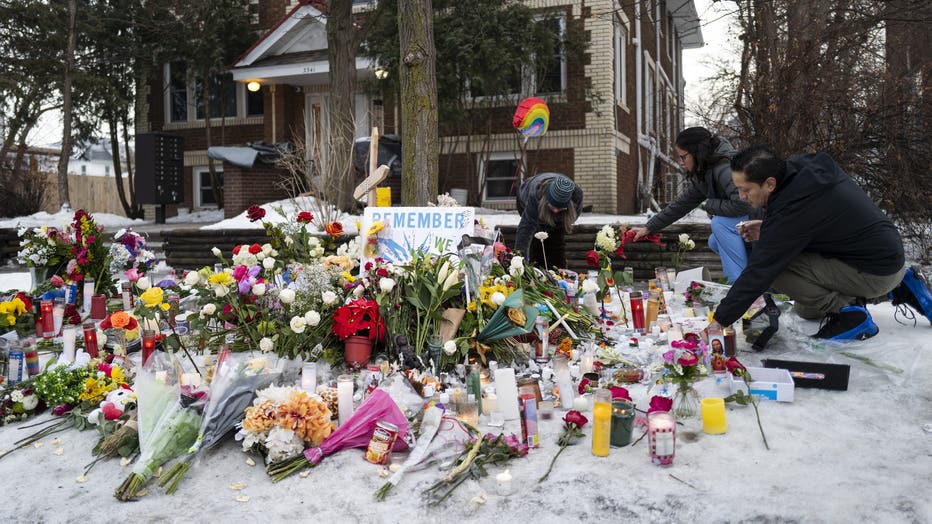
People tend to a memorial for Renee Nicole Good near the site of her shooting on January 08, 2026 in Minneapolis, Minnesota.(Photo by Stephen Maturen/Getty Images)
"I’ve seen the video. Don’t believe this propaganda machine," Walz said on X. "The state will ensure there is a full, fair, and expeditious investigation to ensure accountability and justice."
Who’s investigating?
The Minnesota Bureau of Criminal Apprehension said after the shooting Wednesday, state and federal officials agreed to a joint investigation between the FBI and the BCA’s Force Investigations Unit. The FBI reversed course later Wednesday and now says it will conduct the investigation alone – and won’t share evidence with the state.
MORE: Minneapolis ICE shooting: FBI will lead investigation; BCA won't have access to case material
"Without complete access to the evidence, witnesses and information collected, we cannot meet the investigative standards that Minnesota law and the public demands. As a result, the BCA has reluctantly withdrawn from the investigation," the BCA said in a news release Thursday. "The BCA Force Investigations Unit was designed to ensure consistency, accountability and public confidence, none of which can be achieved without full cooperation and jurisdictional clarity."
Can the state charge federal ICE officers?
Dig deeper:
The federal government is protected by the Supremacy Clause of the Constitution, which makes federal law the "supreme law of the land." States cannot use criminal prosecution to interfere with federal law, but the law does allow states to prosecute federal officials if they acted beyond their "lawful federal duties," according to Bryna Godar, a staff attorney at the University of Wisconsin Law School’s State Democracy Research Initiative.
Federal agents are typically immune from state prosecution if their actions were directly tied to their official duties. The state would have to prove the officer clearly broke the law or acted outside the scope of his duties, a burden that will be harder to meet if the FBI won’t share evidence.
DHS policy states that ICE and other immigration agents are "generally" prohibited from firing at moving vehicles. But the policy includes an exception for when agents feel someone is "threatening deadly force" and "no other objectively reasonable means of defense is available."

Protests spread around U.S. after ICE shooting
Following the deadly shooting of Renee Nicole Good by a federal ICE agent in Minneapolis, protests are growing around the nation. FOX 9’s Chenue Her is live from the FOX 9 newsroom with the latest details.
According to Reuters, if Minnesota charged the ICE agent, he could try to move the case to federal court and argue he is protected by federal law.
The Source: This report includes information from the University of Wisconsin Law School’s State Democracy Research Initiative, Reuters and previous FOX 9 reporting. Statements were provided by Homeland Security Secretary Kristi Noem, County Attorney Mary Moriarty, Minneapolis Mayor Jacob Frey and Gov. Tim Walz.