

Why is it so hot and stormy in Florida?
ORLANDO, Fla. - Central Florida’s weather this week is not being driven by the usual sunshine, sea breeze, rinse-and-repeat summer pattern.
Instead, several separate weather features are working at the same time. Together, they will help maximize the two things people will notice most: intense heat and more active afternoon storms.
CLICK TO DOWNLOAD THE FOX LOCAL APP
Dangerous heat
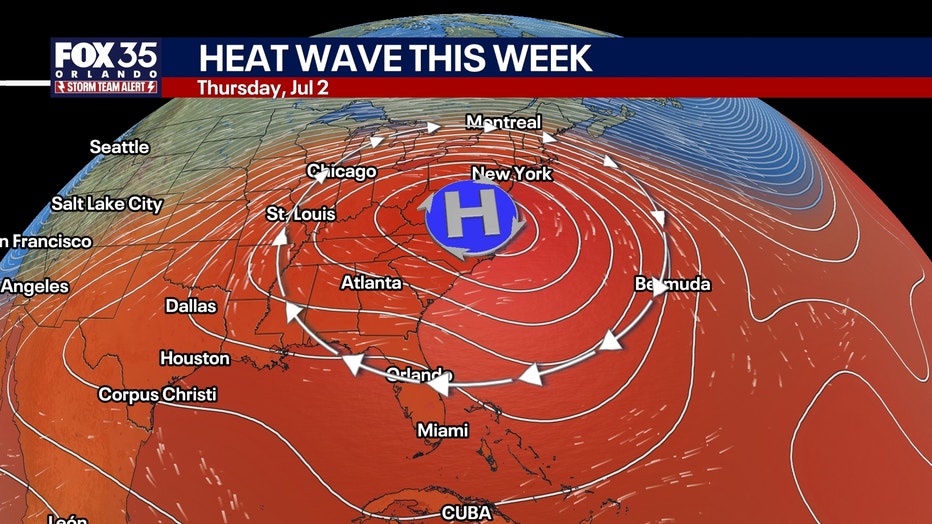
A large dome of high pressure is building over the Ohio Valley and Appalachians. Florida is not directly under the center of that heat dome, but we are close enough to feel its influence.
Air is sinking, temperatures are climbing, and humidity is already high.
Monday will likely be the hottest day of the week. Highs will reach the mid and upper 90s, especially near and north of Orlando.
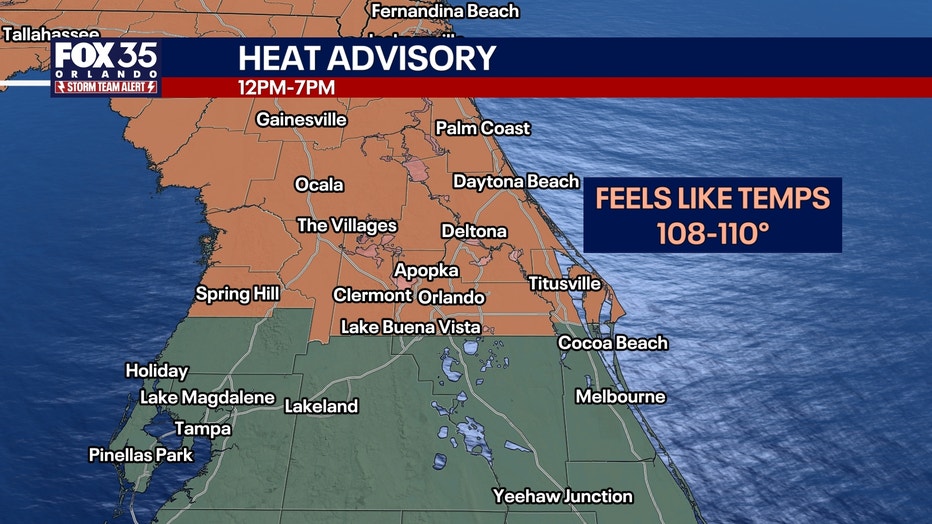
When the humidity is added, it will feel like 106° to 110° in the shade.
That is why a Heat Advisory is in effect from noon to 7 p.m. This is not just uncomfortable heat. It can become dangerous for anyone working outside, exercising, waiting at bus stops, sitting in traffic, or spending too long away from air conditioning.
Not your typical afternoon storms
Around the edge of that big heat dome, small pieces of energy in the middle levels of the atmosphere, roughly 18,000 to 20,000 feet up, will rotate into Florida from the northeast.
That is not our normal summer storm setup. Instead of storms being driven mainly by the sea breeze, some already-enhanced, punchy storms will develop first across northeast Florida before dropping south toward the Orlando area.
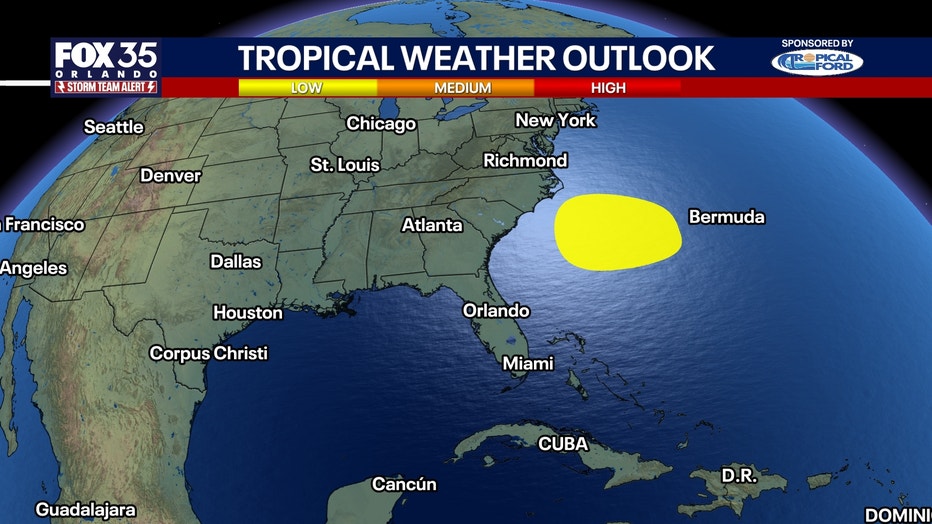
At the same time in the same region, a weak front will slide south toward North Florida. Along that front, weak low pressure is expected to develop offshore of the Southeast coast.
This low is not expected to become a major wind threat, but it will help pull deeper moisture into the region and give storms more support.
SIGN-UP FOR FOX 35'S BREAKING NEWS, DAILY NEWS NEWSLETTERS
How does Saharan dust impact hurricane season?
Dust often gets attention because it can limit tropical system and thunderstorm development.
For Monday though, a small amount of dry air has arrived in the mid-levels of the atmosphere today (roughly 4,000 to 10,000 feet up) and could ironically help to make storms stronger.
The presence of dry injected over a hot, humid air mass can increase instability and help stronger downdrafts develop.
So while not everyone gets storms, the ones that do form may be capable of gusts past 50 mph, frequent lightning and small hail.
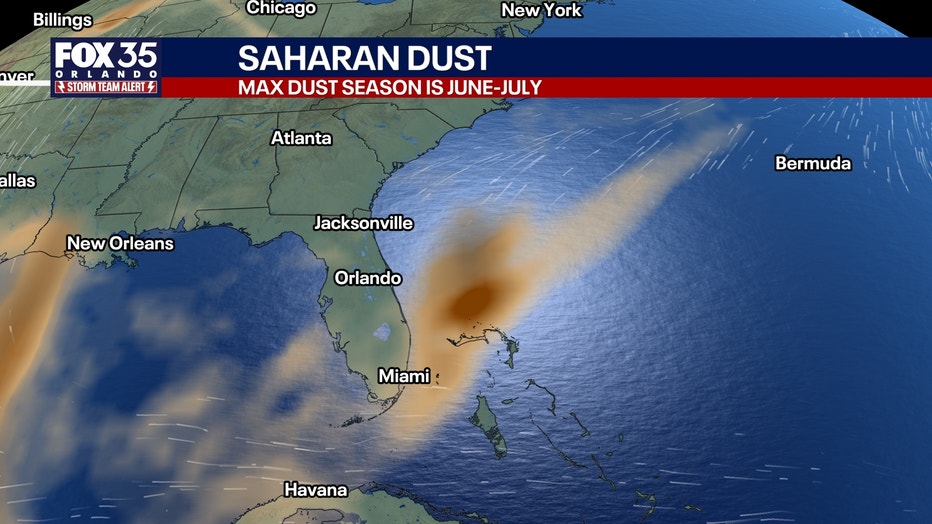
This week, the overlapping ingredients of heat, tropical air, energy from a system and Saharan dust are likely to raise the ceiling a bit for stronger storms, especially Tuesday and Wednesday as the front gets closer and storm motion turns more north-to-south at times.
The Source: The information used in this story was provided by the FOX 35 Storm Team.