

Toucan spotted in Orlando sparks viral social media buzz: 'Unbelievable!'
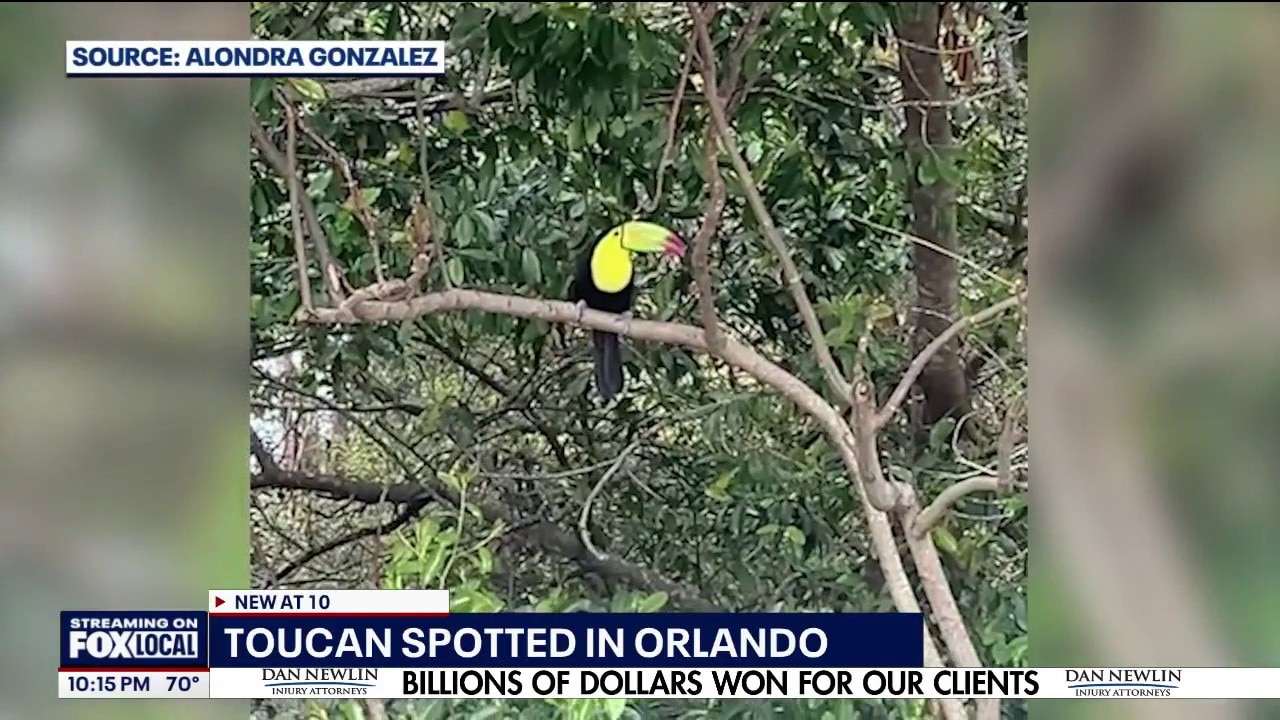
Toucan spotted in Orlando, catching attention of locals
A toucan was spotted perched on a tree along Conroy-Windermere Road in Orlando. The tropical bird whose natural habitat is far from Central Florida caught the attention of locals and quickly went viral online.
ORLANDO, Fla. - A toucan was spotted perched on a tree along Conroy-Windermere Road in Orlando.
The tropical bird whose natural habitat is far from Central Florida caught the attention of locals and quickly went viral online.
Local perspective:
Alondra Gonzalez, who spotted the bird while at work, recognized it from the Froot Loops commercials.
"Honestly, it’s unbelievable! I thought I would never see a toucan in the wild, so it’s something that I’m probably gonna remember for a long time," she said.
CLICK TO DOWNLOAD THE FOX LOCAL APP
Authorities say it is legal to own a toucan in Florida, though the Florida Fish and Wildlife Conservation Commission has not received any official reports of sightings.
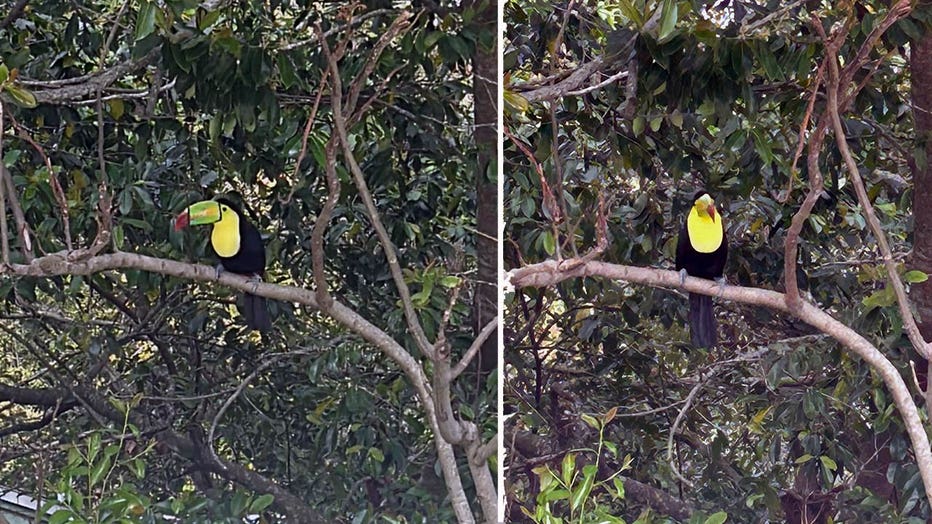
Photo credit: Alondra Gonzalez
The prevailing theory is that the bird is someone’s pet, and Gonzalez hopes it returns safely to the area.
What is a toucan?
Dig deeper:
Toucans are a family of colorful birds known for their oversized, lightweight bills, which are made of keratin and help them reach and peel fruit and may play a role in attracting mates.
Their large bills can be nearly half the length of their bodies and are a defining feature of the roughly 40 species that make up the family Ramphastidae, including the well‑known Toco toucan and smaller aracaris and toucanets.
Toucans typically have a diet that consists of fruit, but the bird has also been known to eat insects, small frogs, lizards and eggs from other birds’ nests.
What is the natural habitat of a toucan?
These birds are non‑migratory and tend to stay within their tropical ranges, hopping and making short flights between branches rather than long seasonal journeys. They are typically found in the tropical rainforests and humid woodlands of Central and South America, from southern Mexico through much of the Amazon basin into northern Argentina.
SIGN-UP FOR FOX 35'S BREAKING NEWS, DAILY NEWS NEWSLETTERS
Toucans live high in the rainforest canopy, often in tree cavities created by woodpeckers, where they nest and raise their young. While fruit makes up most of their diet, they also eat insects, eggs and small vertebrates, playing a vital ecological role by dispersing seeds that help maintain forest diversity.
The Source: This story was written based on information shared by Alondra Gonzalez, who spotted the bird while at work, and the Association of Zoos and Aquariums.