

Supreme Court upholds state laws banning transgender girls and women from school athletics
The United States Supreme Court released its opinion Tuesday on upholding state laws banning transgender athletes from female sports teams, handing a major victory to supporters of laws they say protect fairness in women’s athletics.
The decision upholds laws from two consolidated cases challenging laws in Idaho and West Virginia that restrict participation in girls’ and women’s school based on a student’s sex assigned at birth.
The ruling is expected to strengthen similar laws already on the books in about half the states while setting a nationwide precedent in one of the country’s most closely watched legal battles over transgender rights.
Read the opinion
RELATED: Supreme Court rules against law banning 'conversion therapy' for LGBTQ+ kids
States to decide whether to ban transgender athletes
Individual states will now have the authority to make the decision whether to ban transgender athletes from competing in female sports. Several U.S. states have passed bans on preventing transgender girls and women from participating in women's sports.
Additional lawsuits challenging state laws and regulations in Connecticut, California and other states that allow transgender athletes to compete within their gender identity have been left unresolved.
This is a developing story. Please refresh for ongoing updates.
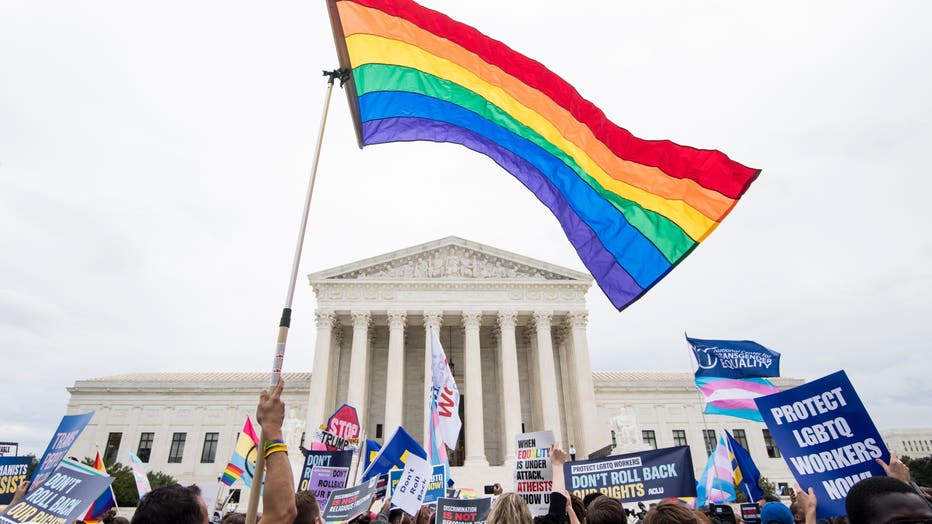
Protesters rally in front of the Supreme Court as it hears arguments on whether gay and transgender people are covered by a federal law barring employment discrimination on the basis of sex on Tuesday, Oct. 8, 2019. (Photo By Bill Clark/CQ-Roll Call,
Transgender athletes laws
The backstory:
The cases centered on constitutional challenges brought by transgender students who argued the laws violated the Equal Protection Clause and conflict with Title IX, the federal law banning sex discrimination in education.
Idaho enacted the nation’s first transgender sports ban in 2020, banning transgender women and girls from competing on female school sports teams, prompting a legal challenge from a transgender athlete.
The West Virginia case centers on whether the state can enforce its ban on transgender girls competing on girls' sports school teams.
RELATED: IOC chair announces ban on transgender athletes in female competitions in Olympic events
Dig deeper:
During oral arguments in January, several members of the court’s conservative majority questioned whether courts should require states to allow transgender athletes to compete in girls’ sports, citing ongoing debate over the effects of male puberty and hormone therapy on athletic performance.
What they're saying:
Sports are "kind of a zero-sum game for a lot of teams," conservative Justice Brett Kavanaugh told Joshua Block, a lawyer for the transgender challengers. "And someone who tries out and makes it, who is a transgender girl, will bump someone from the starting lineup, from playing time, from the team, from the all-league (honors), and those things matter to people, big time."
What is Title IX?
Title IX was created to advance gender equality in athletics and project students from sex-based discrimination and sexual harassment on college campuses. Each presidential administration has the authority to issue its own interpretation of how the law should be enforced.
RELATED: Some federal websites, public health data disappear to comply with Trump’s DEI directives
In 2020, Betsy DeVos, Trump's education secretary during his first term, issued a Title IX policy that narrowed the definition of sexual harassment and required colleges to investigate claims only if they’re reported to certain officials.
The Biden administration rolled back that policy last April with one of its own that stipulated the rights of LGBTQ+ students would be protected by federal law and provided new safeguards for victims of campus sexual assault. However, the policy stopped short of explicitly addressing transgender athletes.
The Source: This story was written with information provided by SCOTUS Blog, previous reporting by LiveNOW from FOX, The Associated Press and Reuters. This story was reported from Orlando.