

Multiple Tampa Bay area counties declare local states of emergency as dengue fever cases rise
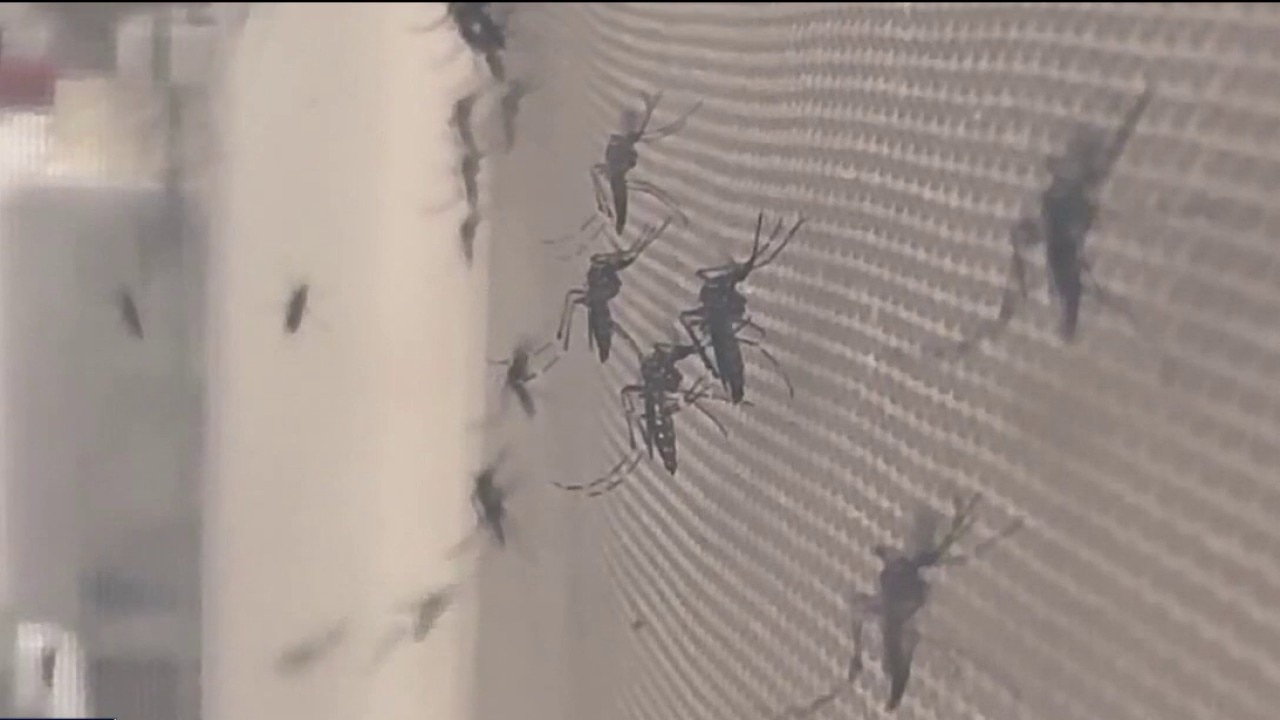
States of Emergency issued over dengue fever
Three Tampa Bay area counties have declared states of emergency as more cases are confirmed. FOX 13's Ariel Plasencia reports.
TAMPA, Fla. - Hillsborough, Pasco and Pinellas leaders declared local states of emergency to combat dengue fever as rising mosquito-borne infections and a confirmed death impact the Tampa Bay region.
"It’s truly going to take everybody in Pasco, Pinellas and Hillsborough to manage the threat of dengue throughout the region," stated Seth Weightman, vice chair of the Pasco County Commission.
Pasco dengue emergency
The backstory:
The Pasco Board of County Commissioners issued a local state of emergency in response to dengue fever spreading through the community. The declaration lasts for seven days unless rescinded earlier, giving the county administrator and emergency management director authority to waive everyday procedures to protect public safety.
Michael Cox, Commissioner of the Pasco County Mosquito Control District, equates dengue fever to being in the cone of uncertainty before a hurricane hits.
"We know there is a pending storm coming toward us, but we don’t know exactly where it’s going to hit. We are encouraged to get ready, to prepare ourselves for an impending event coming toward us and that is what we are doing here today," explained Cox.
Pasco County is currently aiding the Pasco County Mosquito Control District and the Florida Department of Health in Pasco County. Officials strongly advise residents to follow "Drain and Cover" principles to reduce mosquito breeding areas.
Hillsborough declares state of emergency
Dig deeper:
Hillsborough County Adminstrator Bonnie Wise also signed an executive order, declaring a local state of emergency Thursday. The order will be in effect for at least seven days, and from there, officials will have to decide to rescind or extend the local state of emergency.
The order comes as the county works to control the mosquito population and protect residents from dengue fever. The order gives the county administrator and emergency managers the ability to quickly take certain actions to ensure the health and safety of the community, officials said.
What you can do:
Residents can sign up to be notified of where localized aerial treatments are happening. Hillsborough County officials also said they also maintain an online resource for residents to view where treatments are happening.
For more information, residents can call Hillsborough County Mosquito Management Services at (813) 635-5400.
Pinellas dengue fever response
Dig deeper:
The Pinellas County Board of Commissioners declared its own state of local emergency in response to dengue fever's spread. The declaration does give County Administrator Barry A. Burton authority to quickly approve expenditures related to mosquito control and allows for reimbursement if state funding is made available by the governor.
Pinellas County says they've also seen an increase in West Nile virus activity in sentinel chicken coops, which are early warning signs for potential human transmission.
What you can do:
County officials are urging residents to take precautions by doing the following:
- Dump out any standing water around their property.
- Dress in light-colored, long-sleeved clothing with closed-toed shoes when outside.
- Defend themselves using an insect repellent with a CDC-recommended ingredient such as DEET, Picaridin, IR3535, or Oil of Lemon Eucalyptus.
Tampa hospital cases
By the numbers:
Data from Florida health officials shows Hillsborough County has recorded more than 170 dengue cases. From Sept. 13-19 alone, the county logged 36 new cases. Nearby Pinellas County has reported seven total cases, while Pasco County has two confirmed cases and is investigating several other cases.
Polk County also reported its first human case of locally acquired dengue fever. Officials with the Florida Department of Health in Polk County issued a Mosquito-Borne Illness Advisory in response to it.
Doctors at Tampa General Hospital estimate they have treated more than 100 dengue patients.
Medical warning signs
What they're saying:
Medical professionals warn that the infection causes severe pain, often called "break-bone fever". "The body aches are so intense that it's got this nickname as 'break-bone fever,'" said Dr. Kartik Cherabuddi, chief hospital epidemiology officer at Tampa General Hospital. "It's real, and I've seen patients — they hurt so bad, it's the predominant thing that’s bringing them into the emergency room".
Cherabuddi noted that about one in four infected people develop illness, with roughly one in 20 symptomatic patients developing severe disease. Common symptoms include severe joint, bone, and muscle pain, nausea, and pain behind the eyes.
"It's the time the fever breaks. The next two days is when you can have more severe warning signs," Cherabuddi added. "If you have severe abdominal pain, persistently throwing up, bleeding from the gums or other sites, difficulty breathing — and critically, that’s when the fever starts to go down is when these could develop. That's when you absolutely have to go to the ER".
Symptoms begin two weeks after being bitten by an infected mosquito.
However, health experts say 25% of people who are bitten by an infected mosquito show symptoms, so 75% are asymptomatic.
If an individual is asymptomatic and is bitten by a mosquito, health officials say that mosquito can then infect others.
Those at high risk of getting dengue fever include those who may have had dengue and not known about it, infants, pregnant women, anyone 65 and older and those who are immune compromised.
The Source: The information in this story was gathered from the Pasco Board of County Commissioners, who announced the emergency declaration, as well as Florida Department of Health data and statements from Tampa General Hospital.