

National Hurricane Center tracking Invest 92L in the Atlantic
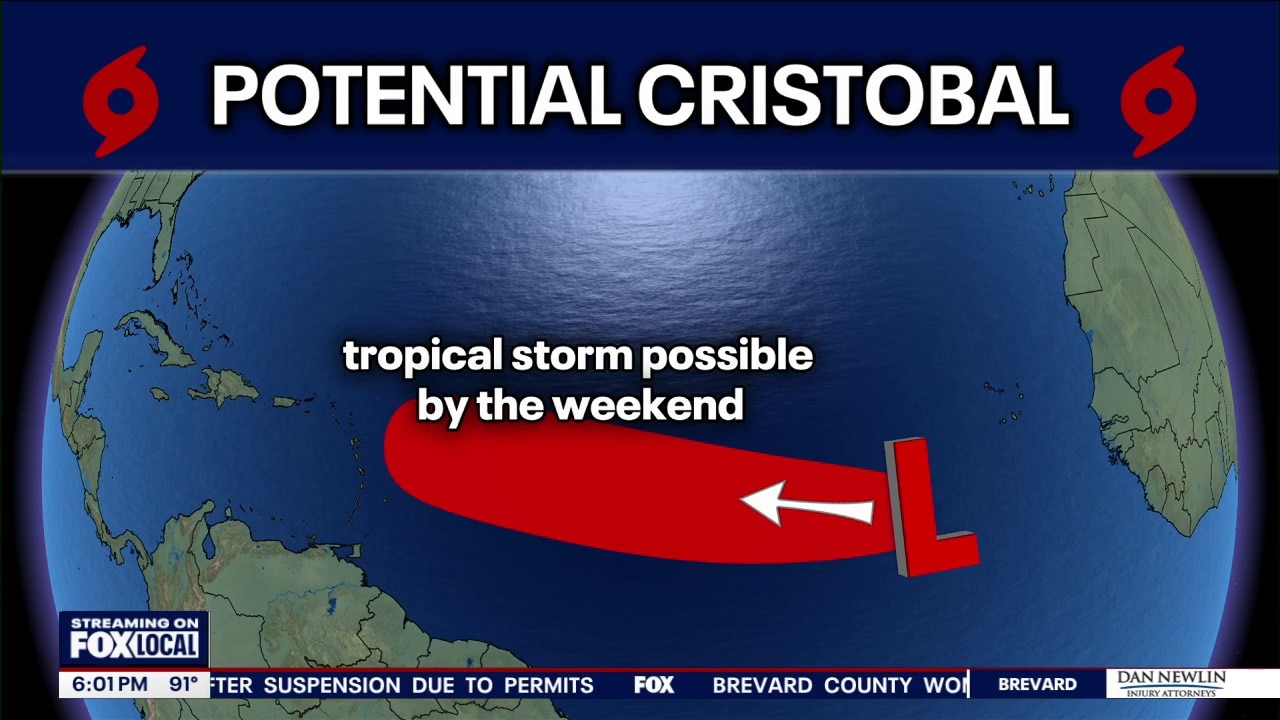
Tracking the tropics: Possibility of Atlantic disturbance becoming Tropical Storm Cristobal
FOX 35 is tracking two tropical disturbances in the Atlantic Ocean, each with differing probabilities of becoming a tropical storm. One is located Southwest of the Cabo Verde Islands in the Central Atlantic. The other is located east of Bermuda.
The National Hurricane Center is tracking two disturbances in the Atlantic Ocean, one of which could become a tropical depression later this week.
One is located Southwest of the Cabo Verde Islands in the Central Atlantic. The other is located east of Bermuda.
Tracking Invest 92L
Timeline:
On Tuesday, the NHC designated the tropical disturbance near the Cabo Verde Islands as Invest 92L.
Deeming it an "invest" (short for investigation) allows meteorologists and forecasters to run special computer models to track the potential track or intensity of a system.
As of 2 p.m. Invest 92L was more than 500 miles southwest of the Cabo Verde Islands and still consisted of disorganized showers and thunderstorms.
Officials said it would likely develop into a tropical depression later this week as it continues to travel westward across the Atlantic.
NHC tracking second disturbance in the Atlantic
A second disturbance is more than 700 miles east-northeast of Bermuda, the NHC said. Showers and thunderstorms within this sytem have become a little more consistent than Monday, the NHC said.
It has a low — 10% – chance of further development, the NHC said, noting that the system is expected to enter cooler waters on Thursday.
Any potential impacts on Florida?
Local perspective:
So far, there are no impacts expected for Florida. The strong ridge of high pressure in the Atlantic should help steer this system out into the open Atlantic and keep it away from the U.S.
2026 National Hurricane Season
The Atlantic hurricane season runs every year for six months, June 1 - November 30.
The most active months are typically between August, September, and October. The Atlantic season actually has two peaks: mid-September and mid-October, though activity tends to drop quickly after the second peak.
Storm Names
This year, we've already had Tropical Storms Arthur and Bertha, both short-lived storms. The next names on the list are Cristobal, Dolly, and Edouard.
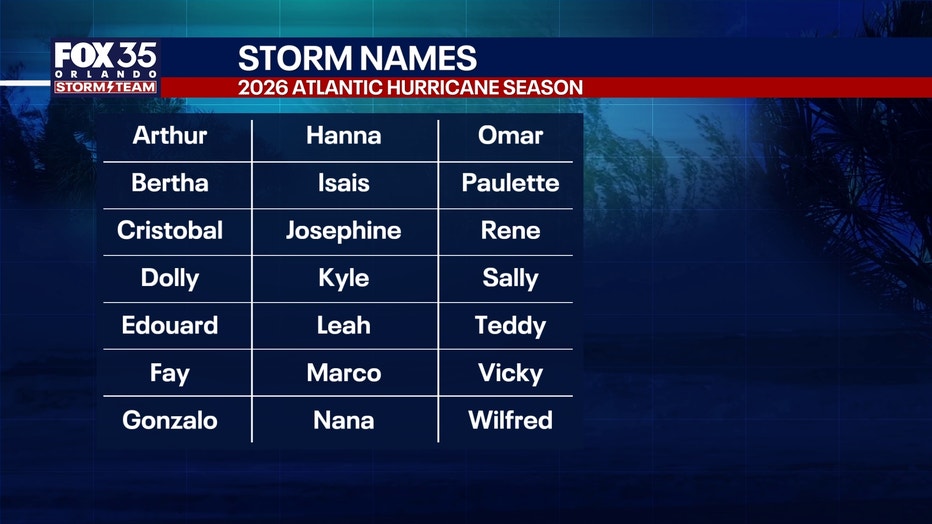
There are 21 tropical cyclone names issued every hurricane season – and they rotate every six years. Those names can sometimes be retired if a system is particularly deadly or destructive.
Below-average hurricane season forecast
Dig deeper:
Both the NOAA and Colorado State University (CSU) have forecast a below-average hurricane season, citing very strong El Niño conditions.
El Niño typically brings stronger wind shear across the Atlantic that can rip apart developing tropical systems.
However, below-average does not mean zero. Officials have warned that it only takes one storm to greatly impact a community. It's a good reminder to have your emergency kit prepared.
The Source: The information is from the National Hurricane Center and the FOX 35 Storm Team.