

How did Artemis II's heat shield perform? New image, data released
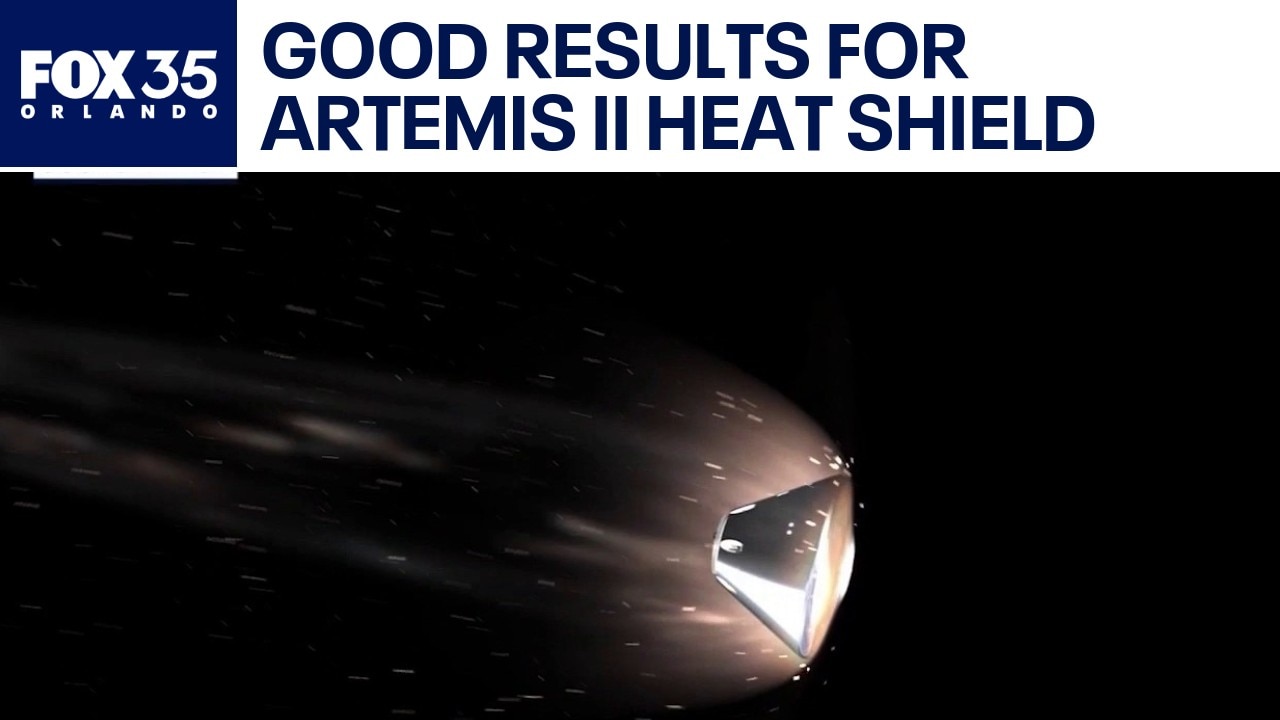
Artemis II heat shield results: What early data shows
After significant concerns with the heat shield after the Artemis II mission, the results from Artemis II are in. Early data shows major success for the Artemis II heat shield after the mission concluded with the heat shield intact.
Moments after Artemis II splashed down in the Pacific Ocean off the coast of California, ending its 10-day journey to the moon and back, divers with the U.S. Navy were there to make sure the crew stayed safe. They also captured photos of the Orion spacecraft's heat shield – a key piece of equipment protecting the astronauts inside as they descended through Earth's atmosphere.
Early data shows Artemis II's heat shield performed as expected, and better than the heat shield on Artemis I.
Here's what Artemis II's heat shield looked like from U.S. Navy divers
NASA said the amount of char loss on Artemis II's heat shield was "significantly reduced" compared to Artemis I's heat shield.
"Diver imagery of the spacecraft’s heat shield initially taken after splashdown and further inspections on the recovery ship found the char loss behavior observed on Artemis I was significantly reduced, both in terms of quantity and size. Performance also was consistent with arc jet facility ground testing performed after Artemis I," NASA said in a recent update.

Credit: US Navy via NASA Blog
To achieve this, NASA modified the reentry angle of the capsule to reduce the duration of peak thermal stress. They also conducted extensive ground testing at arc jet facilities to predict how the material would behave.
"Now seeing these photos of Artemis II, it almost looks like you could go fly it again," said Zac Aubert, founder of The Launch Pad Network. "Artemis’s Orion did exactly as we hoped."
Denault called the technical adjustments "genius," noting that the performed exactly as predicted.
The crew module will be delivered to NASA's Kennedy Space Center in April, where it will undergo more testing.
"Teams will conduct detailed inspections, retrieve post-flight data, remove reusable components such as avionics, and eliminate remaining hazards such as excess fuel and coolant," NASA said.
Sometime over the summer, the heat shield will go to NASA's Marshall Space Flight Center in Alabama for "sample extraction and internal x-ray scan."
Artemis I heat shield issues
The backstory:
The success of Artemis II follows a period of intense scrutiny for NASA. During the uncrewed Artemis I mission in late 2022, the Orion capsule’s heat shield experienced unexpected "char loss." Instead of wearing away gradually as designed, the protective material chipped off in larger-than-expected pieces, leaving the shield streaked with burns and missing tiles.
"The heat shield has always been one of those situations," said David Denault, former NPR Space Correspondent and host of About Space Today. "How do you fix it? How do you adjust the tiles?"
The situation was the primary safety concern heading into the first crewed flight. Had the shield failed to hold up while hitting the atmosphere at speeds of 25,000 miles per hour, the result for the crew onboard could have been deadly.
More testing ahead of Artemis III
Artemis III is planned for a 2027 launch. NASA hopes to land astronauts and a moon lander on the moon in 2028.
The Source: The information is from NASA's latest blog entry, "NASA on Track for Future Missions with Initial Artemis II Assessments." FOX 35's Esther Bower also talked to Zac Aurbert, founder of The Launch Pad Network, and David Denault, host of About Space Today.