

First Central Florida measles case of 2026 confirmed in Osceola County: How does it spread?
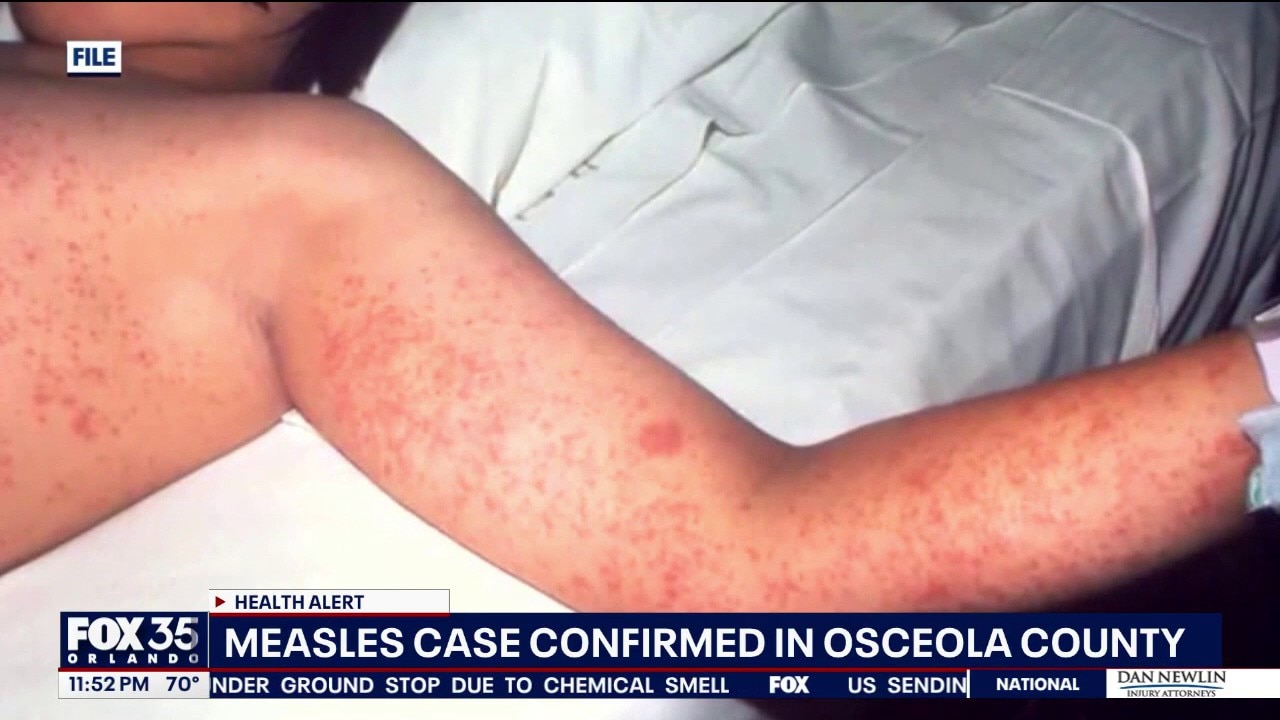
First measles case reported in Osceola County this year
Health officials have confirmed the first case of Measles this year in Osceola County. According to the Florida Department of Health, the patient is a person in their 20s who contracted the virus while traveling out of state.
OSCEOLA COUNTY, Fla. - The first measles case in Central Florida this year was reported this month in Osceola County.
Based on information from the Florida Department of Health, one person – between 25 and 29 years old – was confirmed to have measles sometime in March, data shows.
The affected person acquired this highly contagious respiratory disease in the United States, but not in Florida, the data shows.
FOX 35 reached out to the Osceola County Department of Health for comment, who then referred to the State Department of Health data.
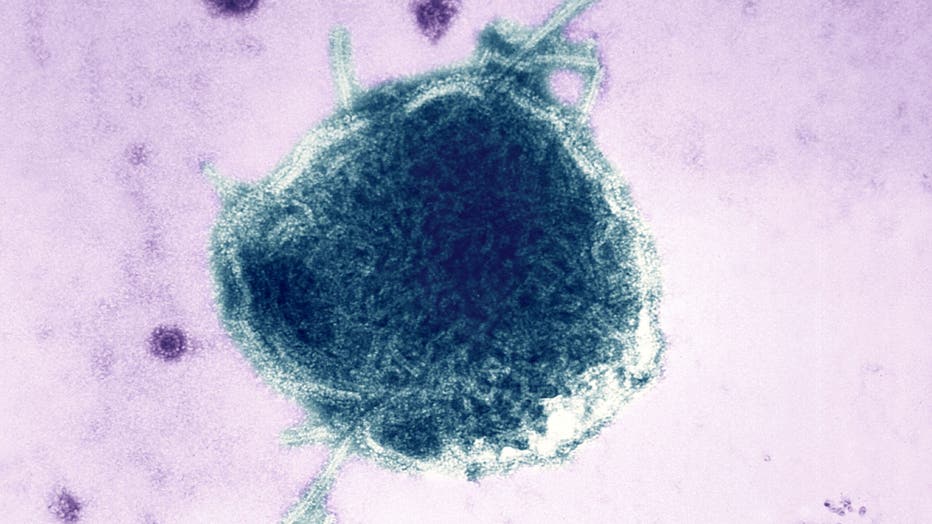
This Electron Micrograph Reveals Both A Paramyxovirus Measles Virus, And Virions Of The Polyomavirus, Simian Virus Sv40 Smaller Circles. The Envelope Of The Measles Virus Has Broken, Exposing The Nucleocapsid Filaments. Interest In Sv40 Has Increased
132 confirmed measles reports in Florida in 2026
As of March 7, 132 measles reports were confirmed in Florida, with the majority of cases reported in Collier County.
Here is the number of confirmed measles cases in Florida as of March 7 in each county:
- Alachua: 2
- Broward: 2
- Collier: 98
- Duval: 6
- Escambia: 5
- Hillborough: 2
- Lee: 2
- Manatee: 3
- Miami-Dade: 1
- Osceola: 1
- Pasco: 1
- Pinellas: 6
- St. Johns: 3
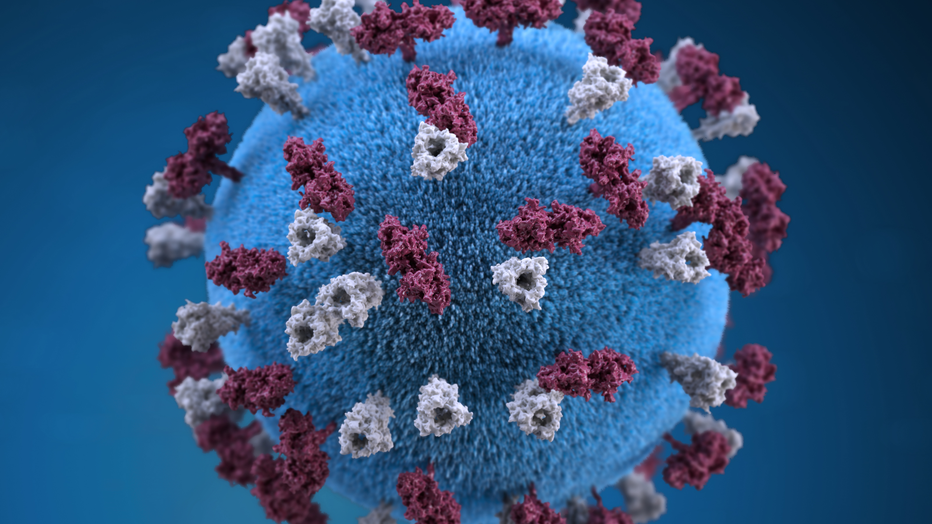
This illustration provided a 3D graphic representation of a spherical-shaped, measles virus particle, that was studded with glycoprotein tubercles. Those tubercular studs colorized maroon, are known as H-proteins (hemagglutinin), while those colorize
What is measles?
Measles, also known as Rubeola, is known to be highly contagious and can lead to serious complications, the U.S. Centers for Disease Control and Prevention reports. The disease – which affects the respiratory system – can be especially dangerous for babies and young children.
How does measles spread?
The disease spreads when an infected person coughs or sneezes or through contaminated air or surfaces.
Measles can only spread from person to person. Animals are not affected, the CDC says.
The CDC says the best way to protect against measles is with the measles, mumps, and rubella (MMR) vaccine. Here are various resources the CDC provides on measles.
Spot the symptoms
What are signs of measles to look out for? Experts say symptoms can usually begin about seven to 14 days after infection.
Symptoms can appear as:
- High fever – possibly at 104 degrees or more
- Cough
- Runny nose
- Red, water eyes
- A measles rash – flat red spots appearing on the face at the hairline. The spots will spread down the neck to the arms, legs and feet, the CDC says.
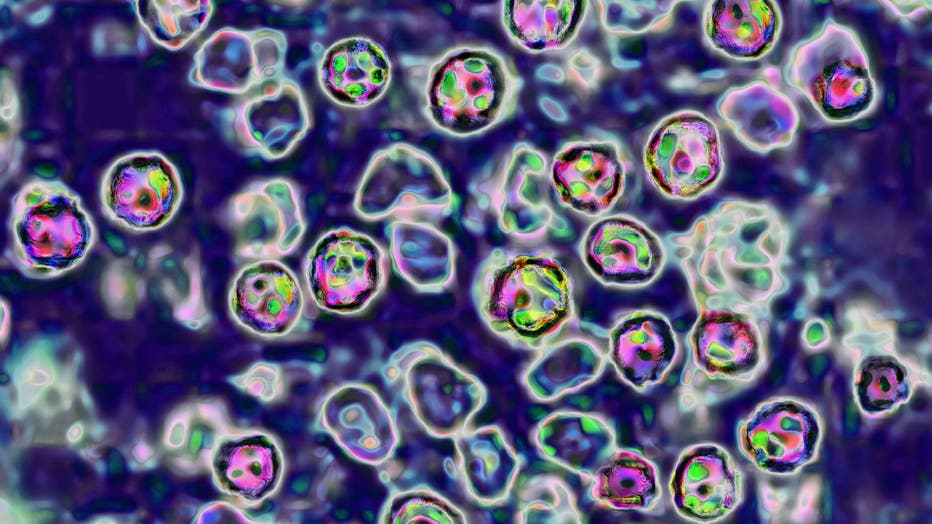
The measles virus, paramyxoviridae from the Morbillivirus family, transmission microscopy view. (Photo by: BSIP/Universal Images Group via Getty Images)
Who's at risk?
According to the CDC, measles can be serious in all age groups. However, the CDC said people likely to suffer from measles complications include: children younger than five years old, adults older than 20, pregnant women and people with weakened immune systems.
"Nearly 1 to 3 of every 1,000 children who become infected with measles will die from respiratory and neurologic complications," the CDC says.
Measles cases grow in Florida
Current data shows measles cases have increased in Florida.
Florida Department of Health information shows 12 cases in 2024, two in 2023 and none in 2022.
The Source: Information in this story was gathered from the Florida Department of Health.