

Blue Origin wins $700M NASA contract to build Mars communications network: What we know
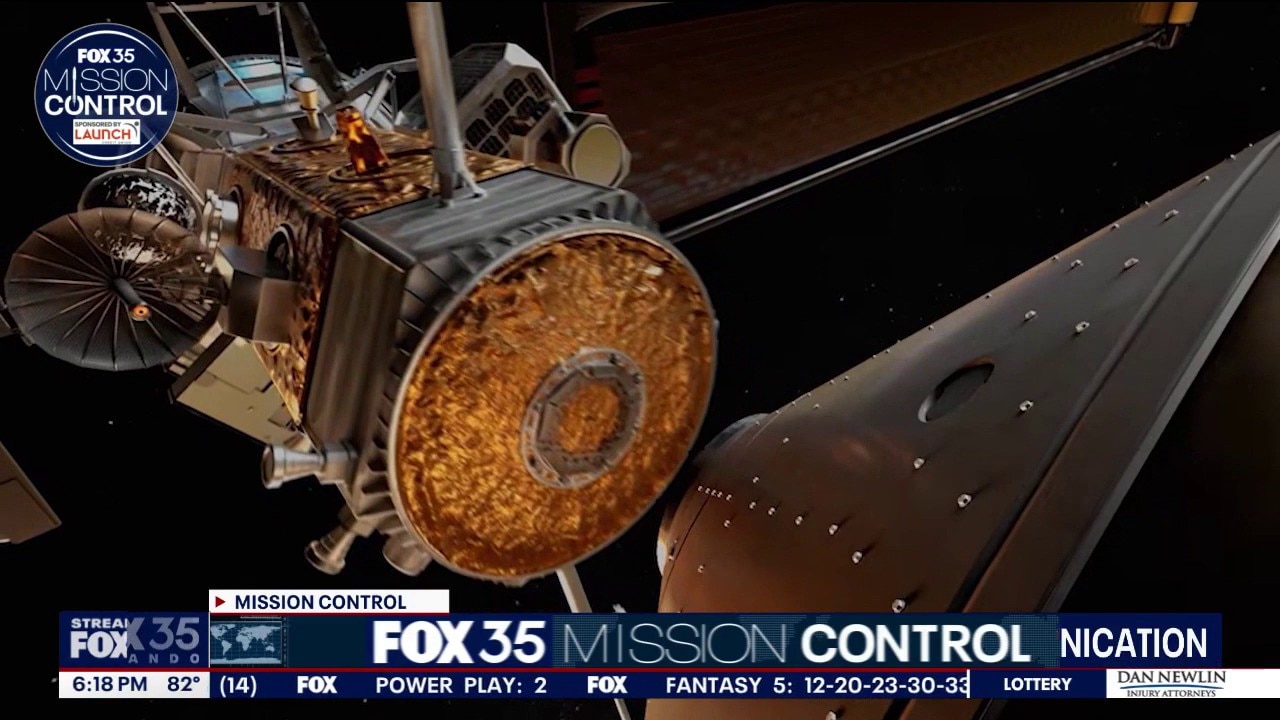
Blue Origin wins $700M contract for Mars communication network
NASA has awarded Jeff Bezos' Blue Origin a $700 million contract to develop, build, and launch a high-tech communications network around Mars. The goal is to have the Mars Telecommunications Network delivered by the end of 2028 – and to have it operational by 2030, NASA said.
ORLANDO, Fla. - NASA has awarded Jeff Bezos' Blue Origin a $700 million contract to develop, build, and launch a high-tech communications network around Mars.
The goal is to have the Mars Telecommunications Network delivered by the end of 2028 – and to have it operational by 2030, NASA said.
What is the Mars Telecommunications Network?
What we know:
NASA described the Mars Telecommunications Network as "a next-generation communications system that will enable reliable, high-bandwidth communications and navigation services for current and future Mars missions."
Blue Origin has been tasked with building, launching, and operating a telecommunications spacecraft that will orbit Mars, and establish communications and transmit data to other spacecraft working in the area.
The network will help transmit a lot of data:
- Images
- Science data
- Navigational information
- Other communications
Expert: "GPS on Mars"
What they're saying:
Space expert Ken Kemer described the project similar to "GPS on Mars," adding that Blue Origin's spacecraft would act like a cell phone on Earth, but in space.
Kremer said Blue Origin's spacecraft is being designed to send high-resolution data from the Red Planet to Earth in 6–8 minutes.
What we know about Blue Origin's "Blue Ring" orbiter
Blue Origin said its Mars Telecommunications Orbiter would provide continuous high-speed communications between Earth and Mars, using multiple links, which are supplemented by UHF relay satellites in low Mars orbit, according to its website.
The Mars Orbiter builds upon the Blue Ring spacecraft, and features large solar panels and 13 different ports, which can carry individual instruments or small spacecraft that can then be launched into space.
First look at Blue Origin Mars Telecommunications Orbiter
It's currently being built at its facility in Huntsville, Alabama.
The $700 million contract was funded through the Working Families Tax Cut Act.
How long does it take to get to Mars?
Mars is roughly 140 million miles from Earth, on average, compared to the moon, which is 238,555 miles away.
It took Apollo 8 three days to reach the moon. Other spacecraft have taken between 7-10 months to reach Mars, according to NASA websites.
So, future astronauts should likely expect a three-year round trip to Mars and back, which means communication, supplies, and the ability to tackle emergencies while millions of miles from Earth, are key factors in future missions, according to NASA.
The Source: The information in this story was gathered from FOX 35 reporter Esther Bower, who interviewed space expert Ken Kremer. She also watched Blue Origin Chief Scientist Steve Squyres discuss the project, as well as official media statements from NASA and Blue Origin on the announcement