

2 drown while trying to rescue child at Cocoa Beach, officials say
ORLANDO, Fla. - Update (4/21): On Tuesday, the Cocoa Police Department identified the two people killed as 34-year-old Jason Degray, 42, of Connecticut, and Ebony Mount, 34, of Ohio.
Original story
Two people drowned Tuesday while trying to rescue a child caught in a rip current off Cocoa Beach, authorities said.
Brevard County Fire Rescue said the incident happened just after 1 p.m., April 15, near Fourth Street South when a child was swept out by a rip current.
What we know:
Officials said a 34-year-old woman from Ohio and a 42-year-old man from Connecticut entered the water to help, but the rip current pulled both away from shore and they went under.
Crews performed CPR on both individuals on the sand before they were taken to a hospital, where they were pronounced dead, officials said.
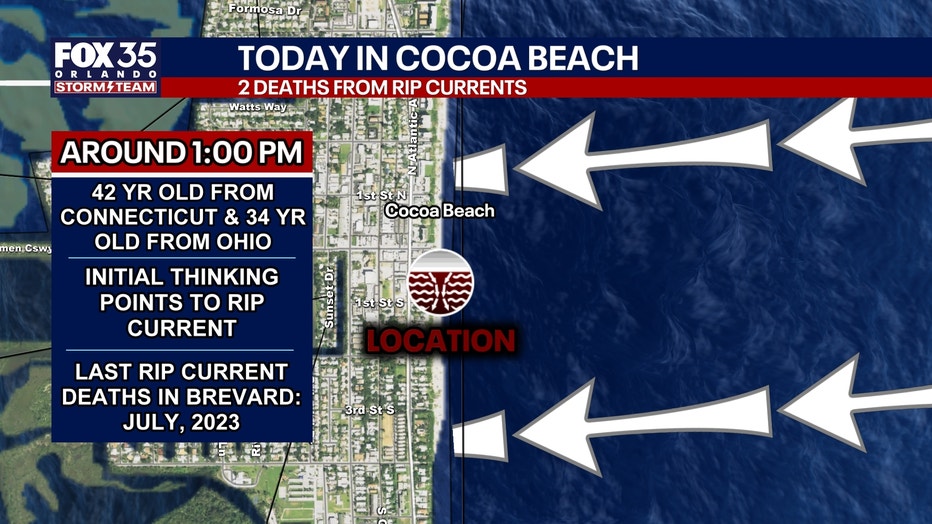
The child survived and did not require medical treatment.
"It’s horrible. I’m sorry to hear anything happen to anybody, but people have to always be super aware at the beach," said visitor Jean Salamanca.
CLICK TO DOWNLOAD THE FOX LOCAL APP
The nearest lifeguard tower was nearly a mile away, officials said. Police later took other children involved to a station before they were reunited with their group.
Preliminary information indicates the incident was related to a rip current.
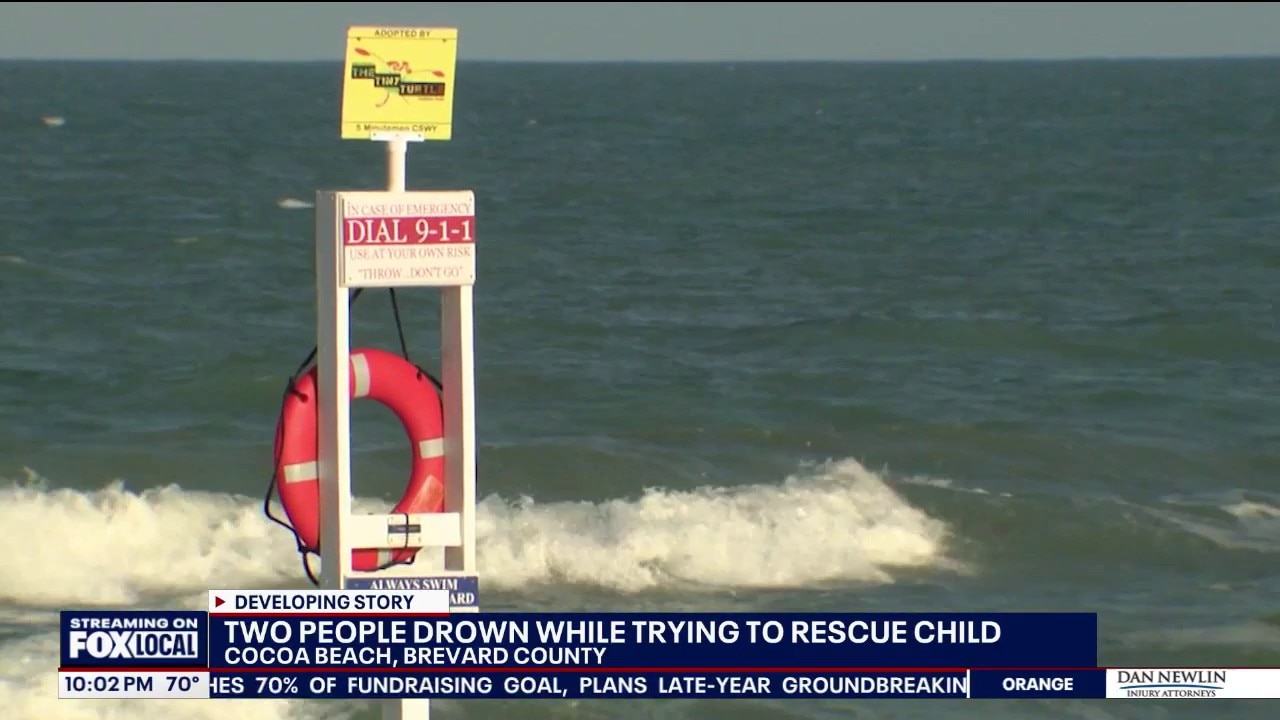
2 drown while trying to rescue child at Cocoa Beach, officials say
Two people drowned after entering the water to rescue a child caught in a rip current at Cocoa Beach, officials said. Authorities said a 34-year-old woman and a 42-year-old man were pulled under while attempting the rescue, and both were later pronounced dead at a hospital.
SIGN-UP FOR FOX 35'S BREAKING NEWS, DAILY NEWS NEWSLETTERS
"We extend our deepest condolences to the victims’ families and loved ones, and our thoughts remain with everyone affected by this tragic event," a city spokesperson said in a statement sent to FOX 35 News.
Officials are urging beachgoers to avoid swimming during strong rip current conditions, especially if they are not strong swimmers.
What we don't know:
The identities of the deceased were not immediately released.
What is a rip current?
Dig deeper:
If you've never seen a rip current, it looks like an unsuspecting shallow body of water that is on the surface of the ocean — but don't let that fool you.
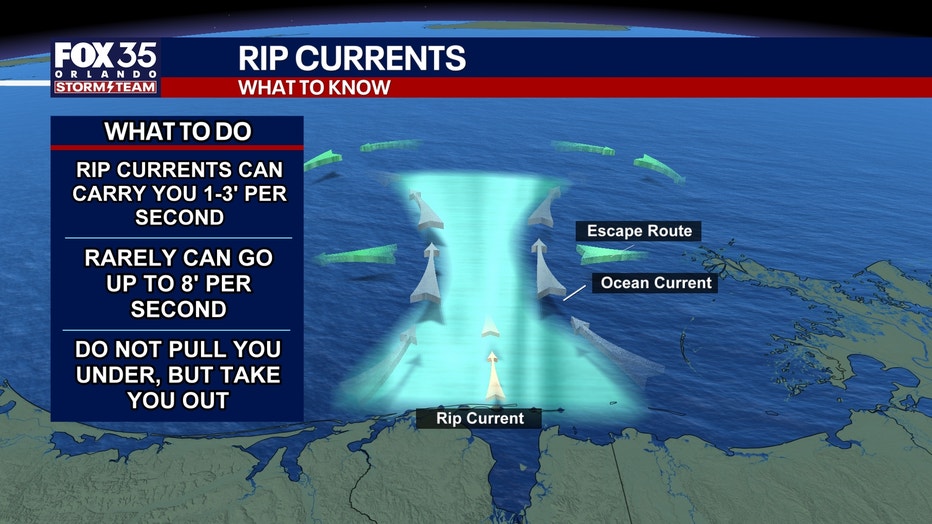
Rip currents are a string of water channels that simultaneously move quickly away from the shore.

Rip currents: How do they form?
FOX 35 Storm Team Meteorologist Jessica Dobson explains how rip currents form.
FOX 35 Storm Team Meteorologist Jessica Dobson explains how rip currents form.
"We have waves crashing out ahead of that sandbar, closer to the shoreline specifically. But the thing is, water has to flow back out, so what essentially happens is the water looks for a low or a weak point in that sandbar and rushes out and that forms a very fast current – a rip current," said Dobson. These can move at a speed as high as 1 to 2 feet per second, Dobson added.
A rip current's strength is dependent on the amount of water that is transported onto the breaches by breaking waves, according to the National Weather Service. A rip current's speed can reach several miles per hour.
What can I do if I am caught in a rip current?
What you can do:
Rip currents are strong and can pull people away from the shore.
According to the National Weather Service, there are a few things that people can do in advance to prepare for a rip current:
- Swim at beaches that are guarded by the Beach Patrol and listen to their advice.
- Learn how to swim before going to the beach
- If you can swim, do not overestimate your swimming ability and take a chance.
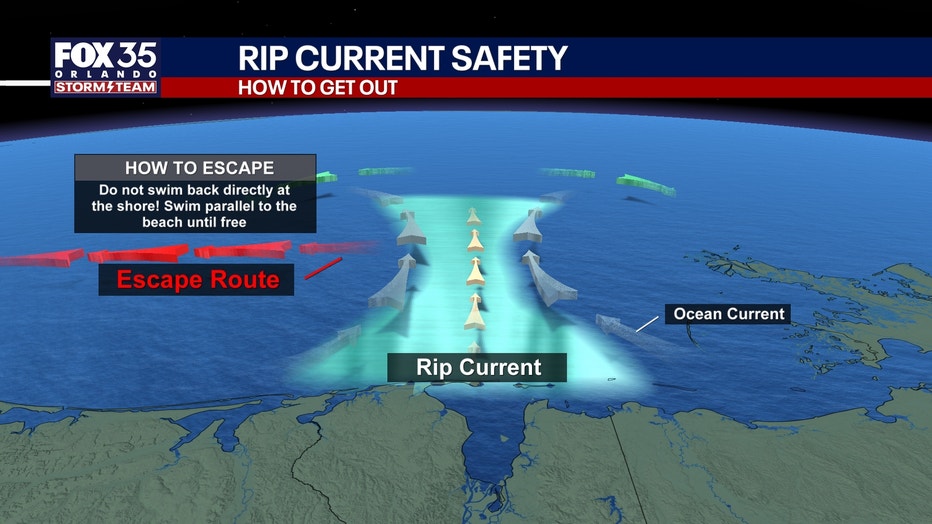
How to escape a rip current.
Here are the proper steps to take if caught in a rip current, according to the National Weather Service:
- Signal for help in the direction of the Beach Patrol or lifeguard
- Remain calm
- Float or tread in the water
- Move or swim sideways. Do not attempt to move directly towards the shore
What do I do if I see others in a rip current?
The National Oceanic and Atmospheric Administration has a few tips on what to do if you see others stuck in a rip current.
- Do not go into the water
- Stay calm
- Get help from a lifeguard or Beach Patrol
- If there is no lifeguard, or you cannot locate Beach Control, call 911.
- Look for something that floats to throw in the water, to help the person in the rip current. For example, a float, or a life jacket.
- If you do decide to enter the water, go with a flotation device. For example, a float, or a life jacket.
It's a misconception that rip currents only form during or after bad weather, but that is not true.
According to the National Weather Service in Melbourne, rip currents can occur at any time of the year, but the majority of deaths in East Central Florida occur from April through October when the combination of numerous bathers and favorable meteorological/oceanographic conditions coincide.
The Source: This story was written based on information shared by the Cocoa Beach Fire Department and the National Oceanic and Atmospheric Administration.