

Permanent daylight savings change 'dead as disco' — at least for now
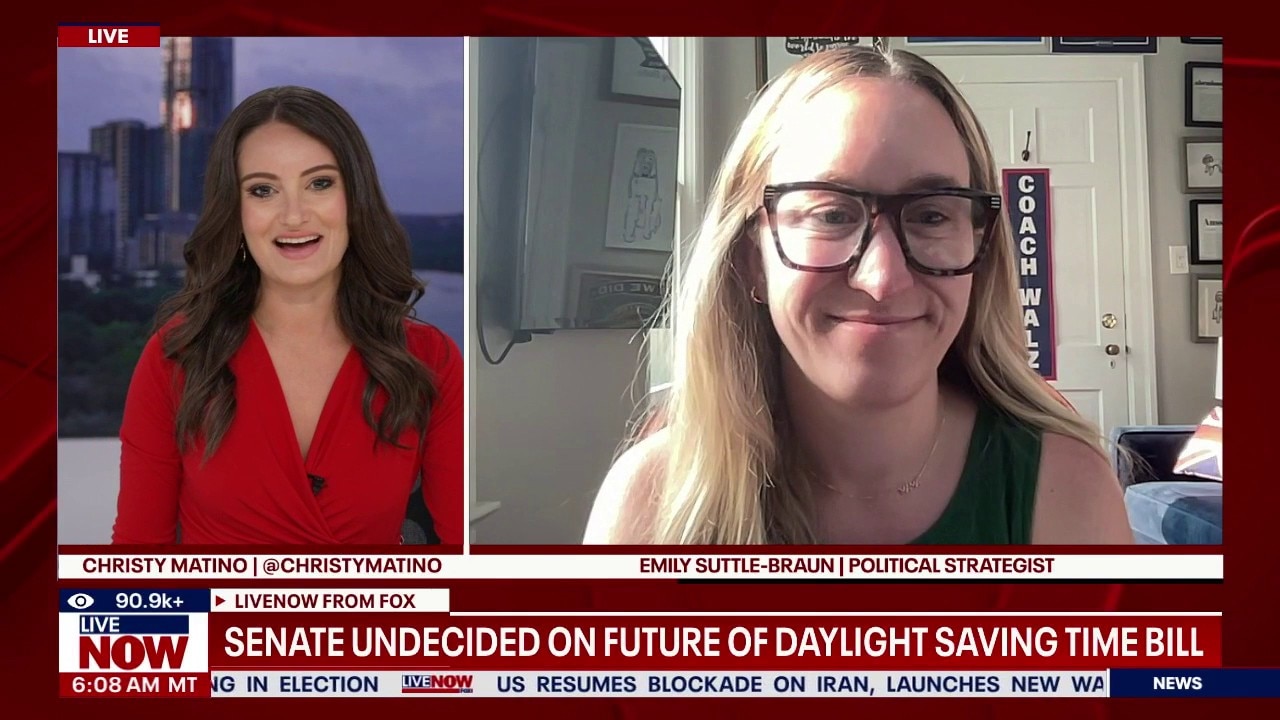
Senate undecided on future of daylight saving time bill
Senate undecided on future of Daylight Saving time. Emily Suttle-Braun, political strategist, joins LiveNOW from FOX to discuss the latest.
A bill to make daylight saving time permanent will not come up for a vote in the Senate before the midterm elections, despite strong lobbying by President Donald Trump.
In a post on his Truth Social account, Trump called changing the clocks twice a year "ridiculous" and said it "costs our country a fortune, is bad for crime, stress on people, sports, and just about everything else you can imagine."
"People are sick and tired of having to change their Clocks twice a year," he wrote. "This is an issue that Republicans, Democrats, and Independents can unite behind!"
Sunshine Protection Act ‘dead as disco,’ senators say
What we know:
The Sunshine Protection Act would make daylight saving time permanent, meaning Americans would no longer set their clocks back an hour – or fall back – in November. The legislation would allow states to opt out before it becomes permanent.
MORE: It's the first day of fall - Will our clocks still 'fall back' this year?
It passed the U.S. House July 14 in a 308-117 vote, leaving its fate in the hands of the Senate. The Senate didn’t bring the Sunshine Protection Act up for a vote before it recessed this week, and senators won’t be back until after the midterm elections Nov. 3.
What they're saying:
"It's dead as disco," GOP Sen. John Kennedy of Louisiana told Reuters when asked about the permanent daylight saving time bill. "My sense is it would have trouble passing ... I don't think the leader is going to bring it up."
What we don't know:
It’s unclear whether the measure will be taken up when lawmakers return. Sen. Rick Scott, a Florida Republican and key sponsor of the bill, told Reuters he was still confident it could pass.
A bill to make daylight saving time permanent will not come up for a vote in the Senate before the midterm elections, despite strong lobbying by President Donald Trump. (Photo by Jaap Arriens/NurPhoto via Getty Images)
Push for permanent daylight saving time
Big picture view:
Lawmakers have tried unsuccessfully for years to make daylight saving time year-round. Proponents, including Trump, say the change would provide more daylight during the times that Americans are most active. They’ve also said more sunlight in the evenings could boost tourism in winter months.
Opponents have argued that permanent daylight saving time would lead to darker and potentially more hazardous winter mornings where children will be waiting for school buses and parents will be driving to work in darkness.
"Millions of Americans will wake up during the winter months in complete darkness with the sun not rising until long after people get up and travel to school or work or have to go about their days," said Rep. Mary Gay Scanlon, D-Pa.
History of Daylight Saving Time
The backstory:
Daylight saving time is defined as a period between spring and fall when clocks in most parts of the country are set one hour ahead of standard time. According to federal law, it always starts on the second Sunday in March and ends on the first Sunday in November.
The practice of springing forward in the U.S. started in 1918 during World War I as a way to conserve fuel. By moving the clocks ahead an hour, backers believed the country could divert a bit of coal-fired electricity to the military instead of using it for an hour of home power. It was reenacted in World War II.
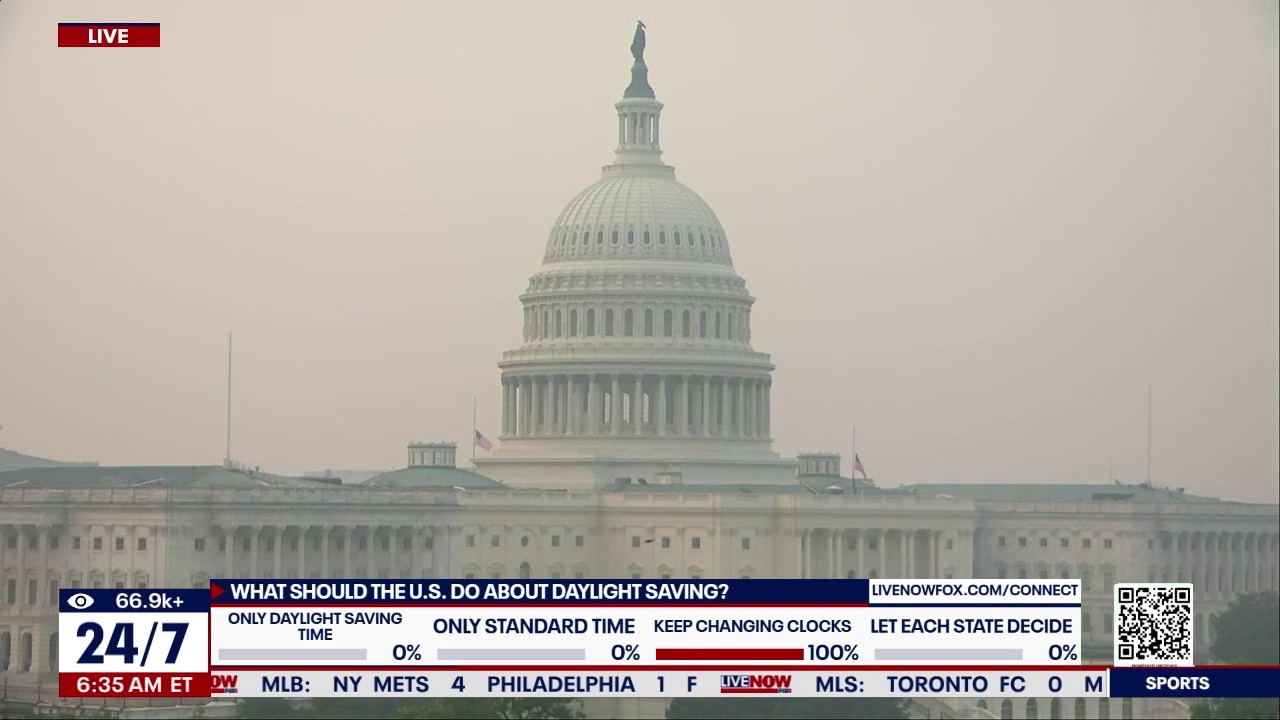
What should the US do about Daylight Saving?
Daylight saving time could soon come to an end in the United States as lawmakers continue debating whether to change the nation’s long-standing clock policy. Any permanent change would require action from Congress, as federal law currently sets the rules for daylight saving time nationwide. Dr. Megan Crawford with the University of Strathclyde weighs in.
It was repealed again when the war ended, but some states — and even some cities — continued to observe daylight saving time while others kept standard time year-round. That meant driving relatively short distances could result in a time change.
By 1966, airlines and other businesses tired of such quirks and pushed Congress to pass the Uniform Time Act. It codified daylight saving time, although it has been modified periodically.
Most Americans already set their clocks forward one hour each spring to preserve more evening daylight before "falling back" one hour in November.
Daylight Saving Time is observed in 48 states. Hawaii and Arizona do not observe Daylight Saving Time, but the Navajo Nation in northeastern Arizona does observe it. Several U.S. territories — American Samoa, Guam, Northern Mariana Islands, Puerto Rico, and the Virgin Islands — also do not observe Daylight Saving Time.
The Source: This article includes information from Reuters, President Donald Trump’s Truth Social account, The Associated Press and previous FOX Local reporting.