

Inside the Mammogram Experience: Patient, radiologist explain what screening is really like
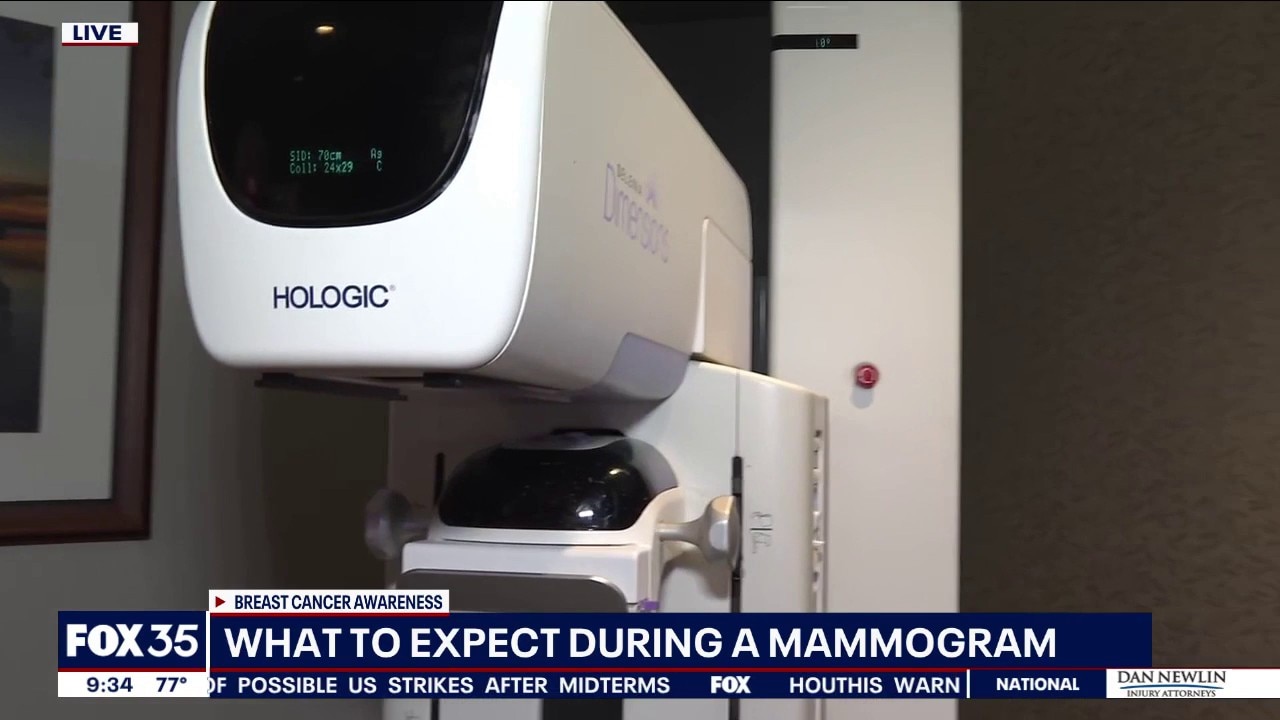
What to expect during a mammogram
During Breast Cancer Awareness Month, health experts stress the importance of early detection such as getting a mammogram. FOX 35's Amanda McKenzie talks with an expert about what the process is like.
ALTAMONTE SPRINGS, Fla. - FOX 35's Amanda McKenzie visited AdventHealth Imaging Center in Altamonte Springs to show what patients can expect during a routine mammogram.
Early detection
Why you should care:
Mammograms can help detect breast cancer before physical symptoms develop, and health experts are encouraging women to prioritize regular screenings during Breast Cancer Awareness Month in October.
Dr. Samana Zaidi, a breast imaging radiologist with AdventHealth, said mammograms use low-dose X-rays to identify subtle changes in breast tissue, including masses, architectural distortions and calcifications.
"This delivers a low dose X-ray to the breast while the breast is in compression," Zaidi said. "We’re looking for things like masses, things like architectural distortion or calcifications."
Addressing concerns about discomfort
Fear of pain or discomfort during breast compression can discourage some women from scheduling mammograms. However, Amy Gutierrez, a patient who underwent the procedure, said the compression lasted only a few seconds.
"It went like you would expect, but the compression, which is what everyone is concerned about, it was only like 2 or 3 seconds kind of thing, so it really wasn’t that bad," Gutierrez said. "It’s mainly for prevention."
Screening recommendations vary by risk
The American College of Radiology recommends annual mammograms beginning at age 40 for women at average risk. Zaidi said women should discuss their individual risk factors with a health care provider earlier in life to determine an appropriate screening plan.
"It’s important to remember that one size doesn’t fit all with screening mammograms, so ultimately we do want our women to start getting risk assessments earlier, usually by the age of 25," Zaidi said.
Depending on a woman’s risk factors, providers may recommend supplemental imaging, such as breast MRI or ultrasound, in addition to mammography.
How to schedule a screening
What you can do:
Women can consult their health care providers to assess their breast cancer risk and determine when to begin screening. Additional guidance and scheduling resources are available at ScheduleYourMammo.com.
Health experts emphasize that early detection can improve the chances of identifying breast cancer before it advances, making routine screening an important part of preventive care.
The Source: This story was reported by journalist Amanda McKenzie for a FOX 35 News segment taped at the AdventHealth Imaging Center in Altamonte Springs. The segment features direct interviews with Dr. Samana Zaidi, a Breast Imaging Radiologist at AdventHealth, who explained the clinical equipment, what doctors look for on scans, and updated personalized screening guidelines. The report also includes firsthand commentary from patient Amy Gutierrez, who shared her experience undergoing the procedure to address common concerns about compression discomfort.