

Hantavirus latest: CDC gives update on outbreak linked to cruise ship
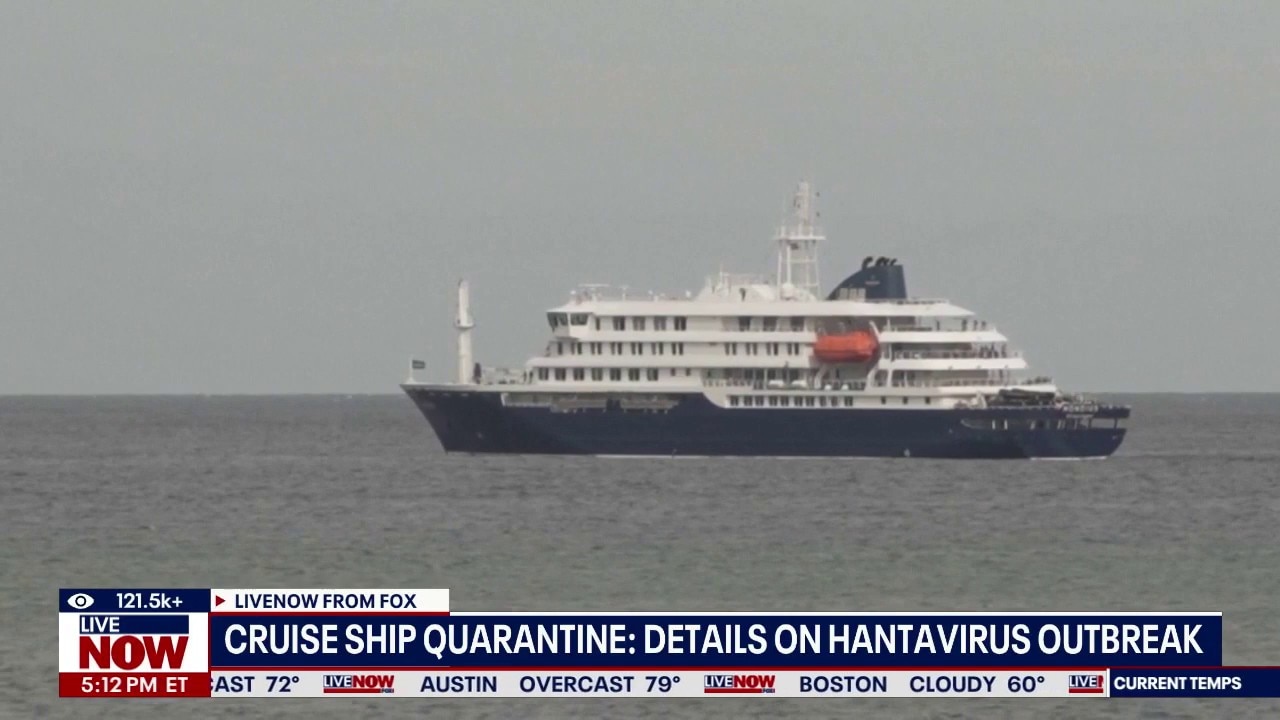
Americans on hantavirus cruise ship to go to Nebraska
The U.S. citizens exposed to hantavirus while aboard a cruise ship are set to quarantine at The National Quarantine Unit on the University of Nebraska Medical Center campus, officials said Friday.
ATLANTA - The Centers for Disease Control and Prevention provided an update on Friday amid a deadly hantavirus outbreak aboard an Antarctic cruise ship,
The outbreak, which originated aboard the MV Hondius, has been linked to at least three deaths and several reported cases as of May 8, according to reports citing the World Health Organization.
Hantavirus CDC update
What they're saying:
The CDC said on Friday that the U.S. government was actively monitoring and responding to the hantavirus outbreak linked to the M/V Hondius cruise ship.
"At this time, the risk to the American public remains extremely low," the CDC said.
According to the CDC, the agency developed health guidance for impacted American passengers, which was delivered by the U.S. Department of State.

This aerial picture shows a general view of the cruise ship MV Hondius stationary off the port of Praia, the capital of Cape Verde, on May 3, 2026. (Credit: AFP via Getty Images)
"The U.S. government's top priority is the safe repatriation of American passengers," the health agency continued, adding that the individuals are planned to be evacuated on a U.S. government medical repatriation flight to Offutt Air Force Base in Omaha, Nebraska, where they will be transported to the National Quarantine Center at the University of Nebraska, Omaha.
The CDC also said it deployed a team of epidemiologists and medical professionals to the Canary Islands, where the M/V Hondius is expected to dock.
"The team will conduct an exposure risk assessment for each American passenger and provide recommendations for the level of monitoring required. An additional CDC team will deploy to Offutt AFB to support public health assessment of returning passengers," the agency continued.
Hantavirus outbreak latest
What we know:
On Wednesday, WHO chief Tedros Adhanom Ghebreyesus said three suspected hantavirus case patients were evacuated from the ship and on their way to receive medical care in the Netherlands.
Photos shared on social media showed medical teams in protective gear.
As of Wednesday, eight cases were involved, with five confirmed as hantavirus by laboratory testing. Three people have died.
RELATED: Hantavirus outbreak: 3 more patients evacuated from cruise ship
What we don't know:
WHO officials didn’t give details about the three latest patients that were involved and evacuated.
It’s still unclear where the virus originated, but Tedros said Wednesday the overall public health risk remained low.
The cruise at the center of the outbreak was the Dutch-flagged MV Hondius luxury cruise ship.
The ship left Argentina on April 1 for a weekslong polar cruise, with stops scheduled in Antarctica and several isolated islands in the South Atlantic.
What is hantavirus?
Big picture view:
The word hantavirus refers to a broad family of viruses, with different versions in different countries. It comes from contact with rodents or their urine, saliva or feces, particularly when it’s inhaled.
RELATED: Hantavirus is 'not the next COVID,' experts say: What to know
Hantavirus infections are relatively uncommon globally. In 2025, eight countries within the Americas had documented 229 cases and 59 deaths, according to the World Health Organization.
What they're saying:
"This is not the next COVID, but it is a serious infectious disease," Maria Van Kerkhove, director of epidemic and pandemic preparedness at the World Health Organization, told The Associated Press. "Most people will never be exposed to this."
An infection can quickly become life-threatening. Death rates vary by which hantavirus causes the illness. Hantavirus pulmonary syndrome is fatal in about 35% of people infected, while the death rate for hemorrhagic fever with renal syndrome varies from 1% to 15% of patients, according to the CDC.
Despite years of research, many questions have yet to be answered, including why it can be mild for some people and severe for others and how antibodies are developed. Some researchers have been following patients over long periods of time in hopes of finding a treatment.
The Source: The information for this story was provided by the CDC. This story was reported from Los Angeles. Previous FOX Local reporting contributed.