

Beach safety: 4 tips to spotting a rip current along Central Florida coast

Dangerous Florida rip currents: What it means, how to stay safe
Volusia County Ocean Rescue Director Tammy Malphurs spoke with FOX 35's Marley Capper about Hurricane Erin?s impact, stressing the dangers of strong surf and rip currents along the coast. She outlined how crews are monitoring conditions and keeping swimmers safe.
If you've never seen a rip current, it looks like an unsuspecting shallow body of water that is on the surface of the ocean — but don't let that fool you. Rip currents are a string of water channels that simultaneously move quickly away from the shore.
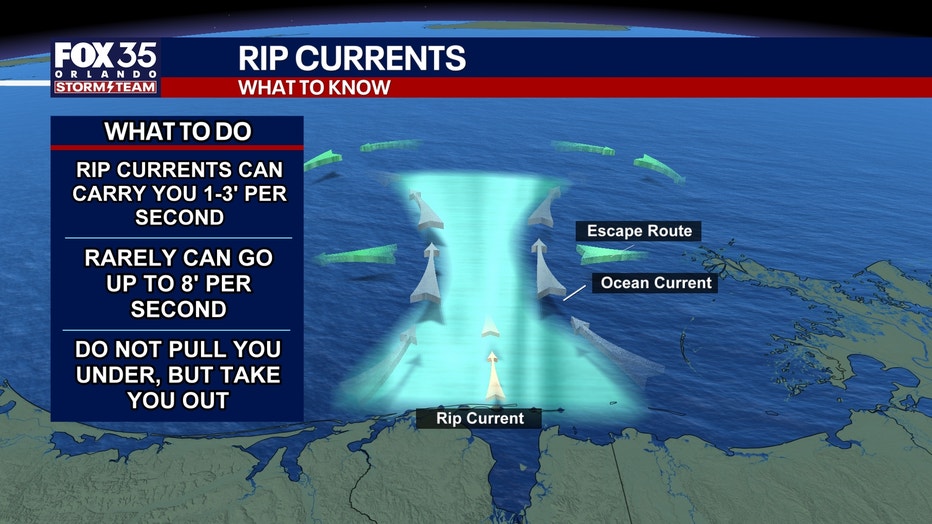
"We have waves crashing out ahead of that sandbar, closer to the shoreline specifically. But the thing is, water has to flow back out, so what essentially happens is the water looks for a low or a weak point in that sandbar and rushes out and that forms a very fast current – a rip current," FOX 35 Storm Team Meteorologist Jessica Dobson explained. These can move at a speed as high as 1 to 2 feet per second, Dobson added.
A rip current's strength is dependent on the amount of water that is transported onto the breaches by breaking waves, according to the National Weather Service. A rip current's speed can reach several miles per hour.
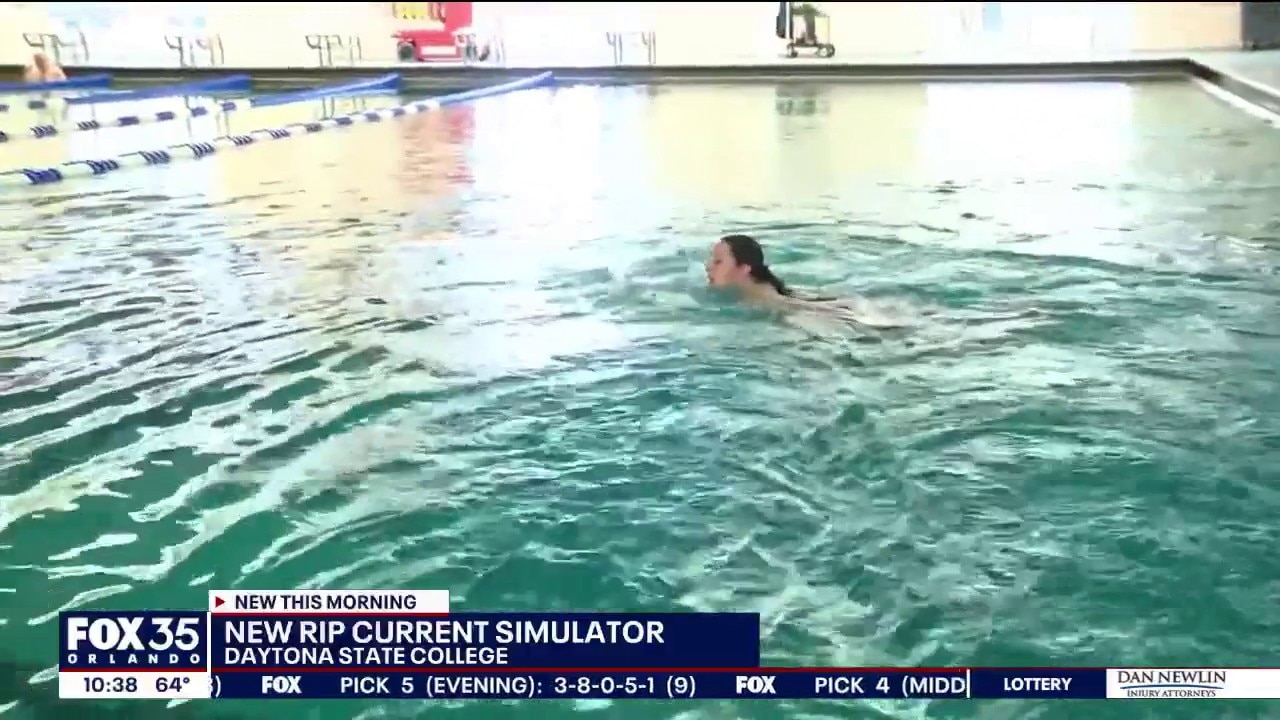
New simulator teaches you how to escape a rip current
Do you know how to get out of a rip current? Do you know what a rip current feels like? A new simulator has debuted at Daytona State College, where Volusia County Beach Safety lifeguards can show kids, adults, and families what happens when you're stuck in a rip current and, most important, how to get out of one. Here are the main steps: Swim near a lifeguard, signal for help, then swim parallel to the shore. Once you realize you're out of one, then you can begin to swim towards shore again. FOX 35's Amanda Ruiz talked with Volusia County Beach Safety about the new simulator.
How to spot a rip current
The National Oceanic and Atmospheric Administration gave several examples of how to spot a rip current before situations worsen:
- Look for a channel of churning, choppy water
- Look for a line of foam, seaweed, or debris moving seaward
- Look for an area having a notable difference in water color
- Look for a break in the incoming wave pattern
What can I do if I am caught in a rip current?
What you can do:
Rip currents are strong and can pull people away from the shore.
According to the National Weather Service, there are a few things that people can do in advance to prepare for a rip current:
- Swim at beaches that are guarded by the Beach Patrol and listen to their advice.
- Learn how to swim before going to the beach
- If you can swim, do not overestimate your swimming ability and take a chance.
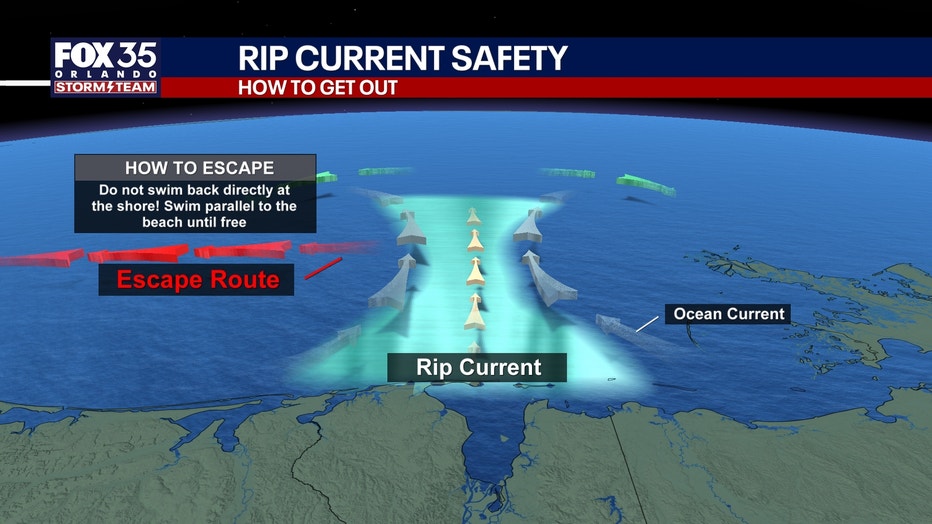
How to escape a rip current.
Here are the proper steps to take if caught in a rip current, according to the National Weather Service:
- Signal for help in the direction of the Beach Patrol or lifeguard
- Remain calm
- Float or tread in the water
- Move or swim sideways. Do not attempt to move directly towards the shore
What do I do if I see others in a rip current?
The National Oceanic and Atmospheric Administration has a few tips on what to do if you see others stuck in a rip current.
- Do not go into the water
- Stay calm
- Get help from a lifeguard or Beach Patrol
- If there is no lifeguard, or you cannot locate Beach Control, call 911.
- Look for something that floats to throw in the water, to help the person in the rip current. For example, a float, or a life jacket.
- If you do decide to enter the water, go with a flotation device. For example, a float, or a life jacket.
It's a misconception that rip currents only form during or after bad weather, but that is not true.
According to the National Weather Service in Melbourne, rip currents can occur at any time of the year, but the majority of deaths in East Central Florida occur from April through October when the combination of numerous bathers and favorable meteorological/oceanographic conditions coincide.
The Source: Information in this story was gathered from the National Oceanic and Atmospheric Administration.