

When will Artemis II launch? Favorable weather for April 1 historic moon mission
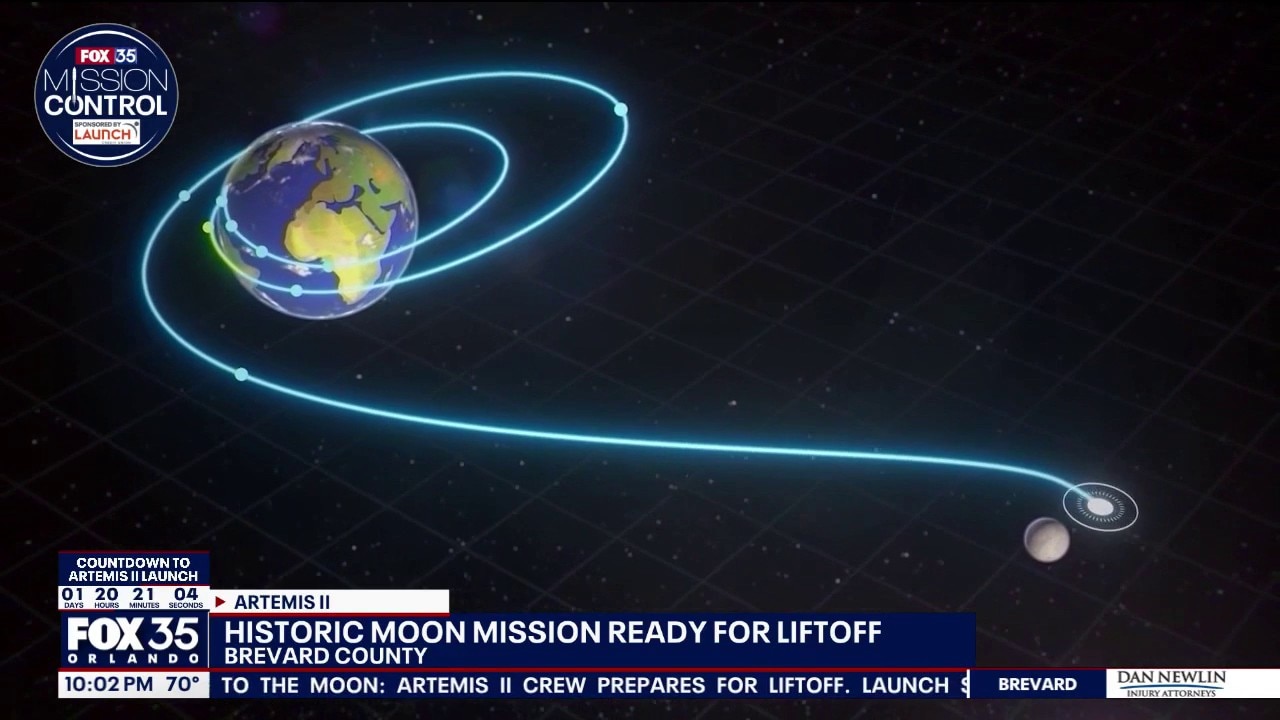
Countdown underway for Artemis II moon mission launch from Florida
The countdown is underway for a historic return to deep space, with NASA targeting a Wednesday evening launch of the Artemis II mission from Florida’s Space Coast.
CAPE CANAVERAL SPACE FORCE STATION, Fla. - NASA is counting down to a historic milestone as the first potential launch window for the Artemis II mission is set to open this Wednesday at 6:24 p.m. The Artemis II lunar mission will be NASA's first crewed launch to the moon in 50 years.
The first potential launch date is set for Wednesday, April 1 – with six more potential launch dates scattered throughout the months. However, the initial launch was set for sometime in March, but the launch was delayed due to a helium leak, requiring the rocket and spacecraft to be moved back to the VAB for repair. After being rolled out to the launch pad for a second time, arriving at the launch pad around 11:20 a.m., March 20, NASA anticipates an early April launch.
The forecast: A ‘green light’ with a catch
What we know:
Weather conditions are favorable for a Wednesday evening launch.
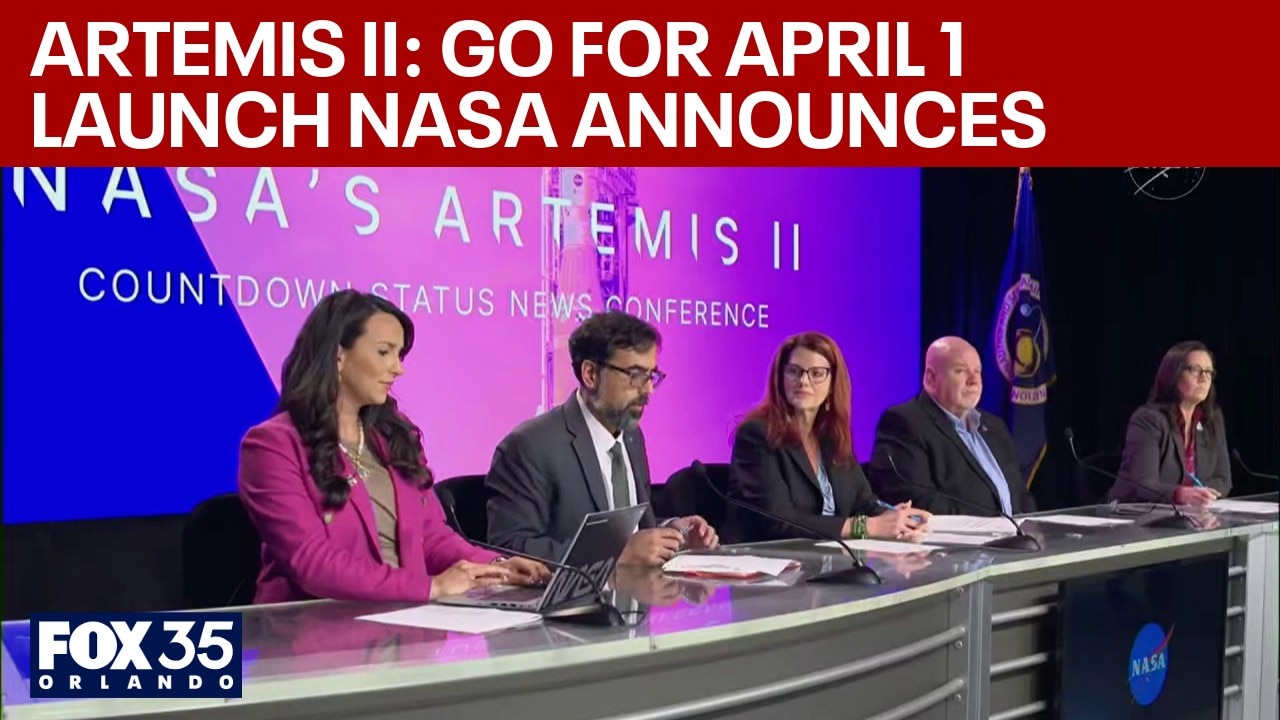
NASA gives Artemis II update ahead of April 1 launch
FULL PRESS CONFERENCE | NASA leaders update the public on their plan to launch Artemis II -- a four-crew mission -- to the moon in a 10-day mission. The launch date is set for April 1, 2026.
Meteorologists at Patrick Space Force Base currently give the mission an 80% chance of "go" – meaning only a 20% risk of weather violations during the window. At first glance, that sounds like a green light. But in Florida, especially for rocket launches, the details matter.
What to expect at launch time
Conditions near the Cape, Wednesday evening, look typical for early spring:
- Temperatures around 75°
- Scattered clouds, including cumulus clouds between 3,000 and 13,000 feet
- Isolated showers in the area
- Onshore winds from the southeast at 15 to 20 knots
There aren't any widespread storms expected, and visibility should remain good. However, the combination of moisture, sea breeze activity, and onshore flow creates a setup where small, isolated weather features could become a problem.
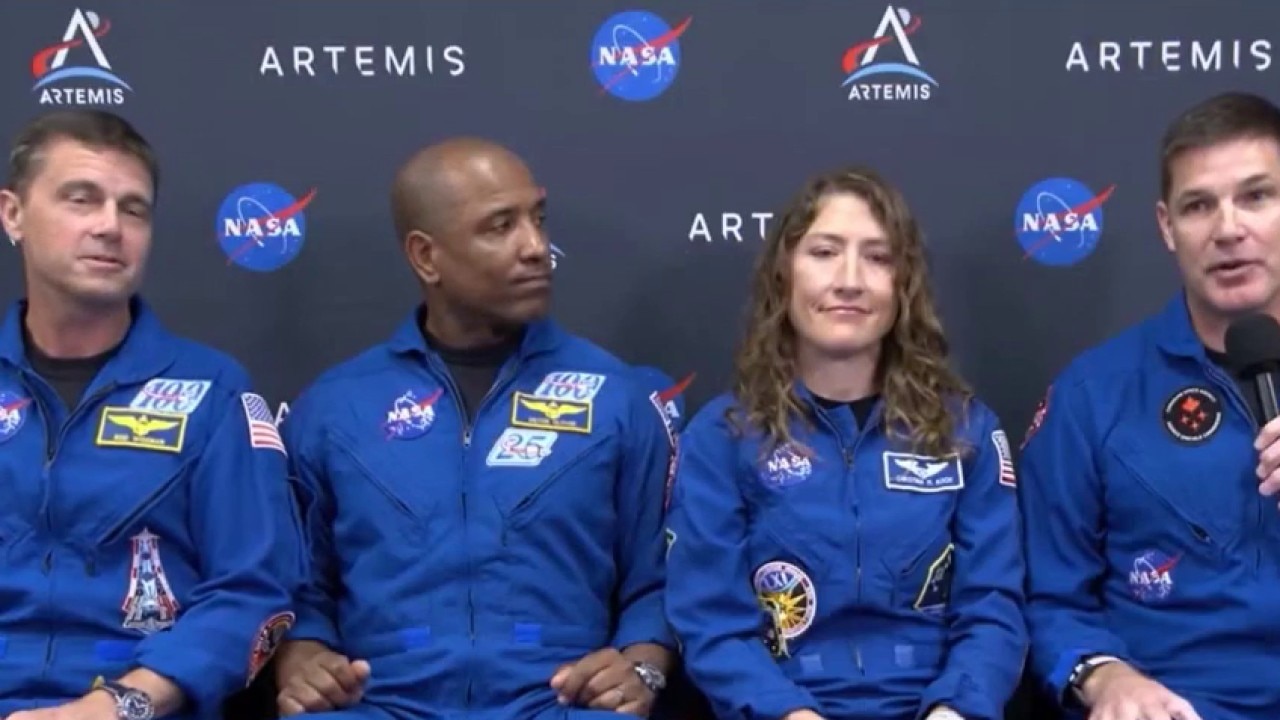
Artemis II crew prepares for liftoff
The Artemis II crew held a Q & A session ahead of Wednesday's launch.
Potential April launch dates for Artemis II
NASA has identified seven potential launch availability dates in April for the Artemis II mission. The first is April 1.
- April 1: Launch window opens at 6:24 p.m.
- April 2: Launch window opens at 7:22 p.m.
- April 3: Launch window opens at 8 p.m.
- April 4: Launch window opens at 8:35 p.m.
- April 5: Launch window opens at 9:40 p.m.
- April 6: Launch window opens at 10:36 p.m.
- April 30: Launch window opens at 6:06 p.m.
Our Artemis II crew will be going around the Moon, but they'll always find their way back home 🌎
— NASA Artemis (@NASAArtemis) March 25, 2026
During this complex journey, the four astronauts will travel ~685,000 miles on a trajectory around the Moon and back to Earth.
See their daily agenda: https://t.co/172PVtri2Z pic.twitter.com/zsK5i6pirj
Artemis II: All about the mission
Artemis II will be the first crewed mission to the moon in more than 50 years. The mission is expected to not only test the technological capabilities to send the Orion spacecraft to deep space and back, but also how deep space impacts humans.
Artemis II is the second test flight in a series of more advanced space flights with the ultimate goal of landing humans back on the moon's southern region – and eventually building a "moon base."
The mission will take 10 days.
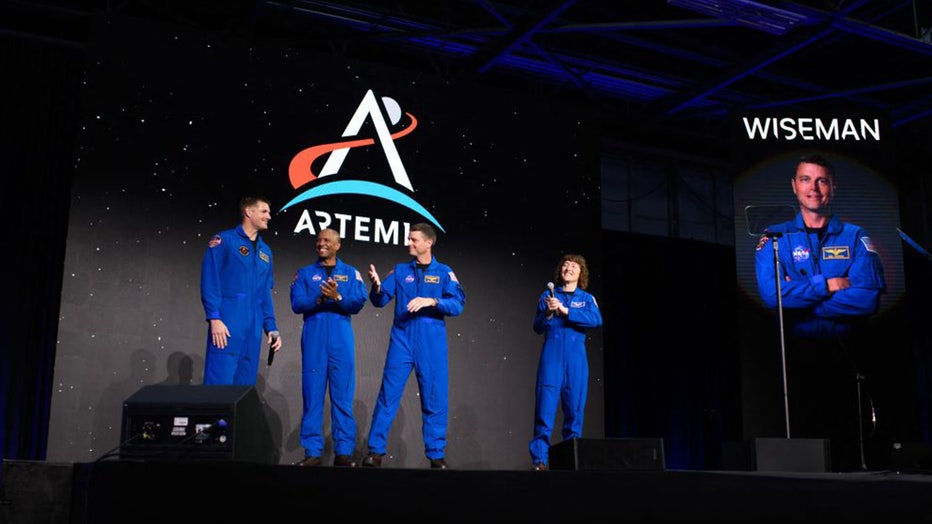
FILE - (L-R) Astronauts Jeremy Hansen, Victor Glover, Reid Wiseman and Christina Hammock Koch stand onstage after being selected for the Artemis II mission who will venture around the Moon during a news conference held by NASA and CSA at Ellington ai (MARK FELIX/AFP via Getty Images)
Why launches can scrub even in "good" weather
NASA and the Space Force operate under strict launch weather rules, many of which go far beyond what most people would consider "bad weather."
For Artemis II, some of the key constraints include:
- No rain anywhere in the rocket’s flight path
- No towering cumulus clouds within a certain distance if they could produce lightning
- No recent lightning in the area
- No electrically charged clouds or anvil remnants nearby
- Sustained winds greater than 40 knots or peak wind greater than 45 knots
- Temps at or below 40 degrees Fahrenheit, or exceeds 95 degrees Fahrenheit at the launch area during rollou
Here's the full list of constraints.
In other words, it doesn’t take a storm over the launch pad to delay a launch. A single shower offshore or a developing cumulus cloud in the wrong location can trigger a violation.
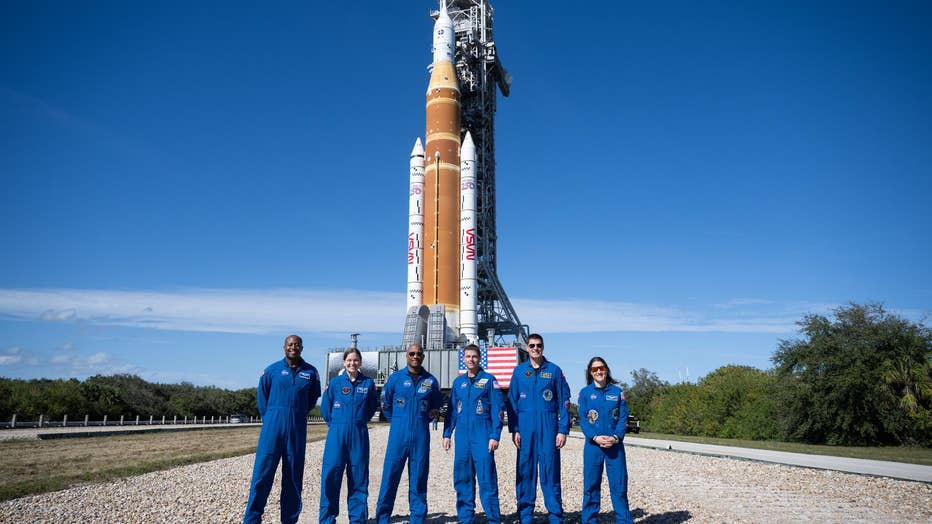
From left: Artemis II backup crewmembers NASA astronaut Andre Douglas and CSA (Canadian Space Agency) astronaut Jenni Gibbons and prime crewmembers NASA astronauts Victor Glover, Reid Wiseman, CSA (Canadian Space Agency) astronaut Jeremy Hansen, and
Primary concerns for April 1
While no major storm systems are threatening the Space Coast, forecasters are monitoring two specific "watch items" that could force a hold:
Cumulus cloud rule: With scattered clouds and a moist atmosphere, there is potential for vertical cloud growth that could trigger lightning concerns
Ground winds: Breezy onshore winds could approach operational limits at times
Isolated showers are also in the forecast, and while coverage is low, any one of them drifting too close to the flight path could force a delay.
Watch: Full press conference
During a press conference, NASA officials said as of March 30, it's a go for an April 1 launch.
What's next:
The overall setup is favorable, but not perfect. There are no large-scale weather systems expected to interfere, but Florida’s typical late day pattern means small-scale features will be closely monitored right up to launch time.
That’s why even with an 80% "go" forecast, a last-minute weather delay remains possible.
NASA will hold a press conference on March 30 at 5 p.m. to update the public on the Artemis II mission.
The Source: Information in this story was gathered by NASA and FOX 35's Brooks Garner.