

Florida fertility clinic sued: Baby dies 10 days after birth; surrogate mental health concerns
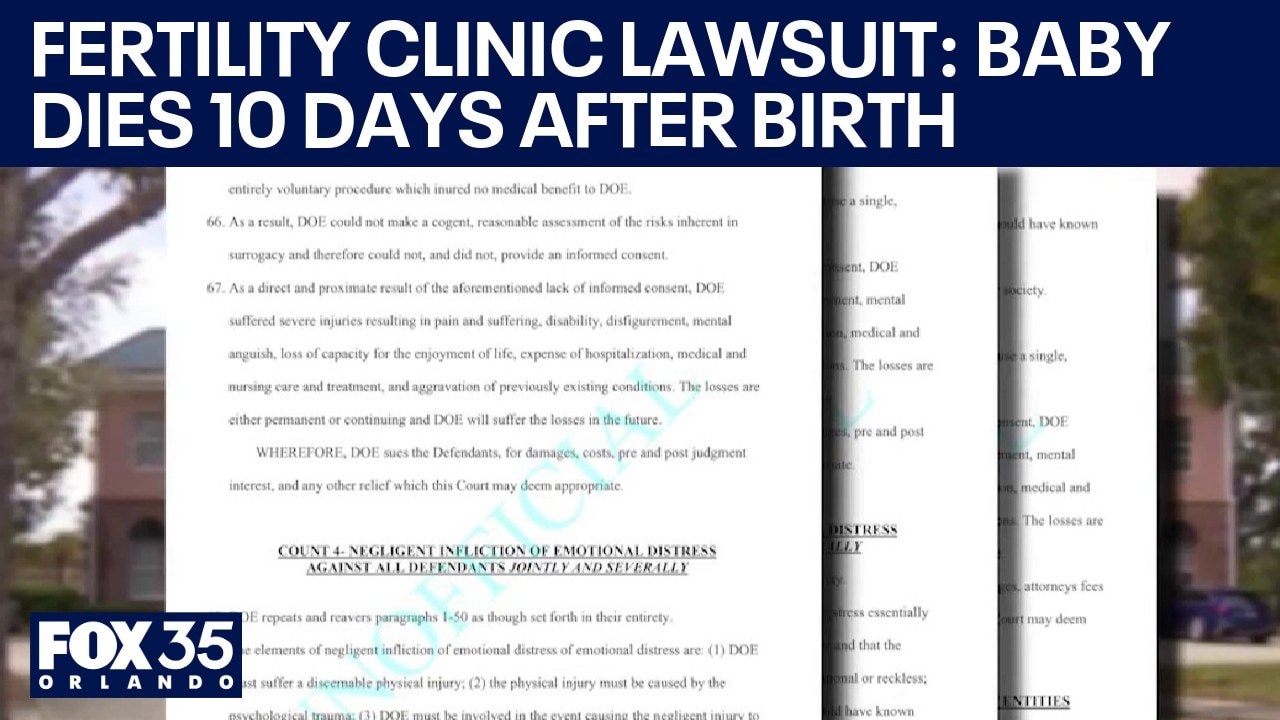
Fertility clinic faces lawsuit after surrogate baby dies 10 days after birth
The power attorney of a surrogate mother filed a lawsuit against a Longwood fertility clinic after a baby died 10 days after birth. The lawsuit alleges that the clinic implanted an embryo into a surrogate who didn't have the capability to make an informed decision by herself.
LONGWOOD, Fla. - A mother is accusing a Florida fertility clinic of improper practice, claiming her daughter was mentally unfit to be a surrogate and saying screening tests should have prevented the embryo implantation from taking place.
This lawsuit, filed in Seminole County, comes after the surrogate gave birth to a baby with a genetic condition which caused the infant to die 10 days after birth.
The lawsuit names the Fertility Center of Orlando, which is also involved in an IVF mix-up case.
Now, the mom, – her daughter's power of attorney – claims the clinic and its director were aware of enhanced psychological pressures imposed on surrogates – of which her daughter – who has a long history of mental illness, the mom said – was not able to make an informed choice using good judgment to be a surrogate.
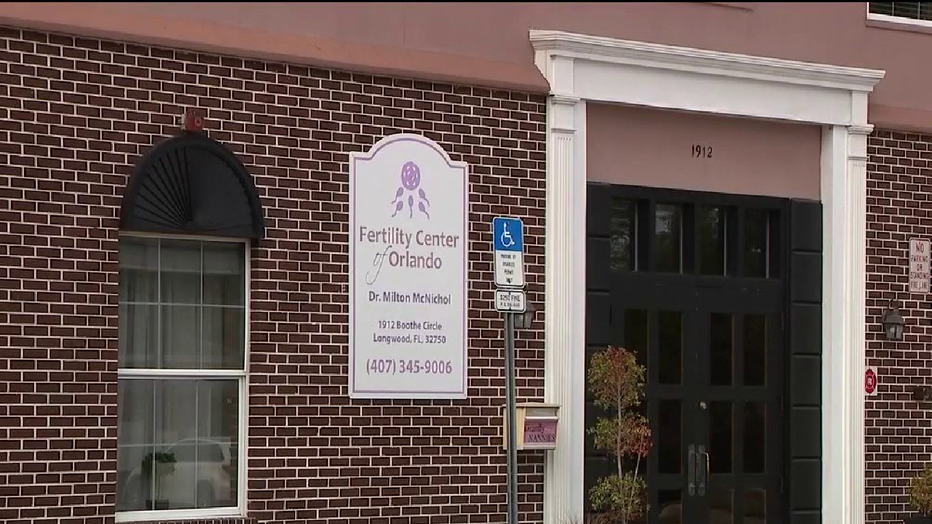
Baby died 10 days after birth
What we know:
On Oct. 24, 2024, an embryo was implanted into a surrogate.
The daughter was a surrogate for her cousin – the intended mother – and her partner – the intended father. Both the cousin and her partner are also being sued.
The intended parents sought a donor egg to be fertilized by the intended father – paying a reported $20,000 for the donor egg.
The baby – who had thanatophoric dysplasia – died 10 days after being born. The lawsuit states the fertility clinic transferred an embryo with thanatophoric dysplasia into the surrogate. This condition – which affects the growth and development of a fetus’ bones and lungs – may be spontaneously generated or inherited, the lawsuit claims.
The lawsuit claims the clinic failed to take sufficient patient history to reasonably rule out genetic deficiencies.
The mom alleges that the clinic – along with its medical director – knew the increased maternal risks and enhanced psychological pressures imposed on a surrogate carrying a fetus with birth defects. The plaintiffs are seeking an excess of $50,000.
Despite the baby's death, the mom said her daughter believes the baby was taken to Guatemala. She never saw the baby's body and still believes the child is alive, the lawsuit said.
The surrogate suffered profound psychological effects from the pregnancy, including being Baker Acted for suicidal thoughts 10 weeks into the pregnancy.
A long history of mental illness
The surrogate's history of mental illness dates back to 2014 – her mom alleges in the court filing – in which she reportedly has numerous Baker Act admissions. The surrogate has a history of impaired judgment, poor impulse control, bipolar disorder and alcohol abuse, among others.
Her list of "ailments," the lawsuit said, deprives her the ability to make meaningful, well-reasoned and informed choices using good judgment on whether to serve as a surrogate for this embryo.
The mom said her daughter lacked the ability to comprehend the IVF process, claiming her daughter was told she might be pregnant at the time of the transfer. The daughter believes the baby was her biological baby due to being shown a sonogram with a fetal age older than the date of the transfer and a birth certificate which names her as the mother, the lawsuit said.
The baby's death certificate names the intended parents as the parents, the lawsuit said.
Lack of payment for surrogacy role
The cousin and her partner have failed to pay the surrogate the amount dictated in the contract, the lawsuit said.
At the time of the lawsuit, only $5,390 of the $22,550 that was stated in the contract. The cousin and her partner are being accused of breach of contract.
The Source: Information in this story was gathered from a Seminole County court filing.