

Could AI data centers be built in space? Google is testing it right now
Credit: Google
Google is testing whether moving artificial intelligence data centers into outer space can solve land, power and pollution conflicts facing terrestrial communities.
Google's ‘Project Suncatcher’
The backstory:
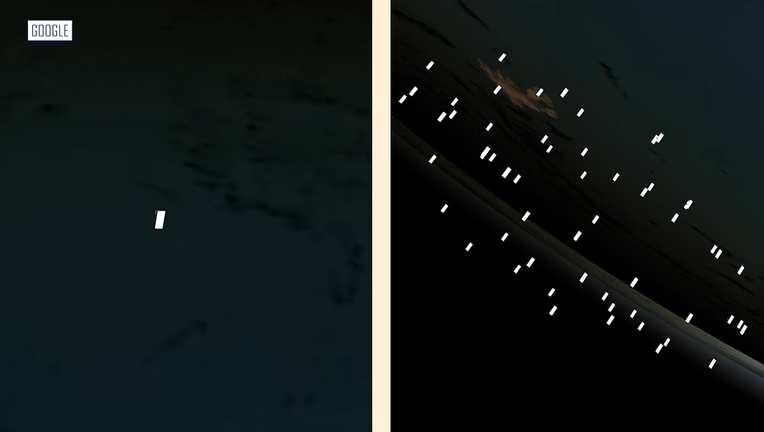
Last year, Google announced "Project Suncatcher," a long-term project to eventually see if it's possible to create AI systems in space, linked by networks of satellites.
"Project Suncatcher is a long-term, research moonshot exploring whether space could one day host scalable machine learning infrastructure. In low Earth orbit, satellites can access near-constant sunlight, generating up to eight times more solar power than on Earth. Eventually, it could be possible to link together multiple constellations of satellites, allowing them to manage larger AI workloads while in orbit.," reads Google's Project Suncatcher website.
Google launches AI hardware into space
What we know:
On Thursday, Google launched a bunch of its Google Tensor Processing Units (TPUs) into space aboard SpaceX's Transporter-18 Mission from California.
What we don't know:
The goal is to see how these units handle space flight and the vibrations during launch, the extremes of space, and how to keep cool and not overheat.
Expert: We have to think about speed, and space debris
Local perspective:
Florida Tech Spaceport Education Center Director Don Platt questioned whether space-based connections hundreds of miles away can deliver enough speed and raised concerns about falling space debris.
"If you have a really big data center spacecraft, it may have pieces that fall all the way to earth, so that is another concern we have to think about," he said.
Google has next mission planned for 2027
Timeline:
Following Thursday's launch, Google said its next mission will happen in 2027 when it sends two satellites into space. The goal of that mission is to see if it can maintain a "high bandwidth connection" across short distances.
"The technology in space already exists, but most state-of-the-art systems are optimized for low bandwidth across large distances, whereas our lasers need to operate at very high bandwidth over extremely short distances. Maintaining the necessary connection requires extraordinary precision, similar to hitting a coin-size target from miles away while both points are in motion," Google said in its blog post.
The Source: The information in this story was gathered from FOX 35 reporter Esther Bower, who reported live from Florida's Space Coast, as well as broadcast interview statements from Dr. Don Platt of Florida Tech. Bower also reviewed information from Google on the project and videos featuring Maria Biggs of Google and Dr. Travis Beals of Google.