

SpaceX's Crew-13 reaches space station in record-fast trip as mission begins

Hometown astronaut inspires Deltona students
Luke Delaney, a DeBary native and 1997 Deltona High graduate, is piloting NASA's Crew-13 mission to the International Space Station aboard SpaceX's Dragon spacecraft. The school held a watch party as students counted down to liftoff and then stepped outside to watch the rocket's trail streak across the sky.
ORLANDO, Fla. - Four astronauts have arrived at the International Space Station after completing the fastest crewed flight by a U.S. spacecraft, reaching the orbiting laboratory about eight hours after launching from Florida.
The Crew-13 mission marks several milestones, including a historic command by NASA astronaut Jessica Watkins and another busy day for SpaceX, which completed multiple launches within hours as the company continued an active week of missions.
Record-setting flight to the space station
What we know:
SpaceX launched Crew-13 from Cape Canaveral Space Force Station after a three-week delay to repair a fuel system leak in the Dragon spacecraft. Despite threatening weather, the mission lifted off safely and docked with the International Space Station about eight hours later, setting a U.S. record for the fastest crewed trip to the orbiting laboratory.
Watkins, making her second spaceflight, became the first Black woman to command a crew into orbit. Joining her are NASA astronaut Luke Delaney, Canadian Space Agency astronaut Joshua Kutryk and Russian cosmonaut Sergey Teteryatnikov, all making their first spaceflights except Watkins. The crew will spend about six months aboard the station, replacing four astronauts who have been in orbit since February.
Historic mission for NASA and SpaceX
Big picture view:
The mission highlights SpaceX's growing role in NASA's human spaceflight program. Crew-13 is the company's 13th operational astronaut mission for NASA and comes during one of its busiest launch weeks.
Just hours after launching Crew-13, SpaceX sent more than 100 small satellites into orbit from California and later planned a Falcon launch from Florida carrying a classified National Reconnaissance Office payload. The launches also came the same week SpaceX's Starship reached orbit for the first time.
Why Crew-13 embraced the number 13
The backstory:
Crew-13 embraces its mission number rather than avoiding it.
The crew's mission patch honors Apollo 13, the 1970 lunar mission that suffered an in-flight explosion but safely returned its astronauts to Earth. The astronauts leaned into the "Lucky 13" theme by riding to the launch pad in Teslas with "Lucky 13" license plates and carrying a crocheted golden dragon mascot named "Lucky" with a four-leaf clover.
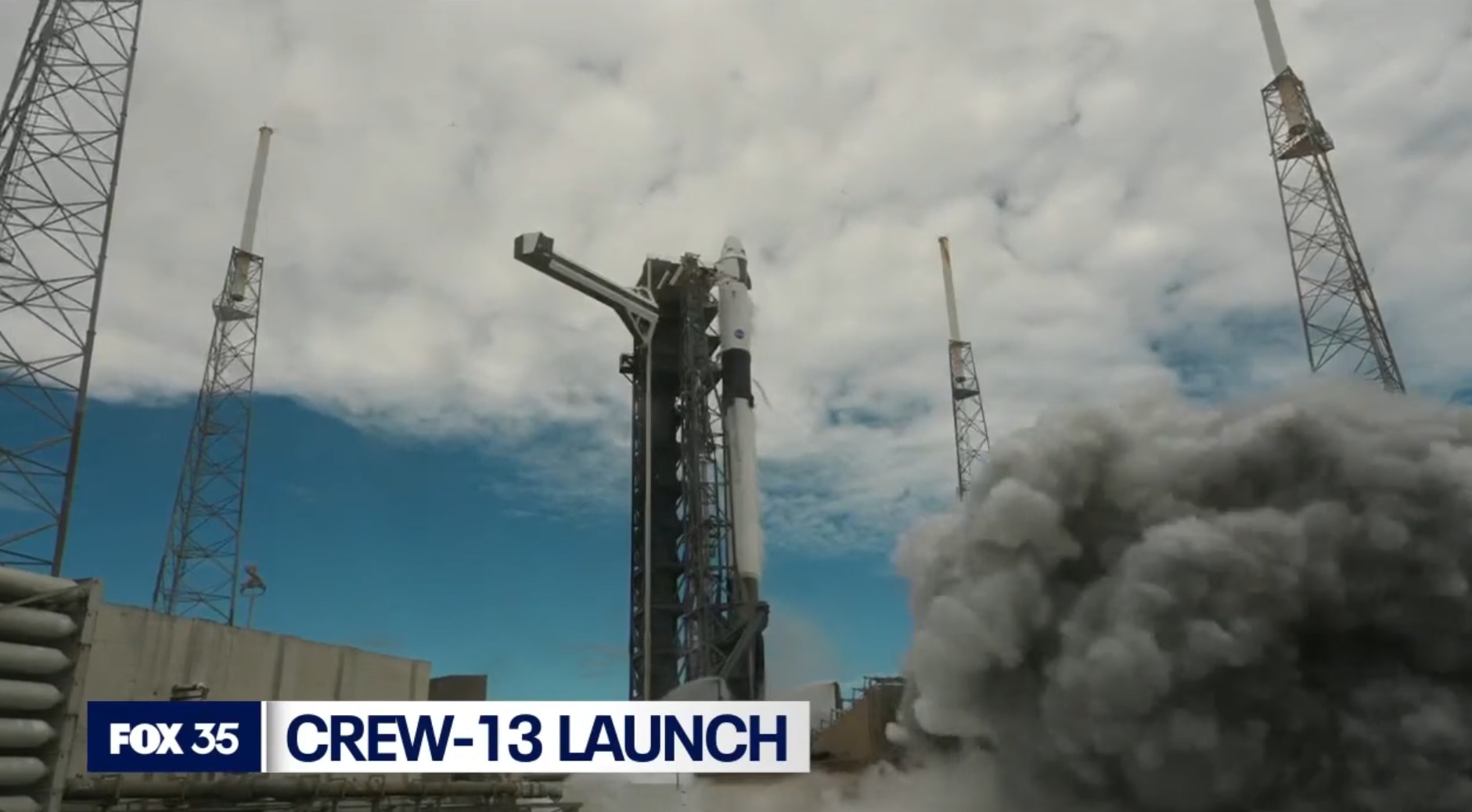
SpaceX launches Crew-13 as Falcon Heavy mission sets up double-launch day in Florida
SpaceX successfully launched its Crew-13 mission to the International Space Station from Kennedy Space Center, sending four astronauts into orbit on what became the first of two planned launches from the Space Coast in a single day.
The record-setting trip was made possible because of the International Space Station's position relative to Earth at launch, allowing a faster rendezvous than previous U.S. crewed missions.
What they're saying:
"Thanks for an amazing ride," commander Jessica Watkins radioed after reaching orbit.
Later, Watkins said, "We figured it wouldn't hurt to bring a little of our own luck just in case, but clearly we don't need it. We're four of the luckiest humans on or off planet Earth."
NASA space station program manager Dana Weigel noted another milestone awaiting the crew, as Canadian astronaut Joshua Kutryk's wife is expected to give birth during his six-month mission.
"A lot of life-changing things can happen over six months," Weigel said. "NASA will do its best to keep Kutryk looped in to his family."
What's next:
The Crew-13 astronauts will spend roughly six months aboard the International Space Station conducting scientific research and maintaining the orbiting laboratory before returning to Earth.
Meanwhile, the four astronauts they replaced are preparing to depart the station and return home after their mission that began in February.
The Source: This story was written based on NASA, SpaceX, and reporting by the Associated Press.